

Martinez Refinery Workers on Month Two of Strike Warn the Bay Is at Dire Risk
“The EPA should be in there every single day seeing what they’re doing.”

When Tomas Rivera leaves his four children for his shift at Marathon Petroleum’s refinery in Martinez, California, he’s ready to put on many hats. Like many of his coworkers, he works in multiple units across the East Bay refinery — seven, in fact — all while making sure his fellow operators stay safe and that the San Francisco Bay’s water is clean.
“Like the water in this bottle,” Rivera said with a smile, holding up a plastic water bottle.
Rivera works 12-hour shifts in one of the most dangerous and toxic industries in the country. He’s been doing so for nearly a decade.
“It’s stuff that will kill you,” Rivera explained. “You can absorb it, you can inhale it, it can fall on you, you can be lit on fire.”
Now, Rivera has traded his personal protective equipment (PPE) for a picket sign. Alongside over 100 fellow refinery operators and his own four children, Rivera is on the picket line seven days a week, over 50 days into a strike against the largest petroleum refinery operator in the United States, Marathon Petroleum Corp.
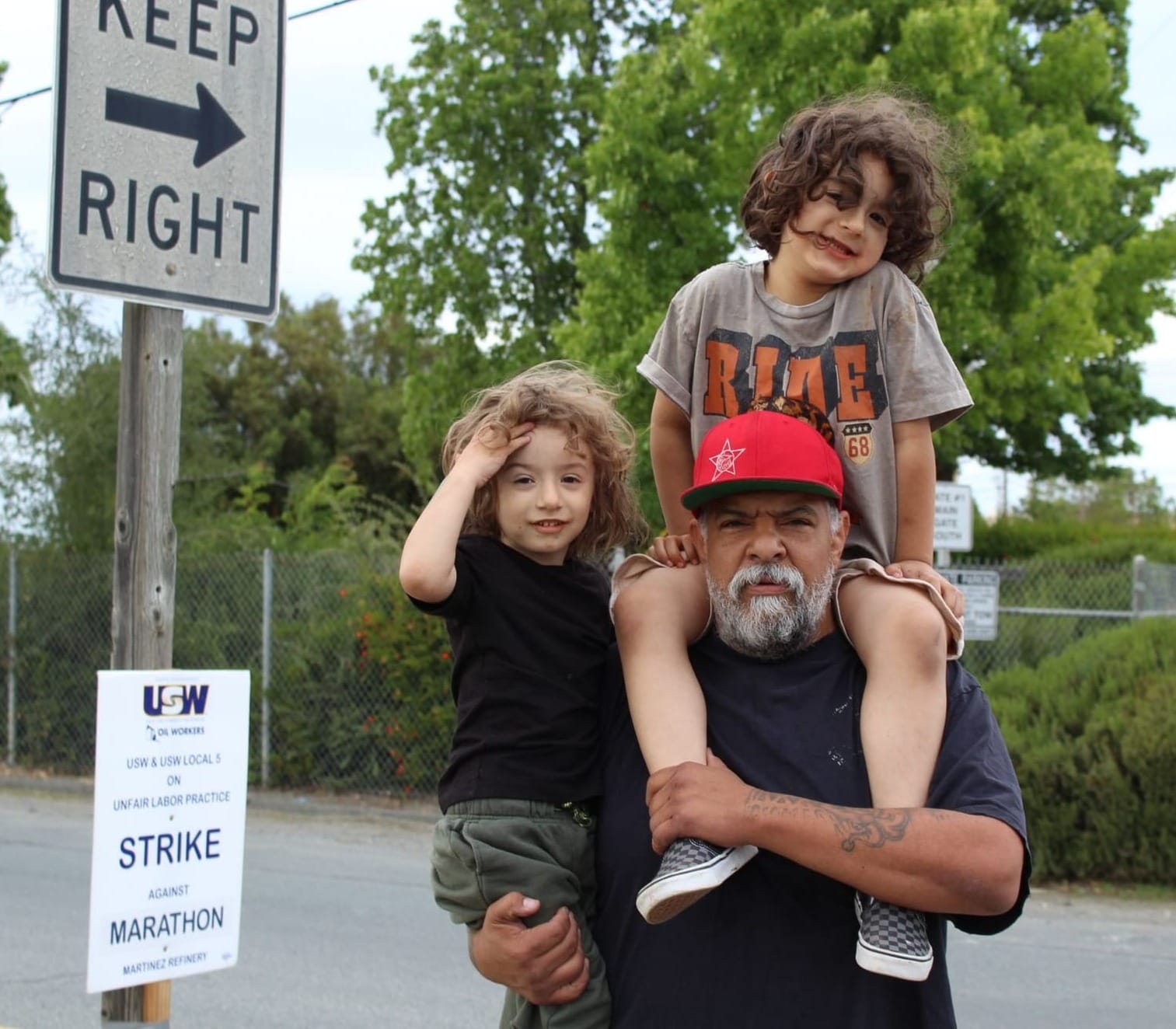
Fighting for the Same Old Contract
Yet, unlike most strikes and major work stoppages, this one isn’t for a wage increase, healthcare, or better benefits. Instead, workers walked off the job to keep the exact same contract that they have had for decades.
“When we went to the table on January 6 [2026], it was just to keep what we have. We weren’t asking for anything else,” explained Criff Reyes, one of the wastewater operators at Martinez Renewable Fuels, owned by Marathon Petroleum and Neste. Reyes has been employed by Marathon Petroleum, and a member of the United Steelworkers (USW) Local 5, since 1999, and USW Local 5 union chair since 2005.
The Marathon Petroleum-owned Martinez facility is home to just one of over 200 USW bargaining units across refineries, plants, pipelines, and stations in the National Oil Bargaining Program, or NOBP. The NOBP, started in 1965 to “push back against Big Oil,” sets the standard for wage increases, healthcare, and protections for over 30,000 oil workers in the union. One of these national standards is a four-year union contract. Thus, every four years, the company, in this case Marathon, and the union, USW, head back to the bargaining table to renew their contract.
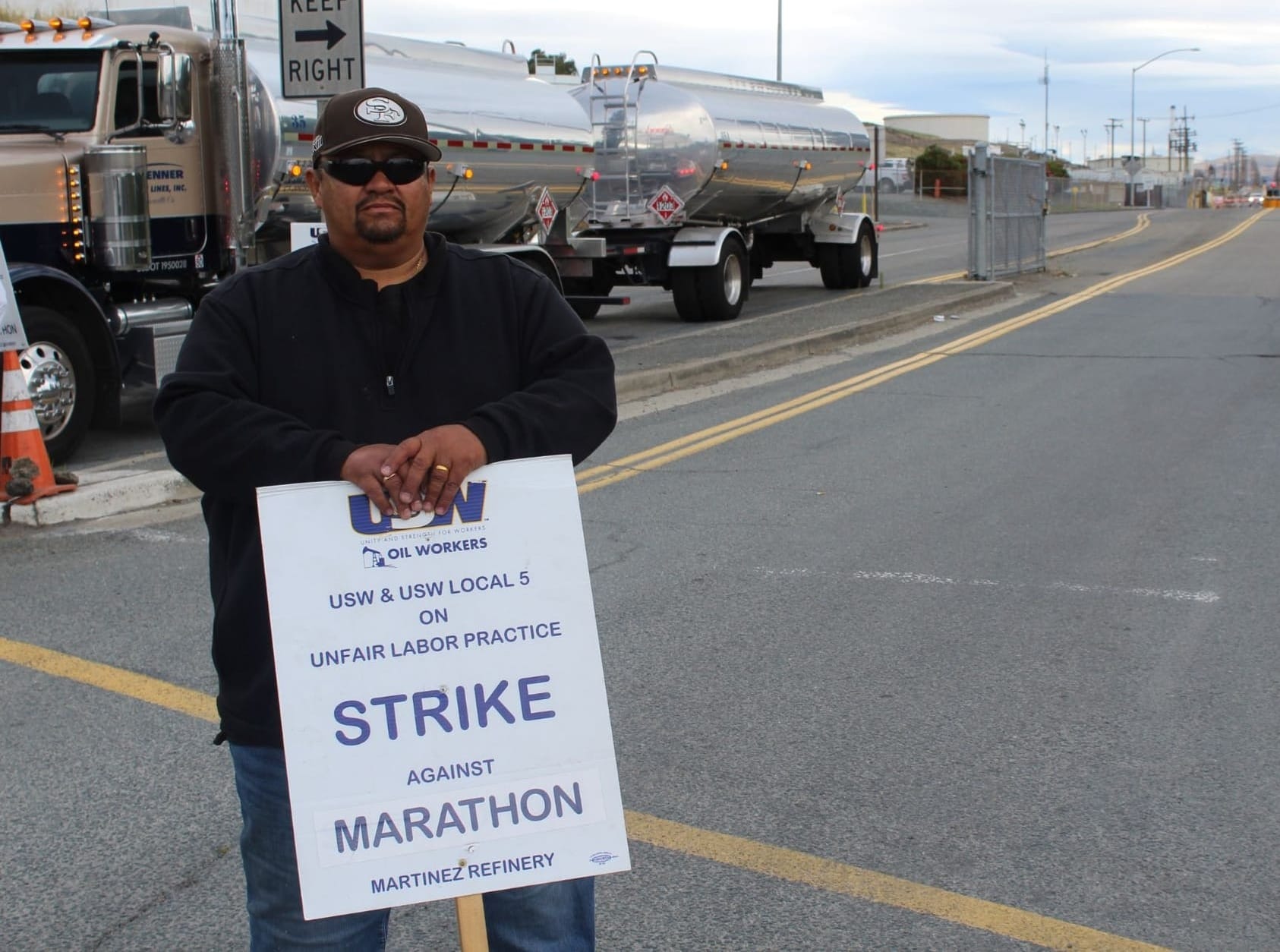
That fair contract involves a wage pattern that has remained consistent throughout past contract cycles: 4% raise the first year, 3.5% the second, 3.5% the third, and 4% for the final year — which would not quite cover the 3.8% Bay Area inflation rate determined by the Bureau of Labor Statistics.
However, in 2020, Marathon decided to transition the Martinez refinery to renewable energy. This means that the site now uses soybean oil, corn oil, and animal fat to create diesel instead of using crude oil. In the process, the site became one of the largest renewable diesel refineries in the world. While the transition was better for the environment, management saw this as an opportunity to attack its unionized workers.
Over 700 employees were laid off, including 345 unionized refinery workers. Even a year after the layoffs, nearly 30% of workers were unemployed. The remaining 50 or so USW workers were forced to handle the transition process understaffed, with many moving into brand new roles at the same time.
“It’s classic Marathon,” Rivera said. “They got their foot on your neck, and they just want to lean in a little bit more.”
Then, Marathon declared that the site no longer classifies as part of the fossil fuel industry — a move that could boost Marathon’s profits. Not only did the company begin to rack in “ tax credits per year for being renewable,” according to Criff Reyes, but they also asserted that the bargaining unit can no longer be part of the NOBP, and in turn, can no longer use the standardized union contract or be guaranteed its protections.
When the union hit the bargaining table in early January, just a few weeks before the contract expired on January 31, Marathon began negotiations by immediately rejecting the typical four year contract – a previously guaranteed national standard — instead pushing for only three years.
“[Marathon] is in there telling people that we’re out here because we’re being greedy and we want more money. And that’s not the case at all. This is not an economic strike. The only economic aspect to this is yes, we do want a four-year contract, which has been, historically, the norm,” explained Rivera. For workers, what is at stake is the nature of the green transition: will it benefit corporations or will the workers get their share?
Marathon Petroleum did not respond to Bay Area Current’s request for comment.
Two Months on Strike
After a few months of what workers call regressive bargaining, on April 27 at 12:01am, 120 members of USW Local 5 went out on strike. Fourteen workers were laid off shortly after the strike began.
Fast forward two months, and workers say that the company has yet to give them anything in negotiation sessions. In fact, they say that the company is only taking.
“It’s classic Marathon,” Rivera said. “They got their foot on your neck, and they just want to lean in a little bit more.”
Lean in they did. Marathon proposed numerous stipulations in exchange for maintaining a four-year contract.
The first was that the company would be allowed to ask operators to come in four hours early or stay four hours later than their assigned shifts with no notice. As for the lab personnel, they may be asked to undergo six-hour shift holdovers, meaning any employee may not be released at the end of their assigned shift due to unforeseen circumstances and/or delays. As a result, some operators may be held for up to 18 hours.
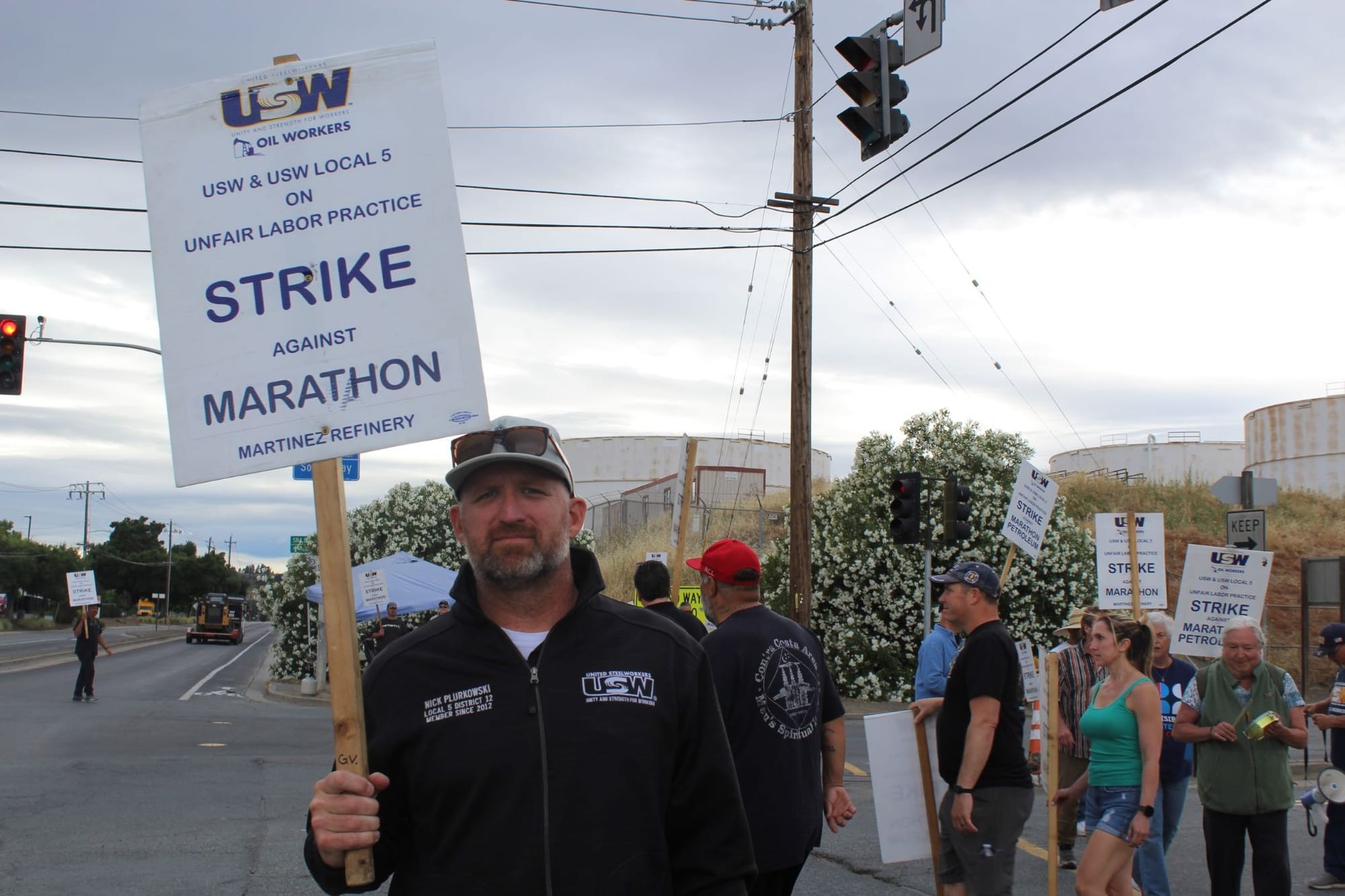
“Imagine driving after 18 hours. You’re actually driving like you’re drunk. Imagine getting into an accident after 18 hours of work, hitting a family, a child, a new driver. You’re putting the community in danger,” explained Criff Reyes. “And how productive can you be running 16- or 18-hour shifts? You’re going to be unsafe. You’re going to cause accidents.”
This isn’t the only change Marathon seeks to implement.
Back in 2019, when the refinery was transitioning to renewable fuel, Marathon and USW came to an agreement that on the sixth and the seventh day that operators had to work continuously, they would be paid double time. This was to stop “the bleeding of people to PGE or Tesla,” explained Rivera, who recalled that so many oil operators were quitting due to excessive workloads, often working weeks straight with no days off.
“It was not uncommon for somebody to be out here six days in a row, ten days a row, thirteen days in a row, 24 or 25 days in a row,” recalled Rivera.
“We built this monster off of our backs and our blood and our sweat and tears."
The signed agreement between Marathon and USW for double pay worked. It boosted morale and operators stopped quitting. However, that agreement expired on the same day as the union contract, January 31, 2026, and Marathon now claims that they don’t have to continue the policy.
“They’ve been steadfast that no, they’re not going to honor that sixth and seventh day that they gave us for building this refinery for them so that they could make this money hand-over-fist, and have three processing units that could put out 700 million barrels a year,” said Rivera. “We built this monster off of our backs and our blood and our sweat and tears — missing my son’s band practices and not being able to take my daughter to the mall and not being there to give my son a breathing treatment when he was struggling with his respiratory issues. We built this place, and this is the thanks we get.”
As if to make matters worse, on June 2nd, Marathon announced that 46 more workers would be laid off, and thus not return to the workplace at the end of the strike.
This mass layoff, which workers pointed out would not be based on seniority but by position, would not be the first since USW went out on strike. Marathon already announced the layoffs of all fourteen maintenance team members on April 27.
“Their explanation for the 46 jobs is that it’s a financial burden for them. That it’s costing them $6 million to have those 46 jobs,” said Criff Reyes. “If we want to talk money, Marathon made $12 billion last year. This site alone made $6 billion last year. They make $11 million a day. These gasoline trucks that come in and out of here cost $55,000. A ship filled with gasoline that comes in costs a little over $50 million. That’s how much money they’re making. And our strike is not about money. We want to keep what we have.”
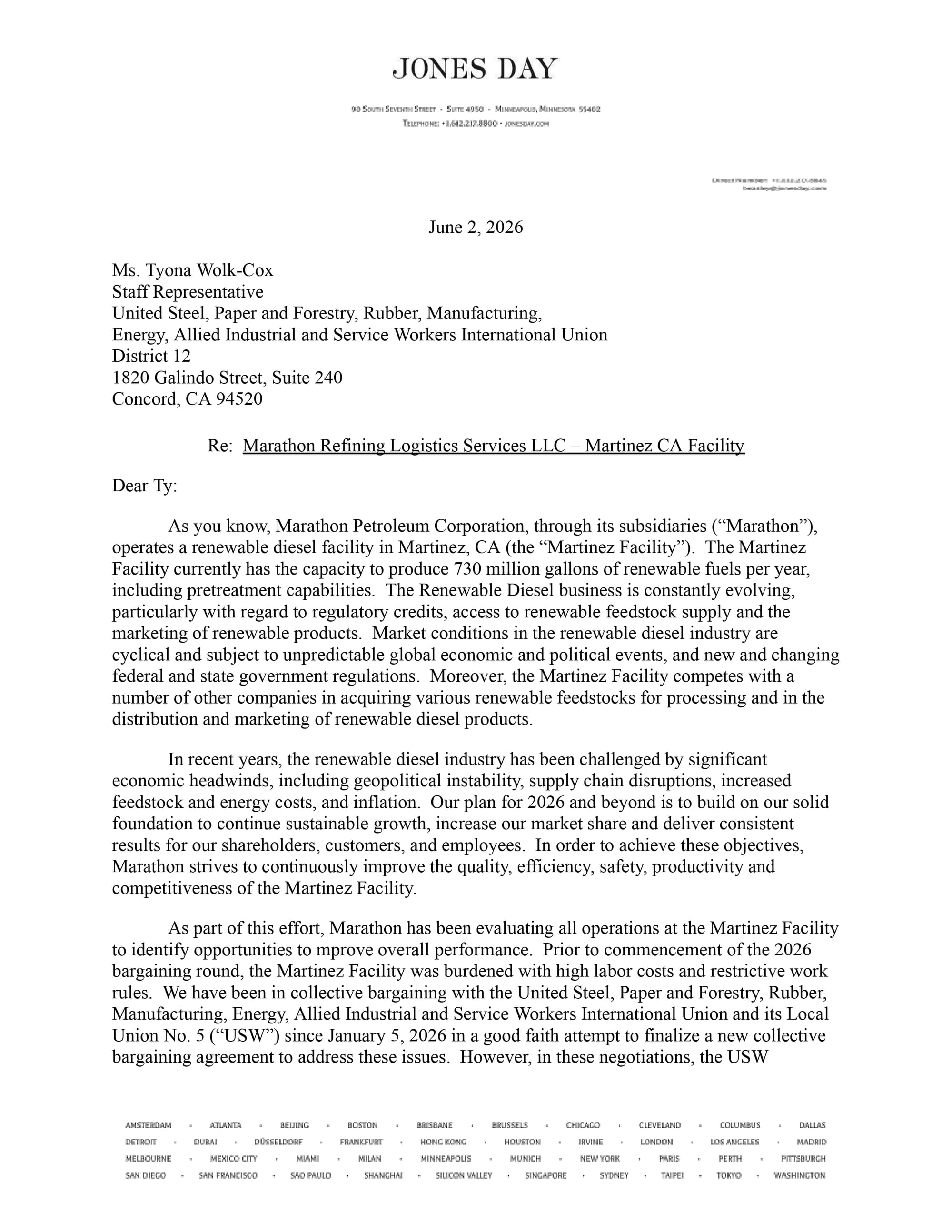
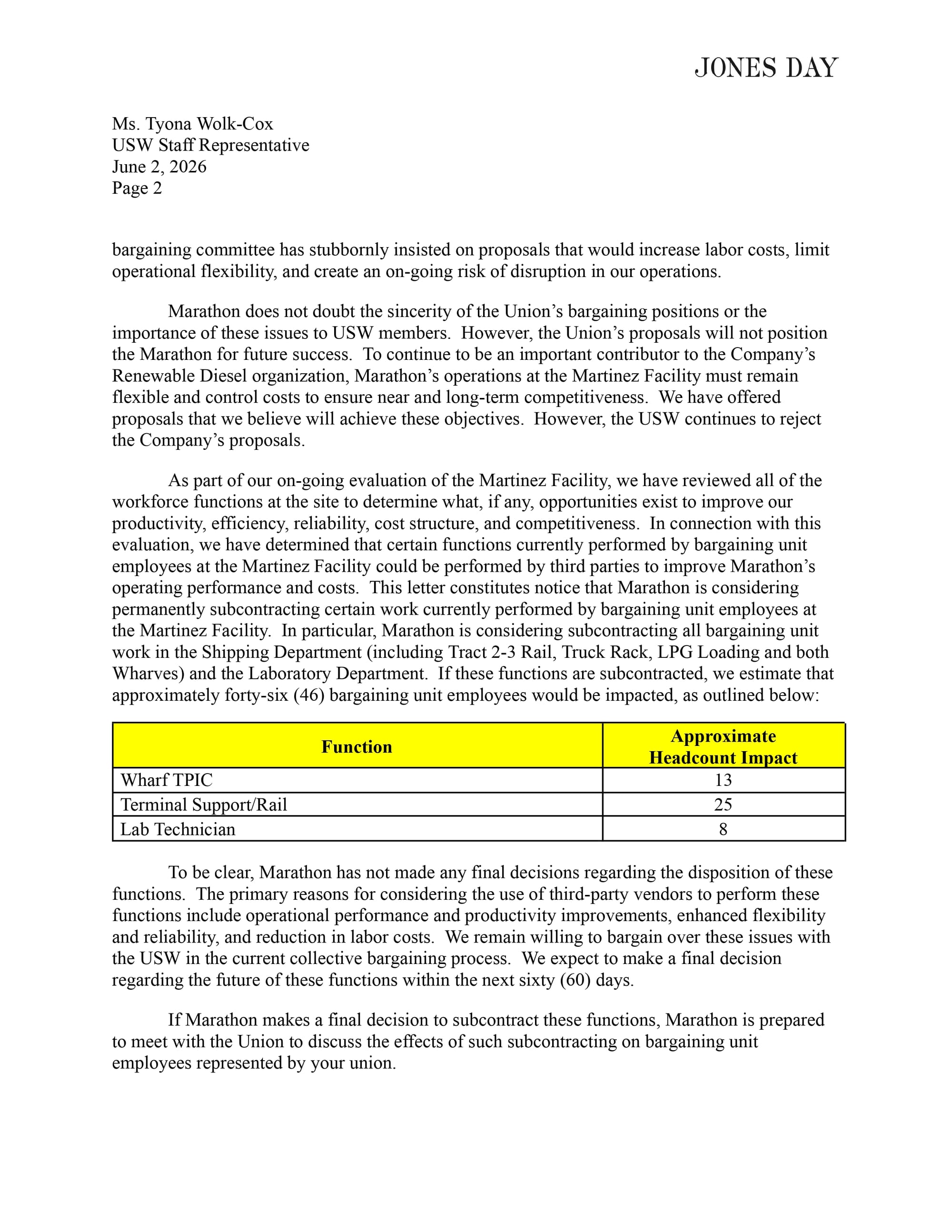
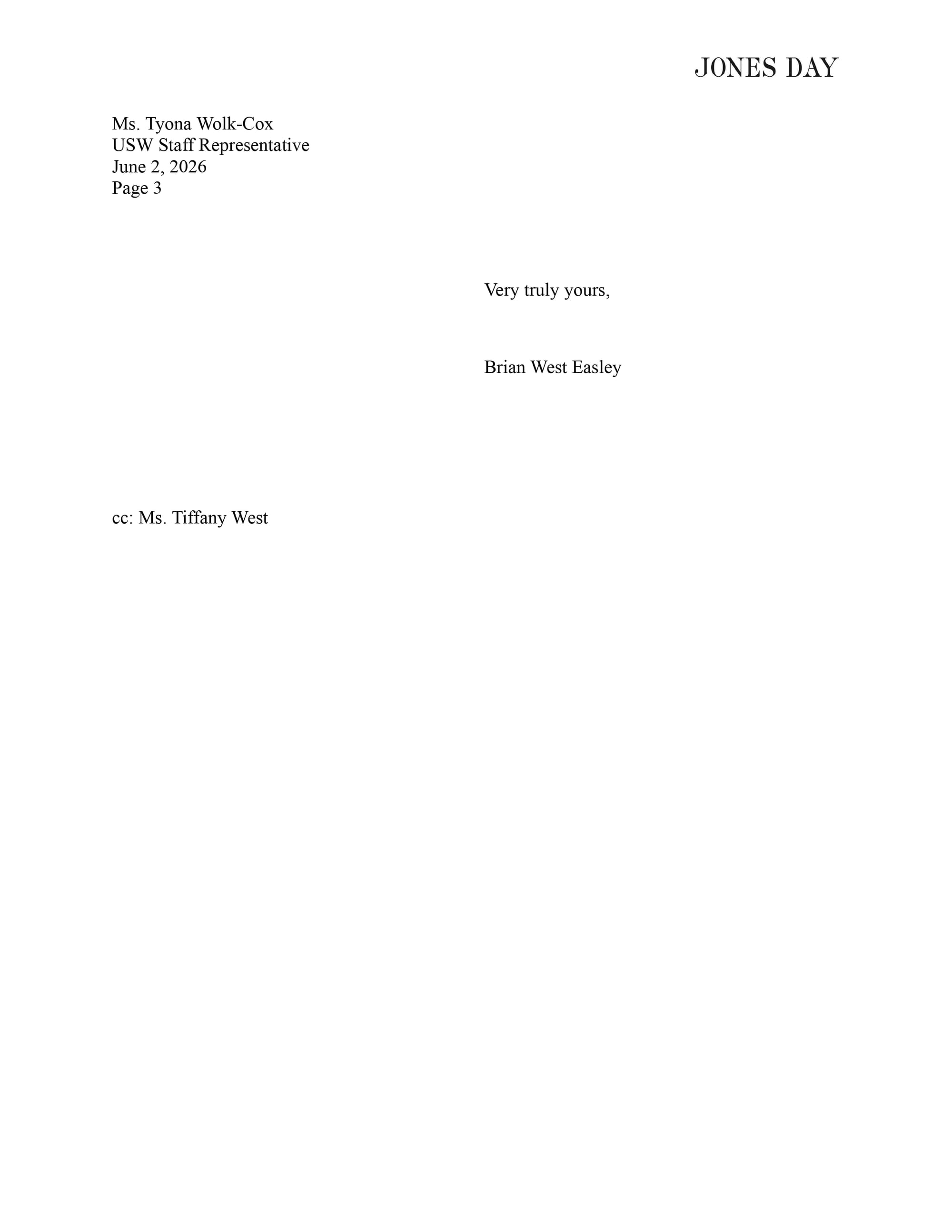
June 2 Layoff Notice.
For clarification: Marathon earned $12 billion in EBITDA, earnings before interest, taxes, depreciation, and amortization.
Unsafe Working Conditions
The reduction in staffing in maintenance and operator positions sparks not only anger, but fear for the workers out on strike, who recalled a catastrophic incident on November 19, 2023, when their coworker and fellow USW member, Jerome Serrano, was critically injured.
Serrano had been working on a furnace that was recently rebuilt in Marathon’s transition to renewable energy, when it began overheating due to a ruptured tube. The sole worker caught in the fire, Serrano suffered third degree burns on over 80% of his body.
“He will never be the same,” said Reyes. “So whether it’s fossil fuels or corn oil, it’s still hazardous. Flammable. High pressures. High temperatures. It’ll still hurt somebody and change somebody’s life forever.”
“We’re blown away that...this management here and corporation have the audacity to insinuate that they can reduce staffing levels when they just burnt a human being almost to death."
USW Local 5 emphasized that because California’s process safety laws for refineries only regulate sites using petroleum and not renewable energy, there is no obligation for companies like Marathon to follow the state’s safety laws — leaving workers, like Serrano, without adequate protections.
“We’re blown away that this place and this management here and corporation have the audacity to insinuate that they can reduce staffing levels when they just burnt a human being almost to death,” Rivera emphasized.
Now, with over 100 operators out on strike, workers say that the refinery is more dangerous than ever.
Managers = Scabs
To fill the positions, Marathon contracted out employees from other sites across the country, including Texas and Southern California. However, the operators out on strike say the site remains far too understaffed to run properly or safely.
Operators have been informed by the drivers of gasoline trucks going in and out of the Martinez site that they have been forced to load their own vehicles because there were no individuals present to assist them at the truck racks. Usually, it is the job of up to two USW operators to unload the trucks. This has resulted in an ongoing Occupational Safety and Health Administration (OSHA) investigation, according to workers on strike.
On top of this, operators say that the contracted employees mostly come from managerial positions with less expertise and training.
“We are the experts on that equipment in there. If you combine the time that our members have been in there, you’re talking about hundreds of years of boots-on-the-ground experience” Rivera said. “Marathon is so desperate to make that next dollar of that next barrel, they’ll just sign them off and say yeah, he’s qualified.”
The training process for an operator at the Martinez facility is highly intensive, involving six to eight months of training, often at off-site training facilities, including fire training every year, hazmat training and, for some, additional exams that take months to qualify and train for.
“These scabs or managers are just jumping into the jobs without having any of that training,” said Reyes. “It’s completely dangerous. They don’t know what they’re doing. And flaring is one of the signs that shows that they don’t know what they’re doing.”
“Flaring” is a term used to describe a gas combustion device used at refineries or plants to burn off flammable gas during unplanned overpressuring of equipment. The controlled activity is used mostly for emergency purposes. Flaring events, in theory, should be extremely rare, as they often signify missing units, accidents in the workplace, or power failures. Flares generate risks not only to the workers inside due to the high fire risk, but also cause significant adverse health effects to the nearby community as it blows thick smoke offsite. On the line, workers pointed out not one, but two flares that have been ongoing for days. It is not the first flaring event that has occurred since the strike began.
“We’re scared for the community. It’s only a matter of time,” Rivera warns. “If they do have a big fire, who’s going to respond to it? Because all the firefighters are out here.”
Who Will Put Out The Fires?
All of the workers out on strike are also members of the Fire Brigade, meaning they are trained in preventing and managing potential fires on the refinery. Rivera says no managers inside are adequately trained to respond to a refinery fire in the way that the USW operators are. In addition, the brigade may be sent to other refineries in the area that are in need of fire management.
“We’re the fire department,” said Marwin Reyes, a Terminal Person In Charge (TPIC), who assists in loading vessels. He has worked for Marathon for 22 years. “If any refinery has a problem right now, we can’t go help.”
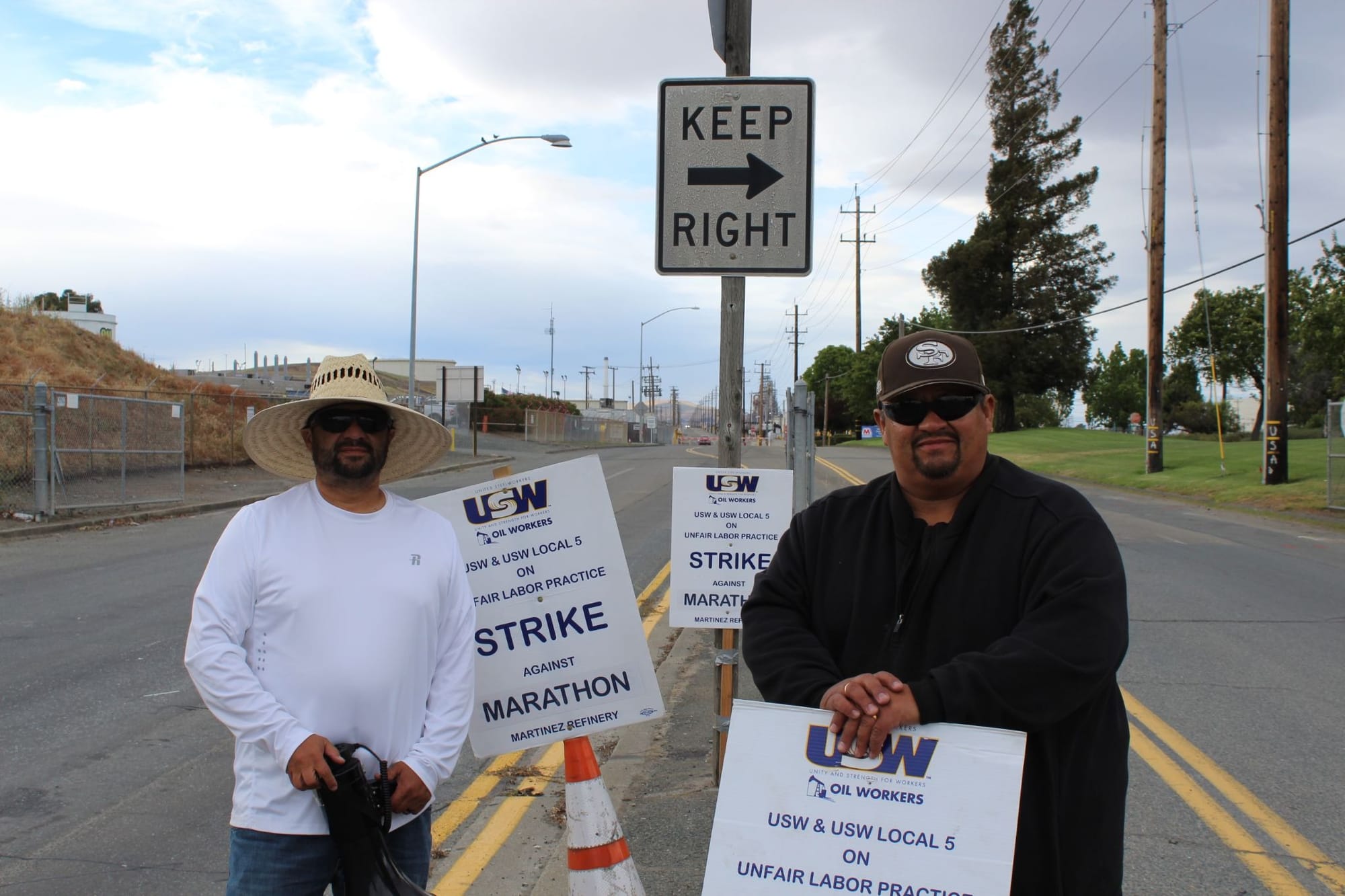
Contra Costa County is home to four of the five refineries in the Bay Area, meaning four refineries that could potentially need USW fire brigade support in the chance of a fire won’t have it as long as the strike continues.
This possibility was a reality about 16 months ago, when a disastrous fire occurred at a Petroplus, Blackstone, and First Reserve (PBF) Energy site in Martinez. “There were about seven [groups] out there in mutual aid, including us, and we could not put that fire out. That’s how intensive it was,” recalled Marwin Reyes, who was sent to assist the PBF refinery fire. The fire burned itself out for three days and cost $30 million in damages.
“The danger is another PBF, or another injury like Jerome,” Criff Reyes said. “The community is at stake, and so are the people in there. Whether they’re managers or scabs, we don’t want anybody to get hurt.”
The Greatest Safety Concern
It may be that the greatest safety concern isn’t regarding fires at all — it’s about water.
Tomas Rivera, beyond managing seven units on site and being a member of the refinery’s fire brigade, also oversees Marathon’s wastewater management. Every day, Rivera is responsible for neutralizing the refinery’s water before releasing it out into the Suisun Bay, an estuary connected to the San Francisco Bay and greater Pacific Ocean. Now that he and his team are out on strike, he said there are zero trained individuals managing the refinery’s extensive water emissions.
“The Bay is such a large beast in itself that connects to the ocean, so we’re talking massive, massive quantities in gallons of water,” Rivera explained. “On an average day in there I’m pushing 3.5 to 4 million gallons of water out. So this is the type of impact we’re potentially having on Suisun Bay. That’s the amount of water going out on a slow day [...] On a day where we have a big rainstorm or it’s been raining for several days, we might be pushing out as much as 18 million gallons of water to the Bay in a 24-hour time period.”
While Marathon’s attempts to break the strike have resulted in lax safety protocols that threaten to pollute the Bay, they have also reportedly spent excessively on flying in these contracted workers: paying for their housing, extra wages, and even food.
“It’s like an all-you-can-eat buffet,” said Rivera. “They’d rather spend [millions] to prove a point and keep that foot on our necks instead of just giving us our fair contract that we deserve.”
However, with their constant chants, family support, and worker solidarity, including Solidarity Monday pickets where supporters are encouraged to join, the USW members have high hopes and clear determination.
Workers await a formal update following negotiations between the union and the company on July 6th and 7th.
“I’ve been out here every day, I will be here every day until this is resolved,” stated Marwin Reyes, who arrived at the picket line at 2am and planned to leave at 7pm. “That’s what it takes. This is us fighting for our jobs. For our livelihoods. For our families.”
USW Local 5 encourages the public to visit the picket line at the intersection of Solano Way and Arnold Industrial Way in Martinez, and/or to send contributions to the strike fund to USW Local 5, PO Box 349, Martinez, CA 94553-0034.
Read next

Wildland Firefighters Are More Important Than Ever
We spoke to one of the frontline union workers in the climate change fight.


The Show Won’t Go On: SF Orchestra Walks Out Opening Night
Union workers face cuts amid eye-watering boss pay and refusal to dip into a $270 million endowment

Over 134 Days on the Picket Line at Martinez Renewables, and Tomas Rivera Won’t Give Up
“I'm just a dad that wants to go back to work.”

Cops Arrested C&H Strikers and Picketers. The Courts Go For Repression Again.
Ten picketers were arrested on July 21st during the strike at C&H Sugar. Their charges can be filed at any time within the next year.
