
French Students Proclaim “the End of the Contemporary Era”
A report from Current’s foreign correspondents in Paris and Marseille.
A report from Current’s foreign correspondents in Paris and Marseille.
Our advice columnist Pretty Good Advice works through a breakup problem.
Tenant fights have become a mainstay in the political landscape.

Jacquelyn Tran speaks with the host of "East Bay Yesterday" about curating a new labor-focused photography exhibition for East Bay Photo Collective.

Liam O’Donoghue does a lot of things. He is the voice behind the beloved podcast and newsletter “East Bay Yesterday,” as well as the Oakland columnist for SFGate. He’s also somehow a tour guide, a DJ, a zinester, and probably a few other things in between. Now he’s the curator of Visible Labor: The East Bay at Work, a photography exhibition at East Bay Photo Collective’s Chinatown gallery, Oakland Photo Workshop. When I sat down with him in his Oakland home, the recording started with him interviewing me. This guy doesn’t stop. Eventually we were able to compose ourselves and get to the good stuff — Liam and the curation behind Visible Labor.
Jacquelyn Tran: Tell me your name, who you are, and what you do.
Liam O'Donoghue: Absolutely. My name is Liam O'Donoghue. I have been the host of East Bay Yesterday for the last ten years. My tiny little local media empire. I host this podcast, I write a Substack, I also do freelance writing. I do boat tours, I do walking tours, I host a lot of events. I collaborate with people throughout the Bay Area. Bookstores, organizations, museums, et cetera. Also gotta mention the side hustle: I've been a DJ since 1999. Still keeping that going. Everything from warehouse parties to fancy wine bars in San Francisco and everything in between.
JT: Yes, and! And now you’re a curator...
LO: Yeah! This is my first time ever curating a photo exhibit. I take photos for my show, yada yada yada. I never studied the art of photography or had a fancy camera or anything like that.
JT: How did you land on Visible Labor: The East Bay at Work?
LO: My niche is local history, but I didn't want to do a show of just historical photos. I wanted this to be something that could engage current photographers and people currently working. When I'm doing my research, a lot of the time you see photos of politicians, famous people, and big events. It's rarer to find photos of people in their day-to-day lives, and a big part of that is work, right? Labor.
When I'm doing an episode, like last year about the cotton mill over in Jingletown, and I was able to find people actually working. That's gold. Not just the bosses on opening day, but the people. I just felt like, "This is an important document." Everyone takes photos when they go out to parties or birthdays, but you're not just usually like, "I'm doing my regular ass job today, I'm gonna document." I felt like this was seeding future archives for future historians, hopefully.
The more I thought about it, the more I felt that this theme makes sense now, especially in the Bay Area where we're constantly inundated with — I think Wendy [Liu] wrote about this for Current — advertisements that say, "Don't hire humans." Those evil billboards. We're inundated with these messages that humans are redundant. People are getting laid off. You don't want people as part of your supply-chain. I'm vehemently opposed to that viewpoint. Sure, we can make work easier, but the idea that people are disposable, that they're cogs you can just get rid of when you get a new, better cog. That's really appalling to me. I also wanted to have an exhibit that would celebrate people who are busting their asses to keep society running. There was a little flourish of that in the early pandemic days. What did they call them? There was a word for the workers...
JT: Essential workers.
LO: Thank you, essential workers. And it's like, okay, we cared about them for like a year?
JT: Clapping our pans at 7pm.
LO: Exactly. And now we don't care about essential workers anymore. You know, not every job is "essential," but whatever. All work has value. But I guess I shouldn't say all work has value, 'cause you know—David Graeber Bullshit Jobs, right? I wanted to celebrate the jobs that people are proud of. I was really happy with the response. People seemed to get it at the opening.
JT: I was so moved to see the show announcement and understood it immediately. I'm a photographer as well, and I understand that with this subject matter you could have approached this in so many ways. You can shoot factories without people, for example. In the images that you chose, you see the whole person. You're not fragmenting them to the concept of hands or tools. What were you looking for, and what made you select the images that you did?
LO: When we did the call out, we specifically said that we want people to be in these images. We didn't want posed workers, we wanted them to be natural. The photographers really understood the assignment, as the kids say these days. We got over a hundred submissions. We all got together — myself and most of the people from the collective — and projected the submissions on a big screen, going through each photo multiple times. We were pretty on the same page about what was speaking to us. We did want to have some diversity. There is a close-up of hands cutting some meat, or things that are further away and less personal.
I learned a lot from hanging out with the East Bay Photo Collective people. You don't want every photo to have the same composition. But on your point to how the exhibit felt personal — that's what we were most looking for. I've never curated a show. But I've been to a lot of museums in my life and seen a lot of photo shows. I feel that it's easy to walk past a row of photos.
I wanted photos that don't let you walk past them.
It's the same way I approach journalism. If something makes me curious, I want to dig deeper. In the visual viewer context, "digging deeper" means maybe stopping and looking and analyzing and thinking and telling the story in your mind. Imagining the story behind this photo. Who are these people? I wanted a show that people could spend a lot of time with.
JT: There's something deeply sentimental to your curation. Like with the bridge welder. Something comes through with an overt intention that you perhaps see in Dorothea Lange's work.
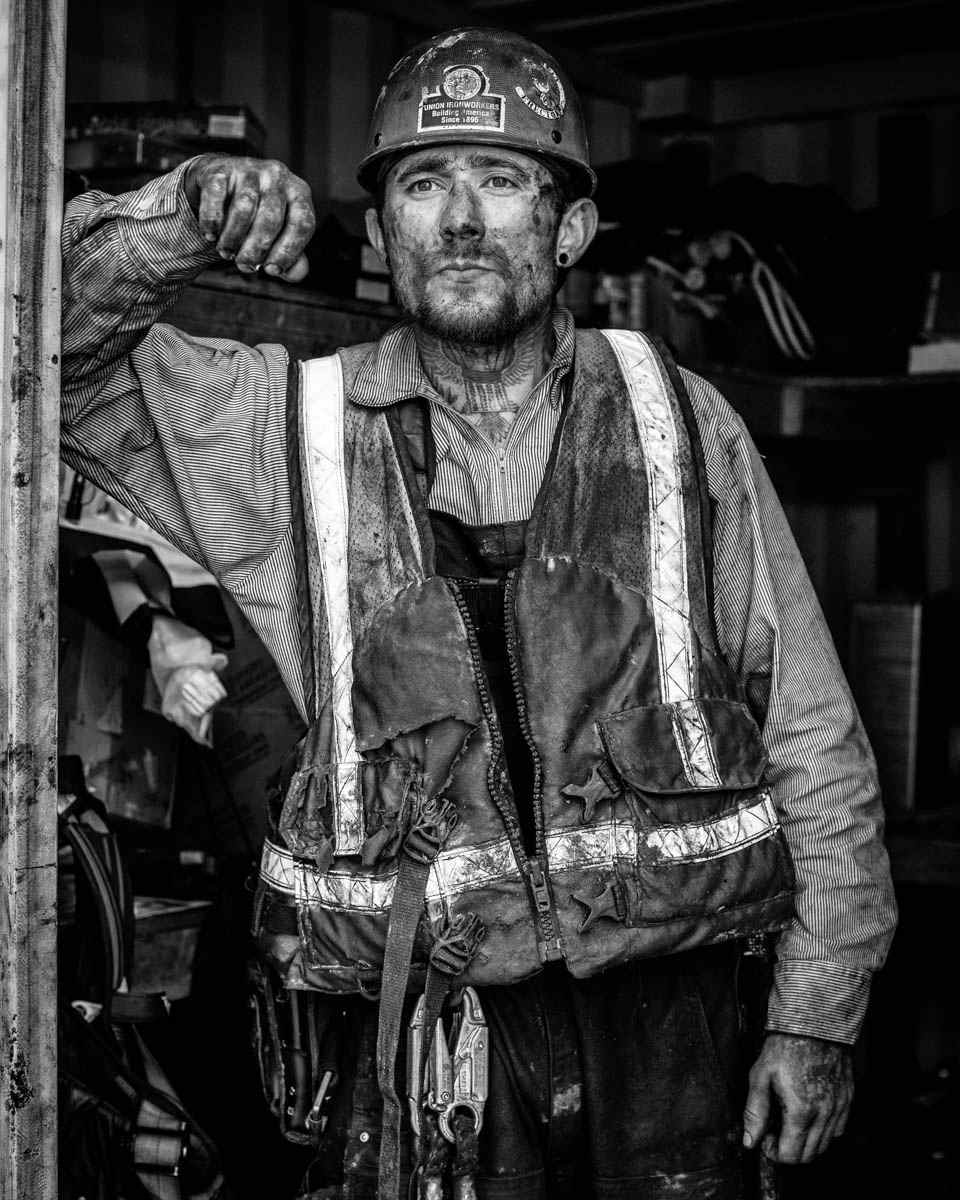
LO: Yeah, absolutely. My neighbor's sister is friends with Dorothea Lange's granddaughter.
I did an episode about Dorothea Lange a few years ago when the Oakland Museum was doing a show... I was so blown away by her story. I'd seen her photos but I didn't know her whole deal. Amazing woman. That episode was one where I felt that I learned so much. I think about her all the time.
JT: It comes through. Curation isn't just this cold, academic thing. You clearly have something to say. Was there a specific piece you wanted to talk about? Not to make you choose one, sorry...
LO: The one we chose for one of the postcards with four carpenters moving a wall really jumped out for everyone. You can really imagine the story behind it. Each person's a character. There's a big guy who's maybe the veteran helping everyone. There's a smaller guy, maybe he's new on the job and holding back. This is what solidarity looks like. They're literally building. It's like an action shot. It's hard to tell where they are, but you can imagine the Oakland or East Bay landscape behind them. This jumped out immediately. It's interesting that in the exhibit, most of the artists framed their own photos in black frames, but this person used a wooden frame that matches the photos. It's a trippy effect.
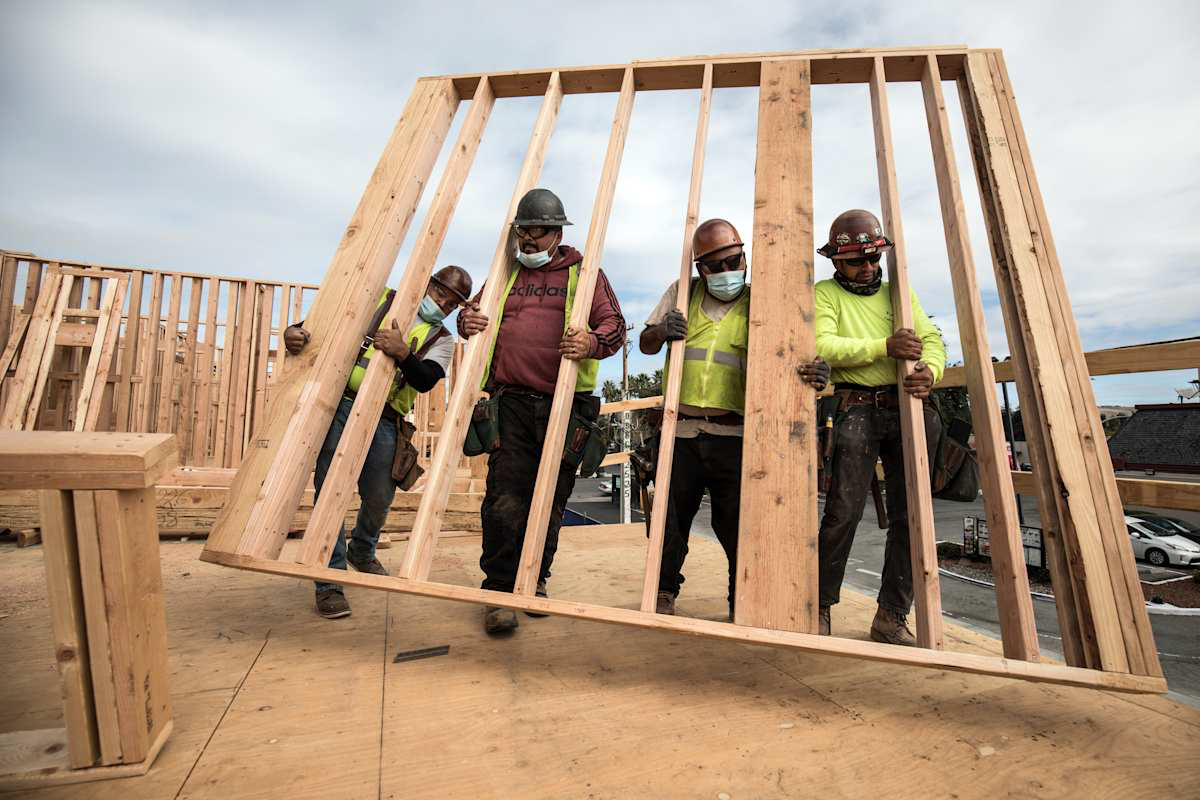
JT: Very immersive.
LO: There's one that might resonate with Current... It's of a worker hammering a ship propeller. There's something very Soviet about it.
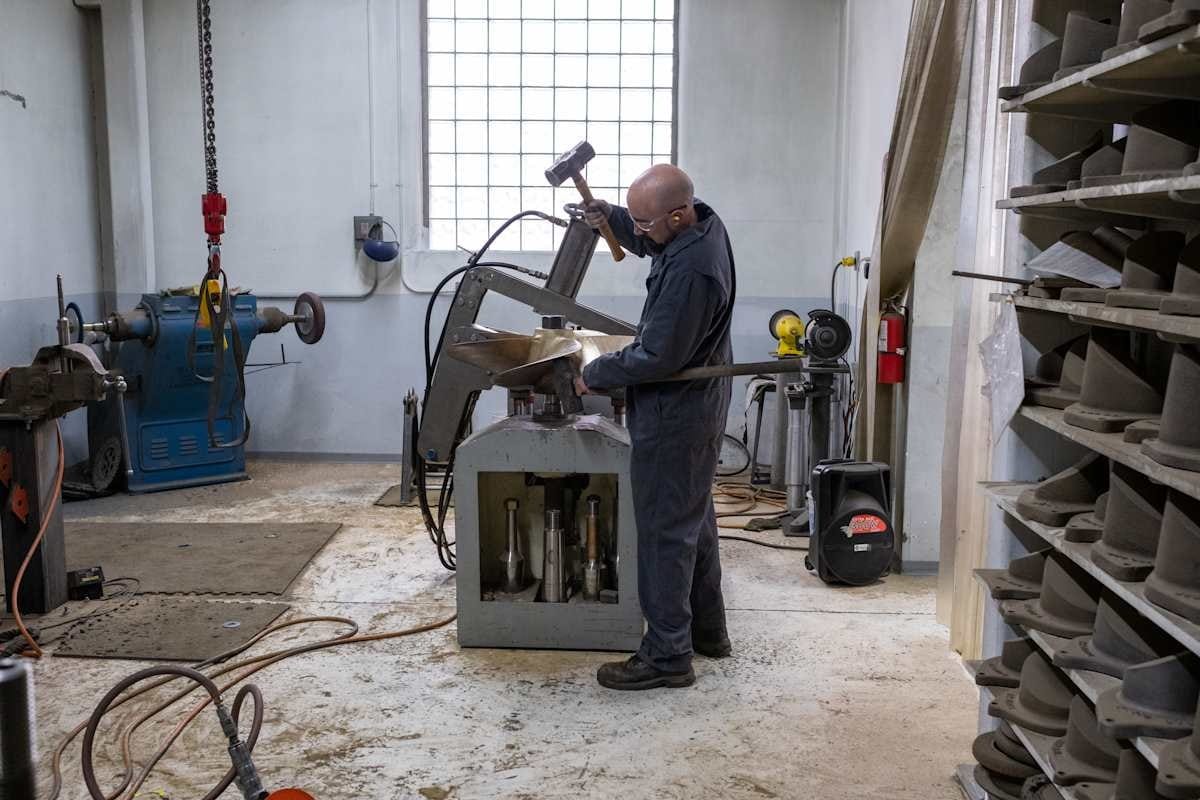
(Explosive laughter)
JT: Oh my god, I love.
LO: The window is perfectly framed with the hammer. The other thing I really enjoyed about the exhibit... There's something almost nostalgic about it. There used to be heavy industry in the Bay Area.
JT: Especially the East Bay.
LO: I don't want to overly romanticize that because there were a lot of environmental problems that went along with it. It does harken back to this era where the whole waterfront was covered by people doing work like this.
JT: There's a sick truth that gets revealed when you focus on labor, you know? It's not all romantic, like you said. There's worker safety, environmental concerns, et cetera, et cetera.
LO: That's what I was thinking while doing an East Bay Yesterday episode last month on the Lawrence Livermore nuclear laboratory. I interviewed this lady who got cancer from working there. She was like, "I don't really regret working there because it allowed me to live here and support my family. Yeah, I had breast cancer and I might have cancer again right now and I gotta go to the doctor next week. I liked my coworkers, it was close, it paid well." You put it well when you called it a "sick truth."
JT: That's what all photography is to me, at least the good stuff.
LO: I never thought of it that way. That's interesting.
JT: Another question I had… What is uniquely East Bay about the exhibit? It all feels so ‘East Bay.’
LO: I think there's a couple elements that feed into that. We didn't want every photo to have a recognizable location, but there are a handful that do. Matty Lynn Barnes took a photo of a camera man at the last game the Oakland A's played at the Coliseum. That's instantly recognizable for people who grew up around here.
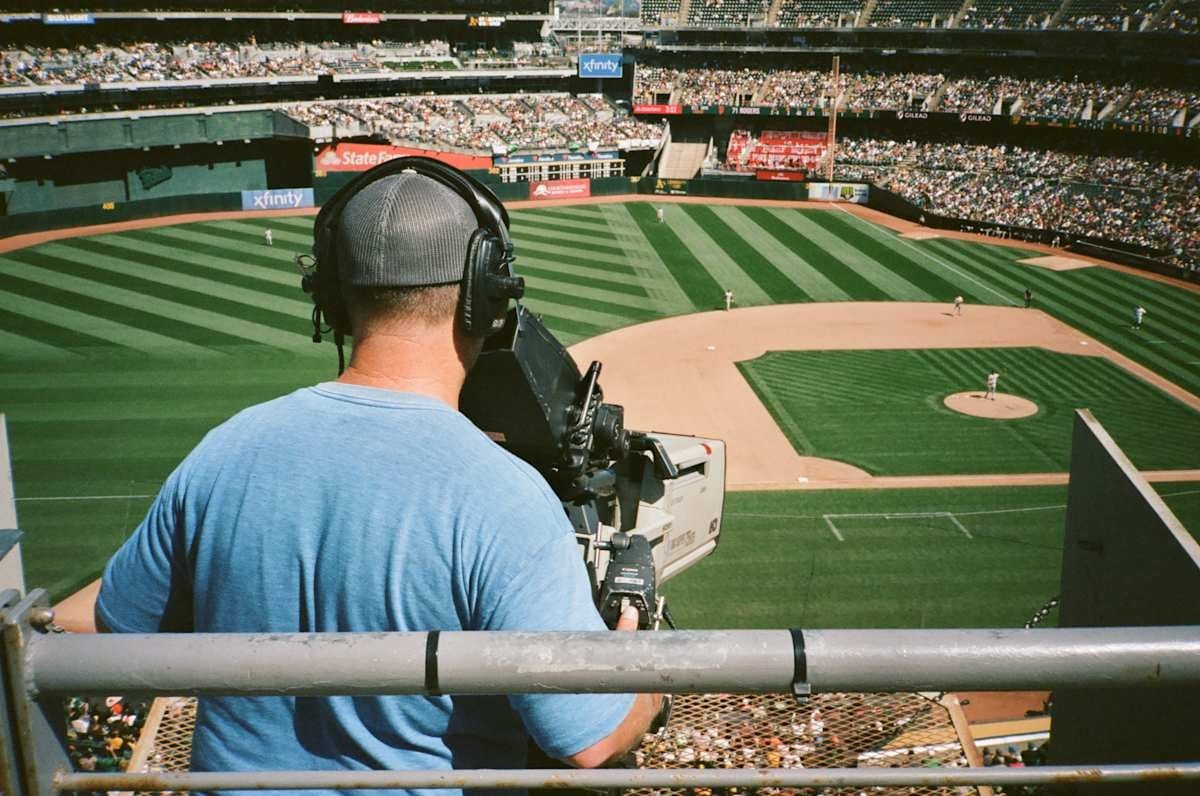
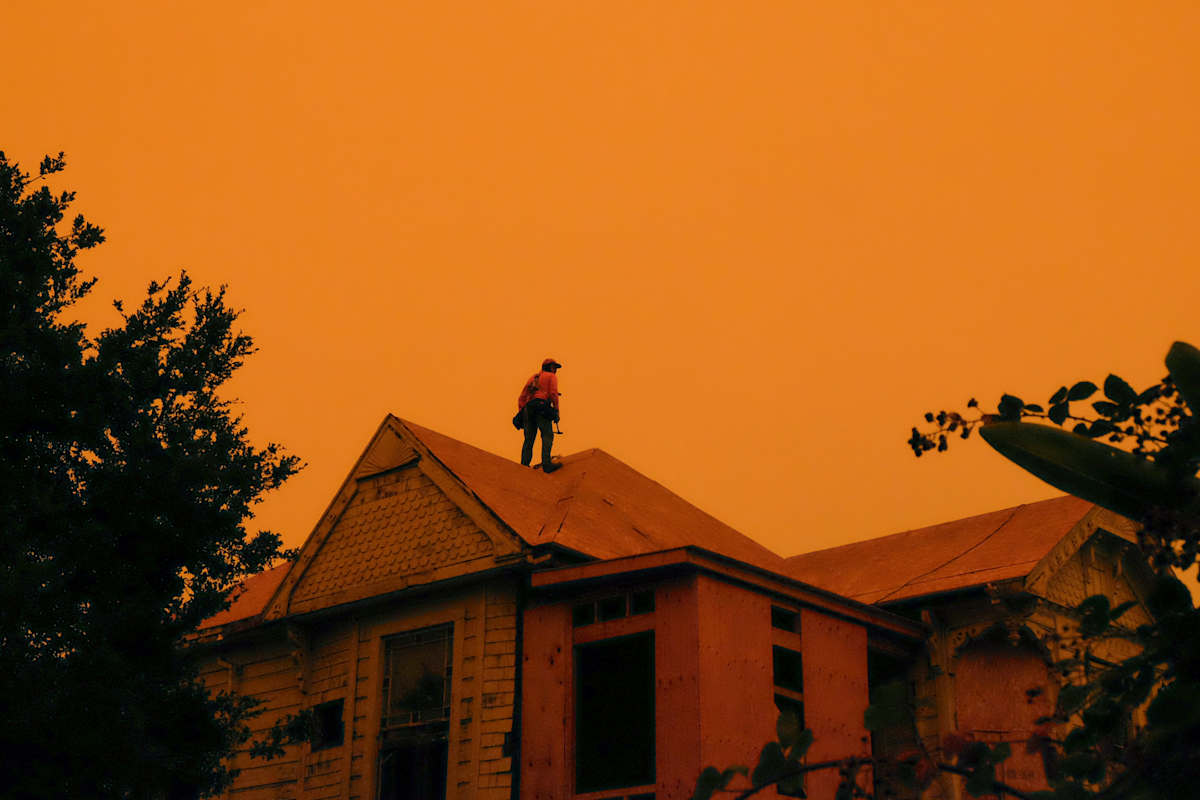
There's another photo of a person standing on a roof amid a red-orange sky. Anyone who was around here four years ago remembers that horrific day.
Even something innocuous, like in one photo where you can see brown shingles on a home. It's very East Bay. It's not always, "I know this house," but if you've walked around East Bay neighborhoods, you've seen something like it.
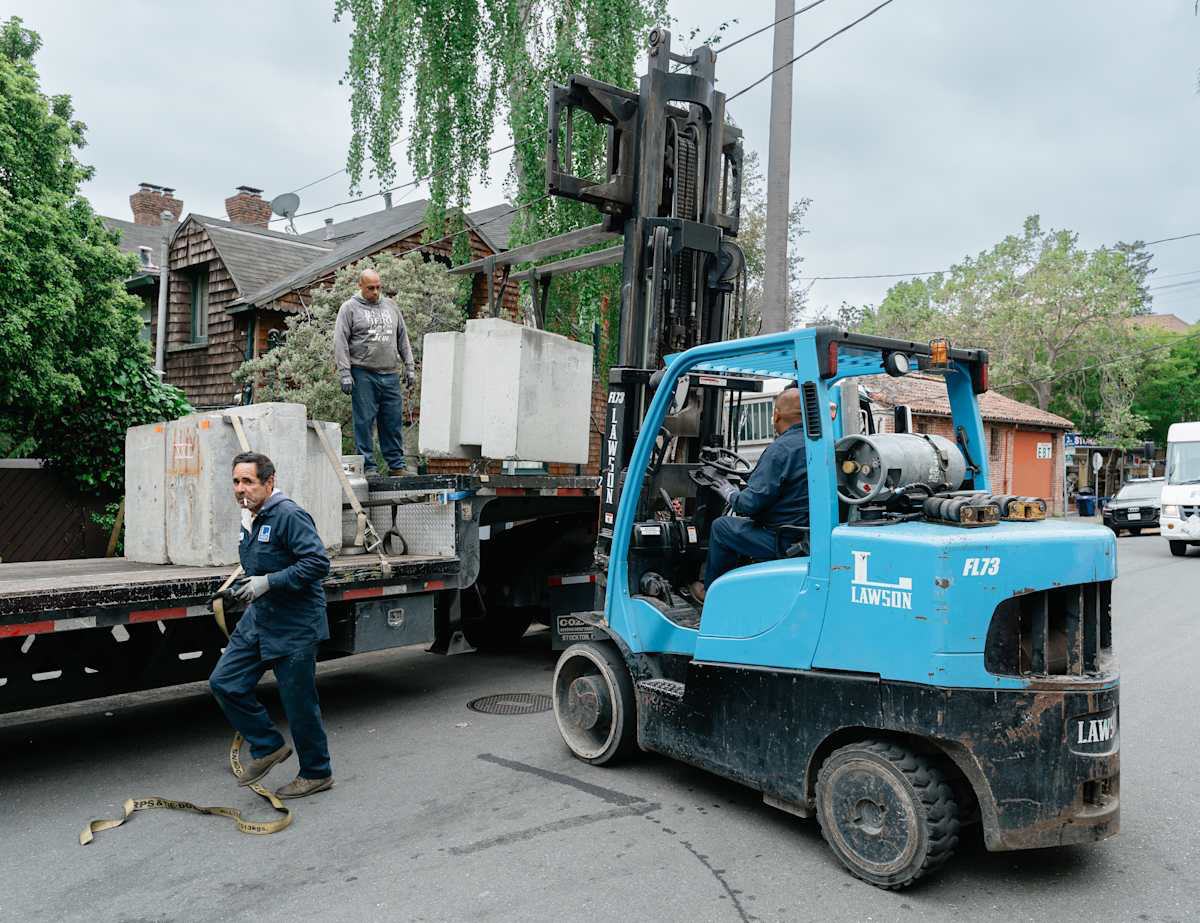
I think the recognizability is also due to the diversity... You know, the East Bay is a melting pot region. There's a lot of ethnic diversity, but also a lot of labor diversity. There's people in high-tech science labs and people fuckin' like, hacking apart scrap metal. We've got all that here. I think every person who came to the exhibit felt that they were familiar scenes. Even if you've never been in a metal welding shop or the back of a bakery, it feels rooted in the East Bay, and it's very intentional.
JT: It comes through. Especially nationally, internationally, it's very easy to characterize the Bay Area to San Francisco. You know what I mean?
LO: Not only do I know what you mean, but that was on our minds. So we fuckin' rejected all the San Francisco submissions. I put that in the call-out, "East Bay only!" And we got some submissions that were really good, but I could tell they were taken outside of the Asian Art Museum in Civic Center and I was like bzzzt.
JT: It is so nice to see somebody say, no you guys, the algorithms are wrong. It's not just AI bros.
LO: They get enough attention.
JT: They get enough attention!
LO: They don't need a little gallery in Chinatown Oakland to feel good about themselves.
JT: While going through the website, I noticed descriptions for the photos. Could you tell me about those? Are they written by artists? Why have the artist explain their work?
LO: Yes, they're written by the artists. We asked for the descriptions in the submission process. I think that was my journalism brain kicking in. My historian brain. Context is crucial, especially in this context-less society that we live in now. Then also, seeding future archives. If you're a historian, you want to understand where this was taken, who's in this, when, what's the story behind it. Some people might be fine walking through a photo gallery and not knowing anything about the context, but that's just not me.
JT: There's so much mythmaking and plain wrong storytelling about our region right now. I felt so touched to see the text in accompaniment with the pieces. It's a real, hard assertion of what you want to say and what the artist wants to say.
LO: It is what the artist wants to say. They wrote it, not us. It's the same with East Bay Yesterday. The reason I transitioned from print journalism to the podcast is because I want to share these stories, but I don't want to be the one driving the narrative. I want to create a platform where people can create their own stories, where their voices are at the forefront. When you write an article you'll interview someone for an hour or a day, then you may use three quotes. You leave all that great stuff on the cutting room floor. I don't want to do that.
On May 22, curator O’Donoghue will moderate a panel discussion with Bay Area photojournalists Amir Aziz, Charles Russo, and Jane Tsyka at Oakland Photo Workshop as part of the closing reception for the exhibit. Learn more about the event here.
Visible Labor: The East Bay at Work runs from now through May 24, 2026 at East Bay Photo Collective’s gallery, Oakland Photo Workshop (312 8th Street Oakland, CA, 94607). The gallery is open Fridays and Saturdays 12-6pm, and Sundays 12-3pm. The exhibition is available for online viewing here.
This interview has been edited and condensed for clarity.

We spoke to one of the frontline union workers in the climate change fight.


Union workers face cuts amid eye-watering boss pay and refusal to dip into a $270 million endowment


In a city dripping with cash, San Francisco can’t get its kids to school.

