
AI Startup Launches Campaign To Exploit Humans, Ethically
Contrary to what Scale's 7-figure ad campaign claims, the company's ethos is anything but “centering humans.”
Contrary to what Scale's 7-figure ad campaign claims, the company's ethos is anything but “centering humans.”

In Against Tech Oligarchy, two leading labor organizers chronicle the past decade’s tech worker movement.
We spoke to one of the frontline union workers in the climate change fight.

AFSCME 3299 open-ended strike averted, union overwhelmingly votes 'yes' on contract with UC system.


After nearly two and a half years of negotiation, 96% of AFSCME (American Federation of State, County and Municipal Employees) 3299 members voted in favor of a new contract with the University of California’s management. AFSCME workers had planned to go on strike last Thursday, May 14, but the union reached a tentative agreement early that morning, calling off an open-ended strike hours before it was set to begin.
AFSCME 3299 represents over 40,000 service, patient care, and other workers across the University of California (UC) system who have been working without contracts since July and October 2024, when prior unit contracts expired. The union has undertaken five limited strikes across the UC system since negotiations began in January 2024, alleging that the University had imposed unlawful terms, including increases to healthcare costs and bargained in bad faith. The UC denies these claims.
Union members voted on the proposed contract between May 19 and 21. The contract will run through November 30, 2029, and grants workers a $1,500 signing bonus, guaranteed raises, and an increase in the minimum wage to $30.10 by April 2029 — the largest pay raise ever for the lowest-paid workers in the UC system, starting from the current baseline of $25. Other key wins for workers include job security protections, safety measures for patient care workers, and caps on healthcare premiums.
The university system faced tremendous pressure to reach an agreement with workers ahead of commencement ceremonies. In a statement to UC President Milliken and the Board of Regents, Dr. Alex Hanna and other invited commencement speakers refused to cross the picket line, urging the university to “come to the table with service and healthcare workers” before UC Berkeley’s commencement on Saturday, May 16.
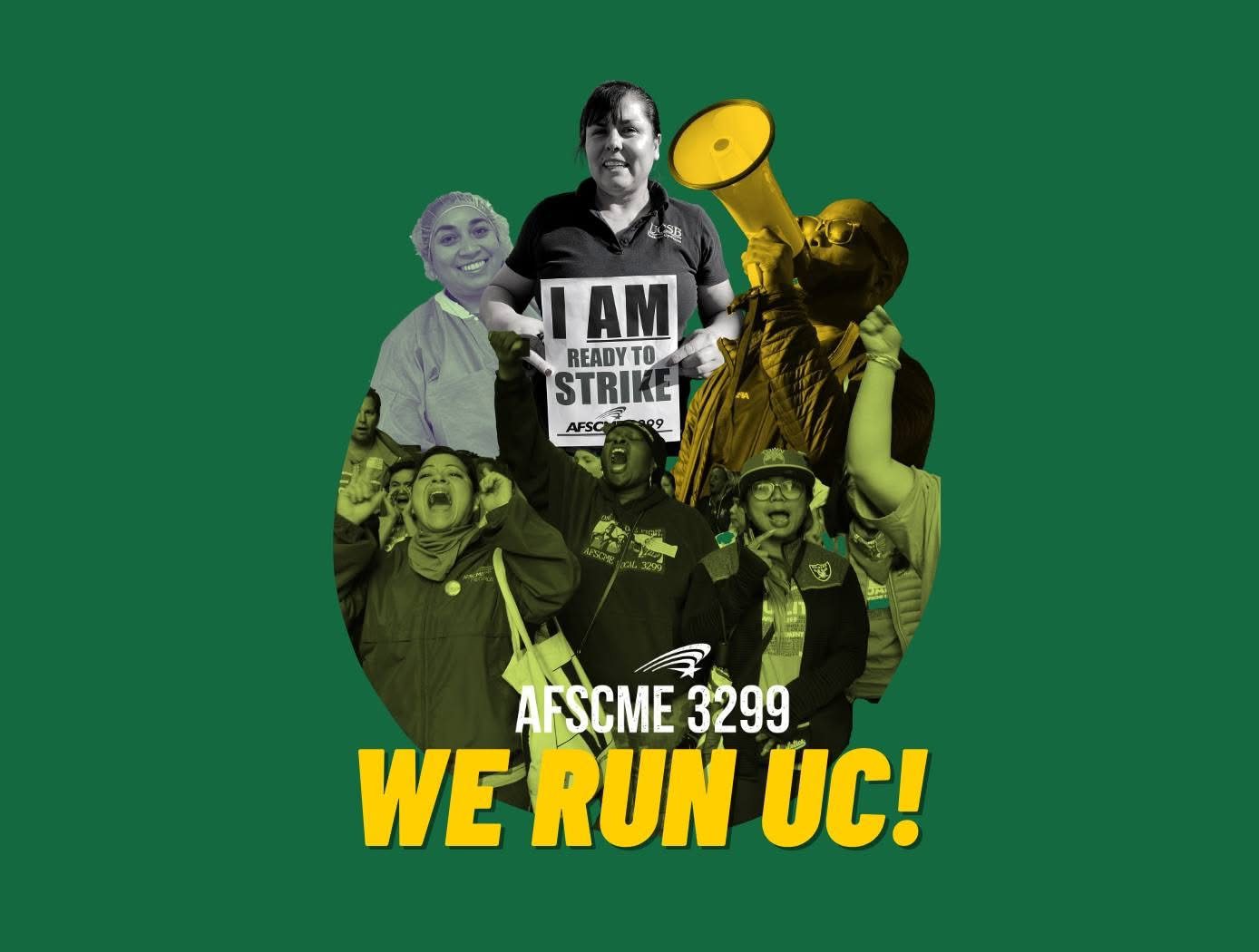
Todd Stenhouse, spokesperson for AFSCME 3299, told Bay Area Current that the tentative agreement was “transformative.” Stenhouse said that a major hurdle on the path to a contract was the UC’s insistence that the system did not have the money to meet the union’s demands. “They always cry poverty when it comes to their frontline workers,” he said.
He considers this agreement a step towards allocating the UC’s resources — over $60 billion in reported revenue in 2025 — more fairly. “I feel like we were successful in pointing out that the UC does indeed have the resources to make different choices as it relates to its frontline workers, whether that's on wages, health care, housing, or all three. It is quite clear that they are an institution of abundance that has the ability to make choices that are responsive to the affordability needs of its frontline workers.”
Carlos Mauricio Blanco began working as a storekeeper at UC Berkeley in 2012. Of the tentative contract, he said, “I think it's about time. I think it's awesome. I think a lot of people were waiting on it. I think it's great for families.” Blanco’s main concerns, he said, were cuts to Medicare and ensuring that wages kept pace with inflation — concerns he feels the tentative contract successfully addresses. “The remaining concerns… one was the housing. We don’t want free housing, right? We want just a small loan that we could pay off.”
As with many other unions, housing has become a flashpoint. AFSCME 3299 filed two Unfair Labor Practice charges against the UC, one in relation to the UC’s refusal to bargain over housing benefits, which are absent from the tentative contract. AFSCME’s website includes housing assistance in its list of demands: “Since 2020, UC has given $1.6 billion in housing assistance loans to its higher earners. If they can do it for those on top, they can do it for us. We’re the ones commuting long distances and struggling to pay for gas, parking, and putting food on the table.”
Not all workers are satisfied with the contract. The Berkeley-based group UCB Student Workers issued a statement on the tentative agreement and the union’s decision to call off the indefinite strike, calling it “a tremendous missed opportunity to display the power of student-worker solidarity at what is both the country’s largest public university and California’s largest employer.” “AFSCME’s housing assistance proposal, a central issue throughout the contract fight, is nowhere to be found,” the group writes.
The union aims to secure housing benefits separately, through a ballot measure that will, if passed, require the UC to establish a down payment loan program for first-time homebuyers with at least five years of tenure as UC support staff. Amid rising inflation and California’s cost-of-living crisis, workers are struggling to find secure housing, leaving some UC employees to live out of their cars or in shelters. AFSCME 3299 reported that 80% of its members cannot afford a one-bedroom close to their place of employment. In 2021, the union secured $5 million in housing assistance for low and moderate-income UC Davis workers, a program that the union previously called upon the UC to expand across its 10 campuses.
On May 6, AFSCME 3299 announced that the proposed measure had reached 1.3 million signatures, comfortably exceeding the 874,641 signatures required to secure a place on the ballot. If enacted, the program will be financed through the UC’s existing short-term investment pool, which currently funds housing assistance programs for select faculty, including high-level executives and senior managers. While the contract has been signed, housing affordability remains a central issue for workers.

We spoke to one of the frontline union workers in the climate change fight.

Union workers face cuts amid eye-watering boss pay and refusal to dip into a $270 million endowment

“I'm just a dad that wants to go back to work.”

Ten picketers were arrested on July 21st during the strike at C&H Sugar. Their charges can be filed at any time within the next year.