
French Students Proclaim “the End of the Contemporary Era”
A report from Current’s foreign correspondents in Paris and Marseille.
A report from Current’s foreign correspondents in Paris and Marseille.
Our advice columnist Pretty Good Advice works through a breakup problem.
Tenant fights have become a mainstay in the political landscape.

“I'm just a dad that wants to go back to work.”

“One of my nicknames is Snacks,” says Tomas Rivera as he unloads a grocery bag of chips and nuts onto a rickety wooden shelf in a tent outside of the Marathon Renewable Refinery in Martinez. “I’m a father so my pantry is always fully stocked. I provide for my kids, and I provide for my brothers and sisters on the picket line, and the visitors and guests and people from the press that come out to support us.”
Rivera, a 50-year-old single father of four children, is one of the 105 United Steelworkers (USW) Local 5 workers that has not clocked into work at the renewable diesel facility in over 134 days. After idling the facility in 2020 — and laying off 700 workers — Marathon, in a joint venture with Neste, converted the facility in 2022 from a petroleum oil refinery to a biorefinery processing materials like vegetable oils and animal fats into renewable diesel. Some, like Rivera, an operator monitoring machinery and environmental and chemical processes and a fire tech captain, worked to convert the facility. Rivera and the facility’s fire brigade are responsible for keeping other workers and communities in Contra Costa County safe. They first went on strike on April 27 during contract negotiations. Marathon was seeking to increase their 12-hour shifts to possible 18 hours without advanced notice and offered the workers a three-year contract instead of the industry standard of four which Marathon itself upheld this year on behalf of other oil companies at the National Oil Bargaining Program (NOBP) with unionized oil workers throughout the nation.
On June 20, after almost two months on strike, the union and workers sent a letter to management agreeing to return to work unconditionally as long as the company continued to negotiate in good faith — Marathon then locked them out. Rather than workers voluntarily withholding their labor, the bosses have refused to allow the striking workers to return and have forced them into an employment limbo. Their picket on Arnold Industrial Way in Martinez is still active, but workers and their supporters seem demoralized given how long they haven’t been working. There is a feeling that Marathon is trying to make an example of them.
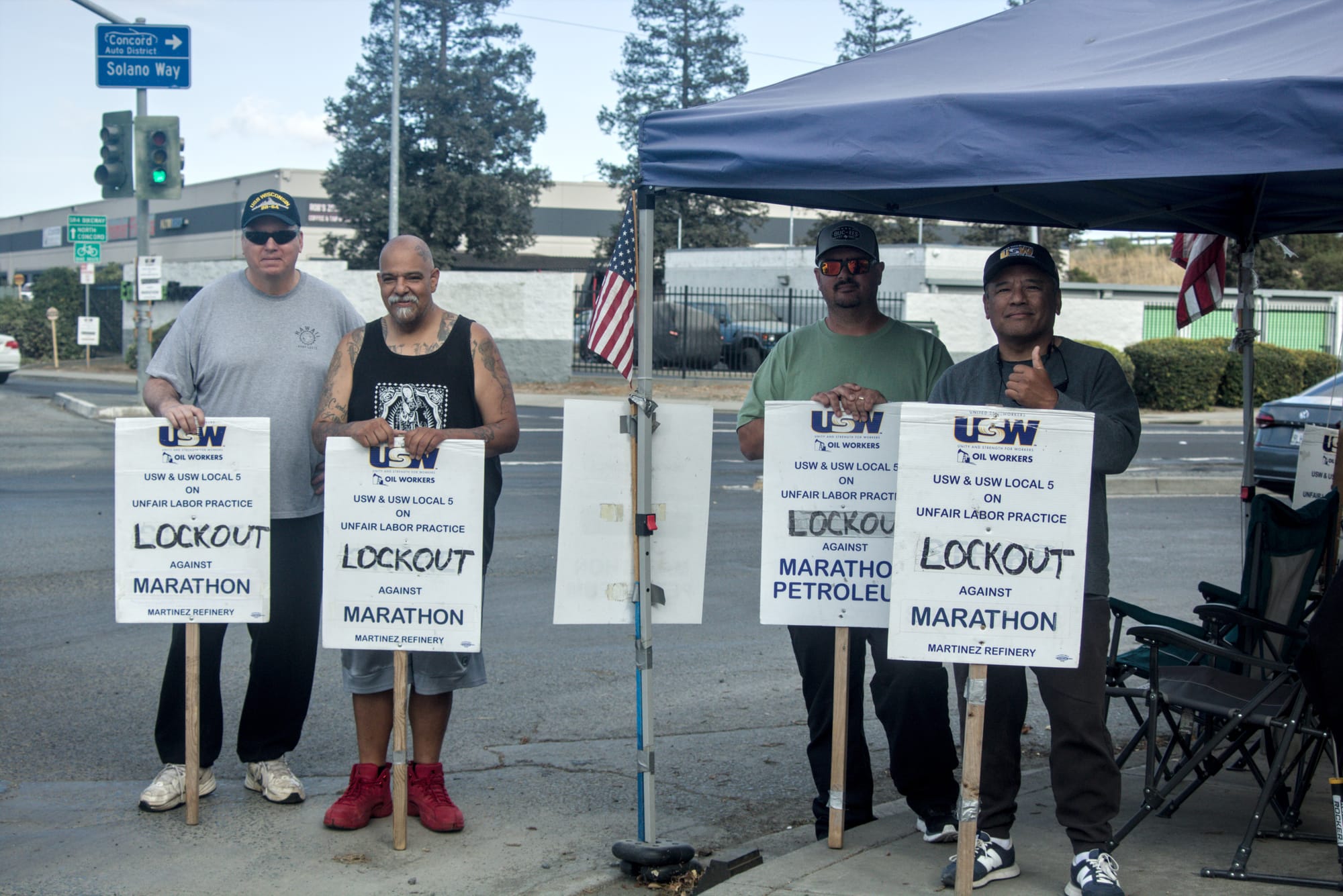
“I really do believe that Marathon is no longer operating from a business standpoint. I think this is all malicious,” said Rivera. “It could have been Chevron [at the NOBP negotiations], it could have been Shell, it could have been Valero, could have been any of these other large companies, but Marathon said, ‘No, we'll go to the NOBP as the face of Big Oil and handle this year's negotiations.’ And then to pull this stuff that they're doing now is just a slap in the face.”
Marathon did not respond to a request for comment on any of the issues raised by workers.
"It’s crazy when your employers are creating an environment that makes you feel like you are behind enemy lines at work.”
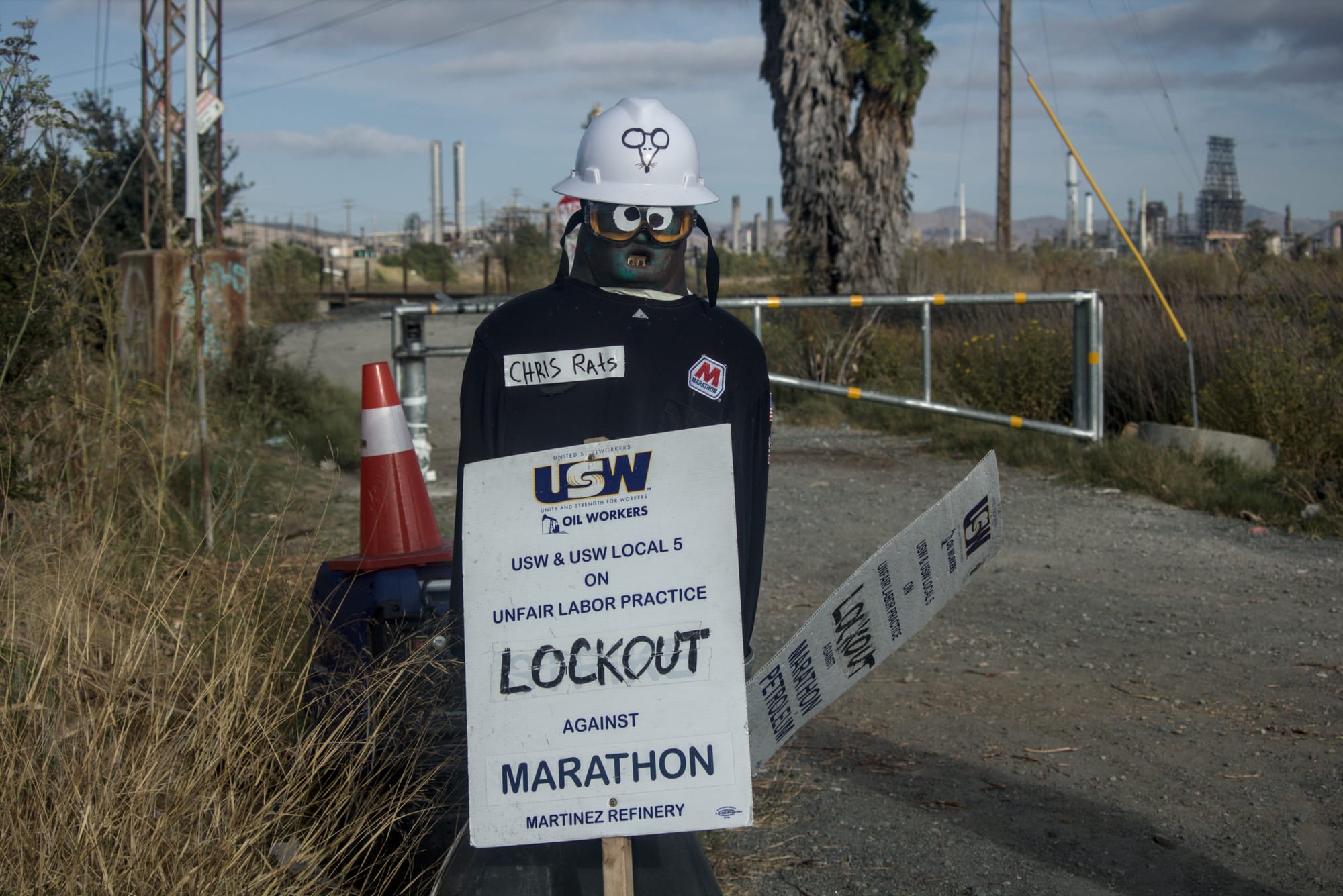
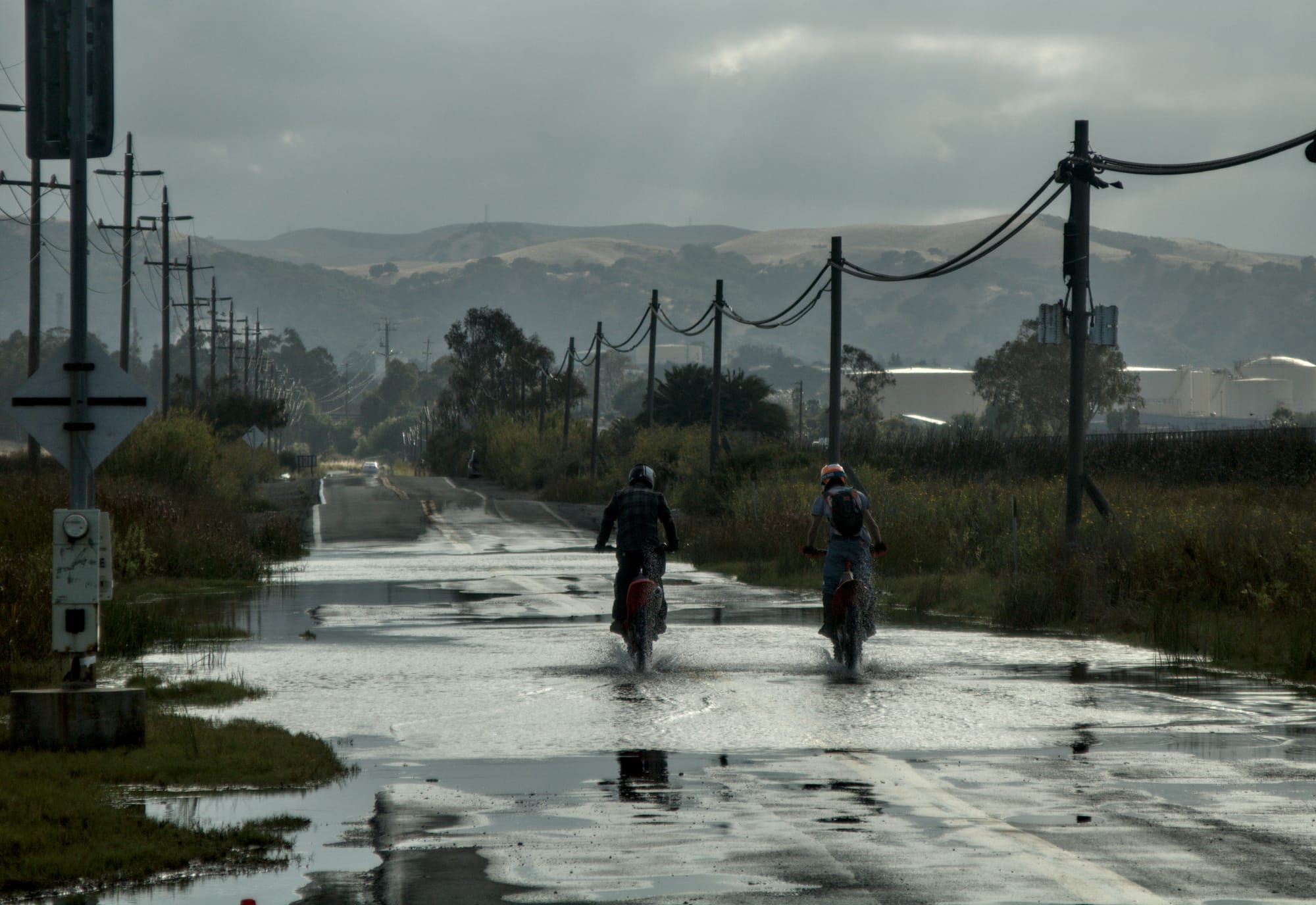
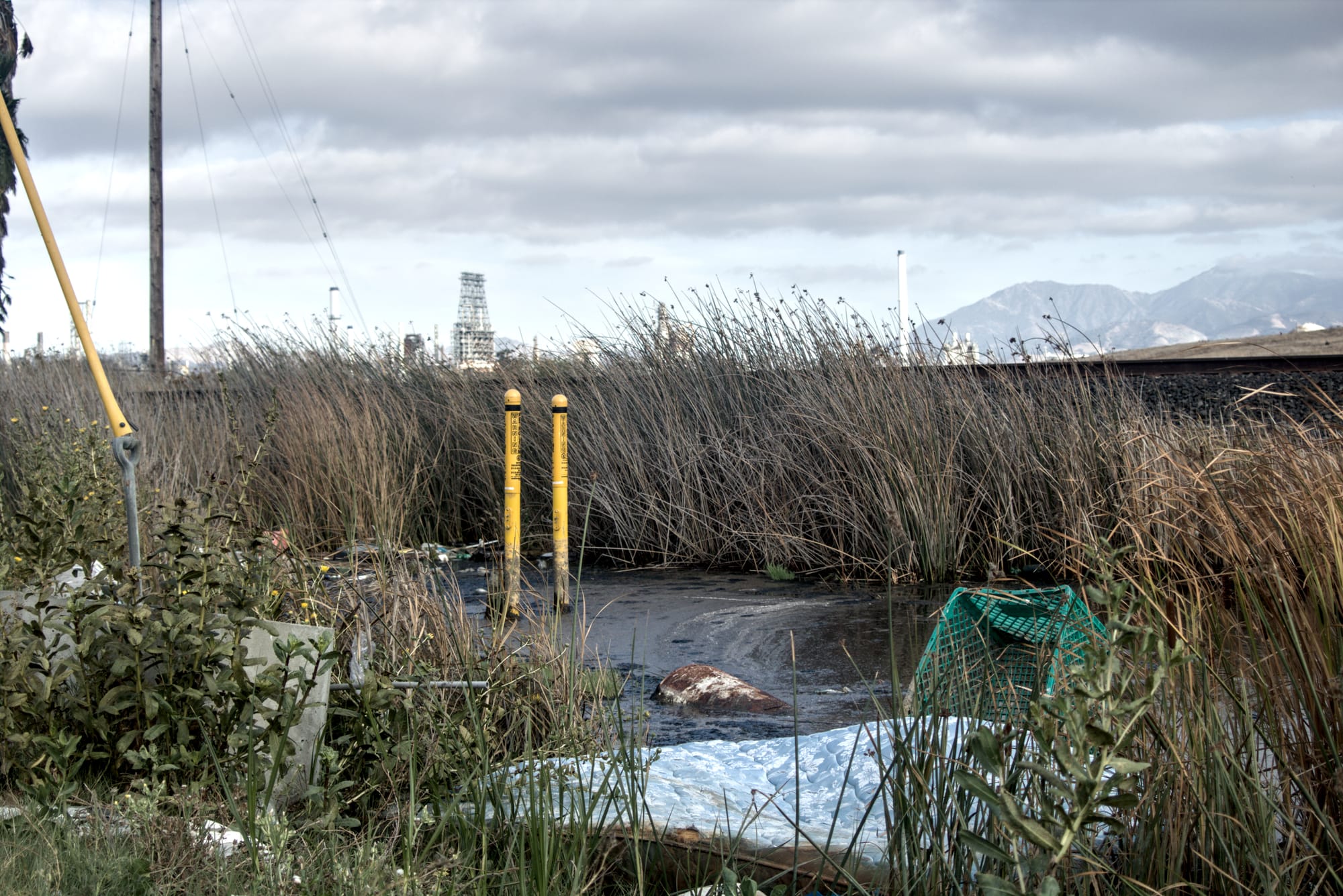
Rivera is unpacking the snacks at a secondary picket. I’ve just followed him on I-680 to the north side of Marathon Renewable’s sprawling 2000-acre facility, where the railroad lines, marshlands and the detritus of consumer goods and industrial waste meet. He is taking over manning the picket from one of his union comrades. It’s close to 6 in the evening and he’ll likely be here, alone—his only company a makeshift effigy of a Marathon manager named ‘Chris Rats’—until 10:30 at night watching goods and scabs and the occasional person hoping to fish drive through several inches of water along the industrial access road. But he is cheerful, as he’s been the entire afternoon I’ve spent with him.
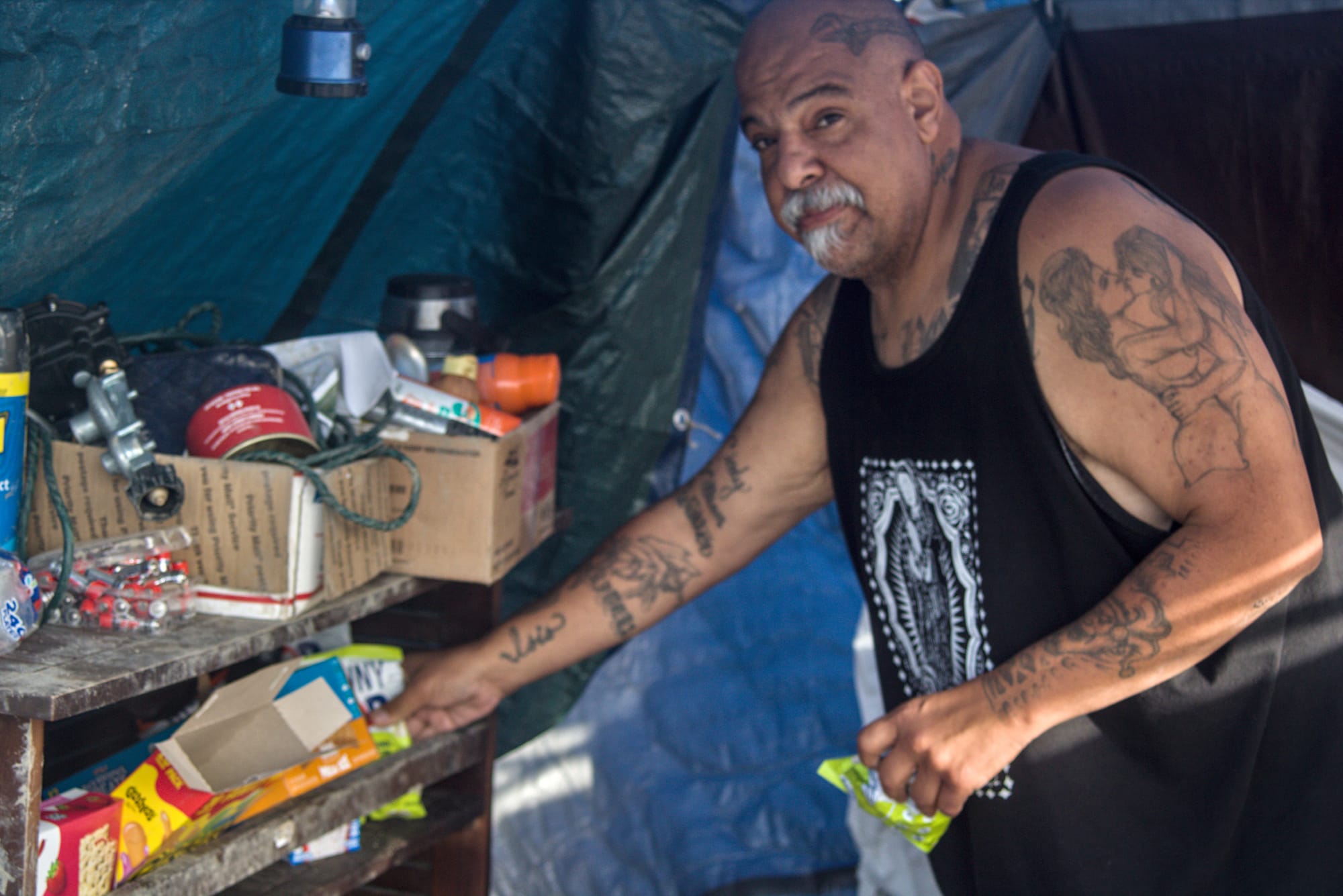
“I’m good as long as I have my sunflower seeds, pepper jack cheese and hot links,” Rivera reassures me as I head back to talk to people on the picket line.
Though he doesn't see himself as a leader — “I'm just a dad that wants to go back to work” — Rivera does stand out for his infectious personality and personal story.
“The guy's phenomenal,” Greg Villella, an operator who has worked at the facility since 1993, tells me of Rivera. “He's out here every Monday with his family. ”
“He comes in the late hours,” Villella explains, “I'm sure he's here at least six nights a week and maybe gives himself a couple days off, but he's out here a lot…You can definitely tell this guy is here for the fight.”
But even Rivera will admit that the lockout and Marathon’s disregard for all the work he and other union members have put into the facility and keeping the community safe has taken a toll on him. “I thought I found my forever job, and it’s still the job I want, but it’s crazy when your employers are creating an environment that makes you feel like you are behind enemy lines at work.”
Loyal to family, loyal to labor
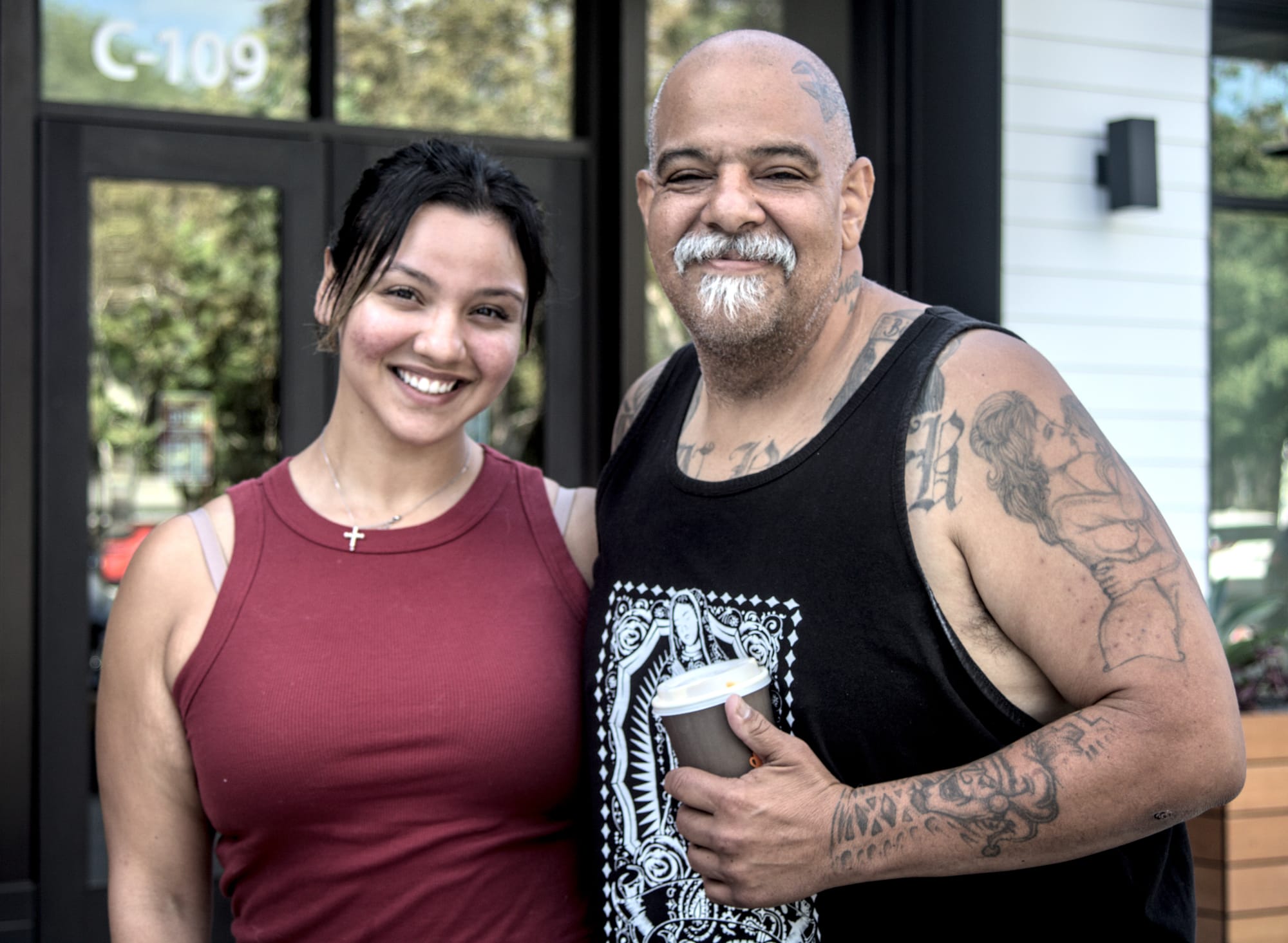
Rivera and I had arranged to meet at 3 o’clock at a coffee shop in a shopping complex in Concord before heading over to Monday’s weekly solidarity picket — the 18th since workers began their strike. He chose the location because he gets to give his niece, who is a manager at the coffee shop, a hug.
You can also tell that Rivera — a heavily tatted burly man with a bountiful smile that could instantly turn into a righteous ‘you’re dead to me’ grimace — has seen some shit. He has had to fight for where he is in life.
She arrives about halfway through our interview and you can tell from how they chat with each other that Rivera is the supportive, somewhat goofy uncle who is always checking in.
You can also tell that Rivera — a heavily tatted burly man with a bountiful smile that could instantly turn into a righteous ‘you’re dead to me’ grimace — has seen some shit. He has had to fight for where he is in life.
Rivera has spent almost his entire life in the Bay Area. He was born in San Francisco, and then his family moved to Contra Costa County where he went to school. He has three siblings that he is “willing to claim,” including a late older brother who struggled with drug addiction. Rivera is proud to be 19 years clean and sober. He’s also proud to be a single father, and member of the USW Local 5.
In his younger years, Rivera bounced between jobs, working at convenience stores, selling artificial turf and doing demolition. Eventually he found refinery work as a contractor, for companies that did environmental cleanup and environmental spill mitigation. Then came the opportunity he’d been waiting for, working at Marathon as an operator. Getting a union job felt, he says, like winning the lottery.
A single father of four children between the ages of 3 and 13, the job security and benefits from working a union job as an operator and fire tech capital at Marathon has been paramount to his ability to provide for his family. Then Marathon offered him and his fellow USW Local 5 members a three-year contract instead of four, undermining the security that they had fought for.
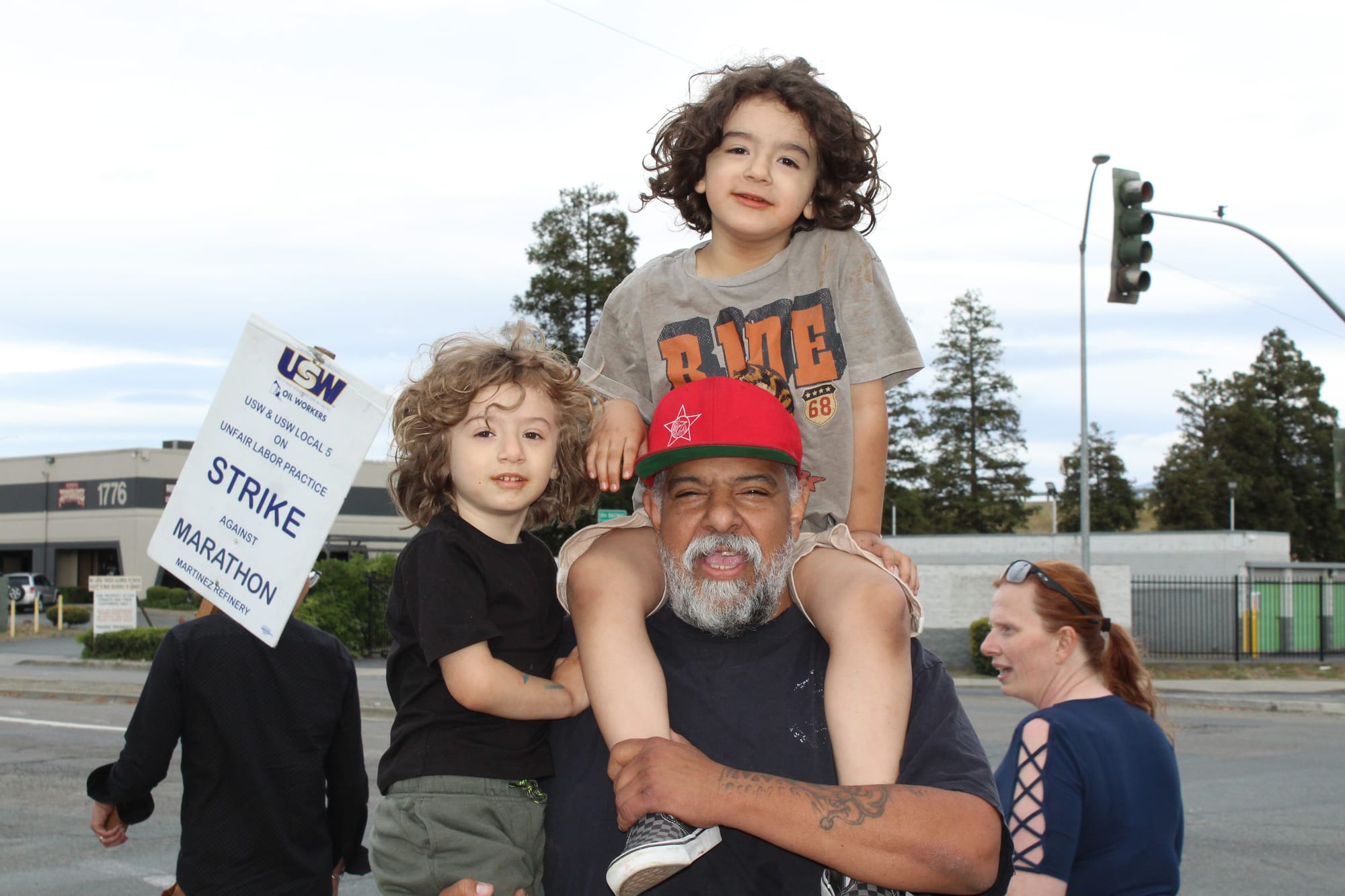
The power of the four-year contract is that Rivera knows it means he is almost 100% guaranteed to have a job for the next four years. That means food and clothing for his children. It means a roof over their heads. And it means healthcare.
“What these jokesters are doing is telling me,’ You guys are really only worth three years of us assuring you that you'll be okay. That fourth year is just not something we're willing to invest in you for whatever reason,’” he says. “That leads us to wonder what's going to happen at the end of that third year? Are we going to be out of work again just like right now or have to go on strike or be locked out and told you're not welcome here?”
The majority of workers at the refinery were hired with the promise of a maximum of 12-hour shifts. Rivera says that means they know they’ll sometimes have to sacrifice birthdays, holidays, anniversaries — even childbirths. But Marathon is pushing to change to requiring 18-hour shifts at a moment’s notice.
Rivera isn’t naive to the fact that union jobs can also be restrictive, especially when it comes to shift work, but management’s push to change their 12-hour schedules to a potential 18 hours without prior notice also went against everything that workers had fought for.
“They're trying to introduce language in the contract that says, "If we need you to stay over for any reason..." And they don't have to tell you the reason. So when my union chair was going over the contract with me and some other operators and telling us this new language, I said, ‘Hey man, that sounds like kidnapping.’ I said, ‘It sounds like I want to go home and you're telling me no, I can't, or else I'm in trouble.’ And he agreed. He said, ‘It would be considered kidnapping unless we accept this contract.’”
As a single father, the increased hours would make it impossible for him to take care of his children, some of whom have ongoing medical issues. “They would've said, ‘Hey, you have to stay.’ And I would've said, ‘No, I need to pick up my son's nebulizer machine.’ Or, ‘No, my son's in the ICU at Children's Benioff in Oakland.’ I've had these experiences before, that's why I know.”
Rivera cares deeply about his children. As we sip our coffees, he also exudes an enthusiasm for his work — he calls the machines he operates as his “babies” — his coworkers’ livelihoods, and what they mean to the Contra Costa County community that some might mistake for self-serving exaggeration. The way he describes his job, I tell him, sounds like every oil refinery is on the brink of disaster. That’s a “totally accurate” description, he responds, and it's why he wants to ensure that Marathon Renewable employs the best trained, most dedicated workers for the job. In February 2025, the Martinez Refining Company, a facility about a mile away, caught fire and burned for five days. Rivera’s strike had not yet started and he and his fellow workers were able to go and help fight the fire. Now, as the strike drags on, the county is left without their fire-fighting expertise.
Rivera believes management is aware of the human costs of cutting corners when it comes to safety, but they don’t want to factor those into the negotiations. He is still haunted by what happened to his co-worker Jerome Serrano in 2023. Serrano suffered severe burns across his entire body after a fire broke out in the refinery. California Division of Occupational Safety and Health later fined Marathon $188,000 in penalties for what they described as safety violations that contributed to the accident.
“Here they are just not even three full calendar years later and they're already thinking about the next 75 cents and where it comes from,” Rivera says.
Rivera says he has had to have difficult conversations with his own children about the potential dangers of his workplace. “Dad works in a place that's inherently dangerous,” he’s told them. “I don't make donuts for a living. It's not a sprinkle machine that I operate. It's a machine that could blow up in my face and I could be burned or it's a hazardous pool of water that I could be thrown into and suctioned down by a pump.”
Locked out and locked in
Despite the dangers of the job and management dragging out contract negotiations, Rivera is committed to keeping and fighting for his “dream job” not only to provide for his family but to provide for other workers through collective action.
“It's never crossed my mind to leave Local 5 and go find other employment elsewhere, even though I know I'm very employable,” he says. “When I signed up in this union shop, I understood that I was taking an oath to myself and my brothers and sisters in the union. I didn't take an oath and say, when it gets difficult, I'm going to bounce. So I was able to reap the rewards of having a good career in this union. And so it's my intention to stick it out and stay until we have a resolution, whatever that resolution is.”
“When I signed up in this union shop, I understood that I was taking an oath to myself and my brothers and sisters in the union. I didn't take an oath and say, when it gets difficult, I'm going to bounce."
There’s a sense among workers that Marathon wants to make an example out of them and the plant. Though the company negotiated four-year contracts with unionized oil refinery workers across the country at NOBP, the Martinez workers are part of a renewables facility and are thus no longer subject to the same industry standards. This is especially egregious to people like Rivera who helped convert the plant from a crude refinery to a biodiesel processing plant.
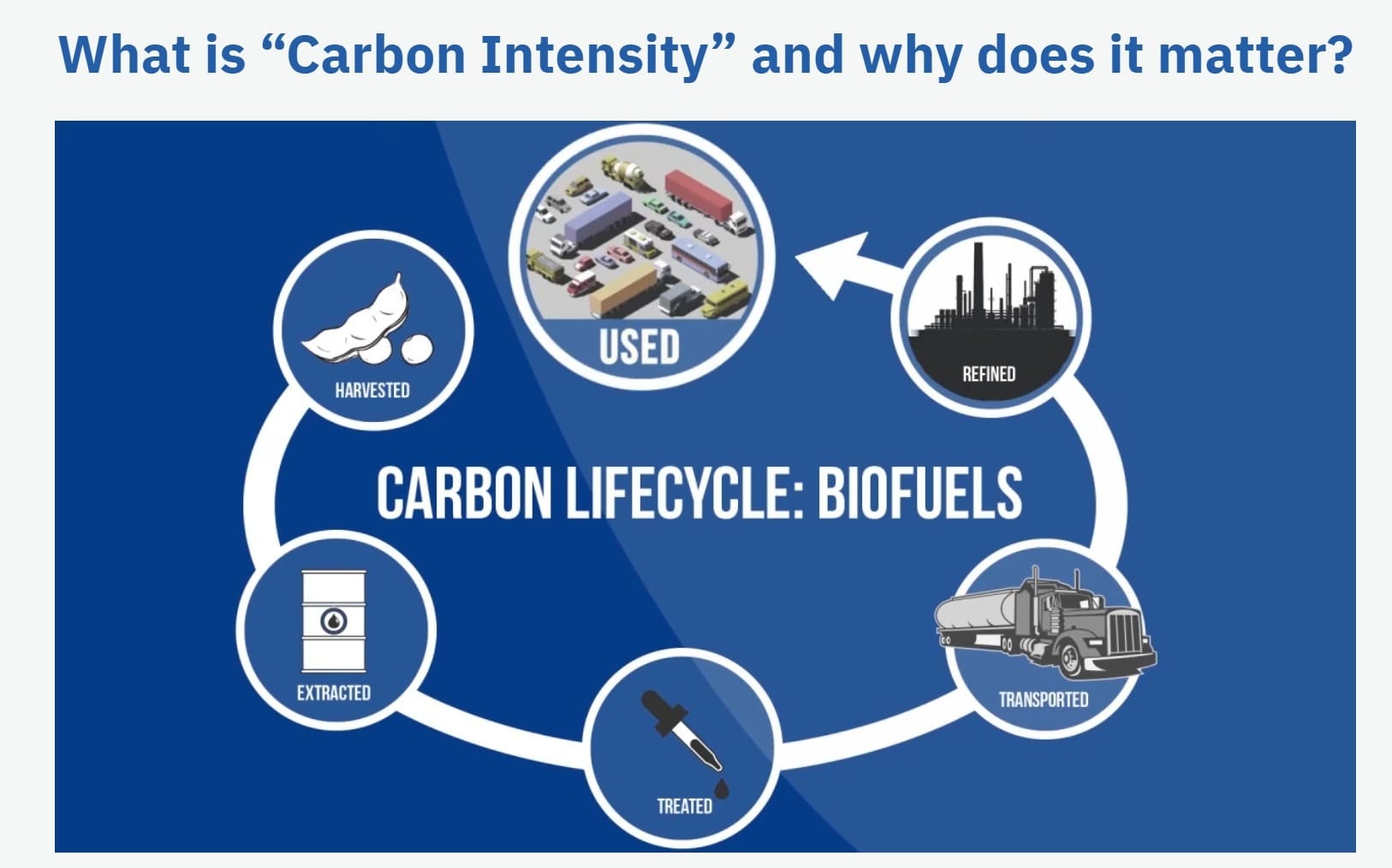
“They're saying, okay, it's no longer a refinery,” says Rivera. “But they are still bringing in feedstock, performing a process at multiple different stages involving incredibly high pressures, incredibly high temperatures, all kinds of gnarly stuff. They're actually using more hydrogen in this process than they were using before. And we all know hydrogen is extremely volatile, autoignites, pyriformic, all that stuff. They're just basically just trying to treat everybody like dumb asses. No dude, this is still a refinery. Come on. I would argue that the process is even more dangerous now than it was before.”
The lock out represents a “clear escalation” by Marathon’s management, says Rebecca Barrett, the Communicators Director of the Contra Costa County Labor Council, “A strike is where the workers have voted and chosen to do it. A lockout is when the company makes the choice. The workers offered to go back in and go back to work while negotiations continued. The company said no. So they are continuing the economic pain for the workers at that point.”
Barrett points out that lockouts are extremely rare in today’s labor movement. “This is my second lockout that I've seen in Contra Costa,” she says.
The lockout has made things more uncertain for workers like Rivera, and there is a palpable sense of weariness on the main picket line.
Bob Bulman, a field operator, says many workers and their families viewed the lock out with a “fear of the unknown.”
“The union is still being helpful and supportive, paying some of our bills, our essential bills, and we're still out here on lockout hoping to negotiate a fair deal with the company,” Bulman says.
For Rivera, the lockout has also enabled him and his coworkers to apply for state benefits and welfare programs that they were not eligible for while on strike.
“They haven't terminated us. They also haven't paid us, so we're just kind of in limbo. For myself, if there are any positives, when I was on strike, I didn't qualify CalFresh.” Rivera has been able to dedicate himself to the picket line thanks to government medical and food aid, as well as, of course, the solidarity and “an abundance of help from friends and family, everything from finances to groceries to personal donations made to me and my family.”
But it’s clear that some workers have been pushed to the brink of no longer wanting to fight. “Tomas is a very big-hearted individual and very dedicated,” Bulman tells me. He worked at Marathon during a previous strike in 2015. “I have a lot of new guys out here, and so there's a lot of fear. So I've been doing my personal best to try to keep morale high, try to keep people from being afraid. And Tomas has been huge in that.”
“The whole point of the union and the solidarity is that there's no big me’s or little you’s, right?” he says. “The whole point is really believing that an injury to one is an injury to all.”
The strike and lock out have also been a clarifying experience, one that has strengthened Rivera’s broader commitment to workers across industries, even when that solidarity isn’t mutual.
“There's others that work in that facility that are also unionized that cross our picket lines every single day because they have some language in their contract that doesn't allow them to [join the picket], for whatever reason,” he says. “But I've been disappointed in those people too because outside of the what we do for work thing, there's also a human connection and a lot of these people would address me as friend or brother because we shared that commonality of a workplace and it was part of my job to keep them safe.”
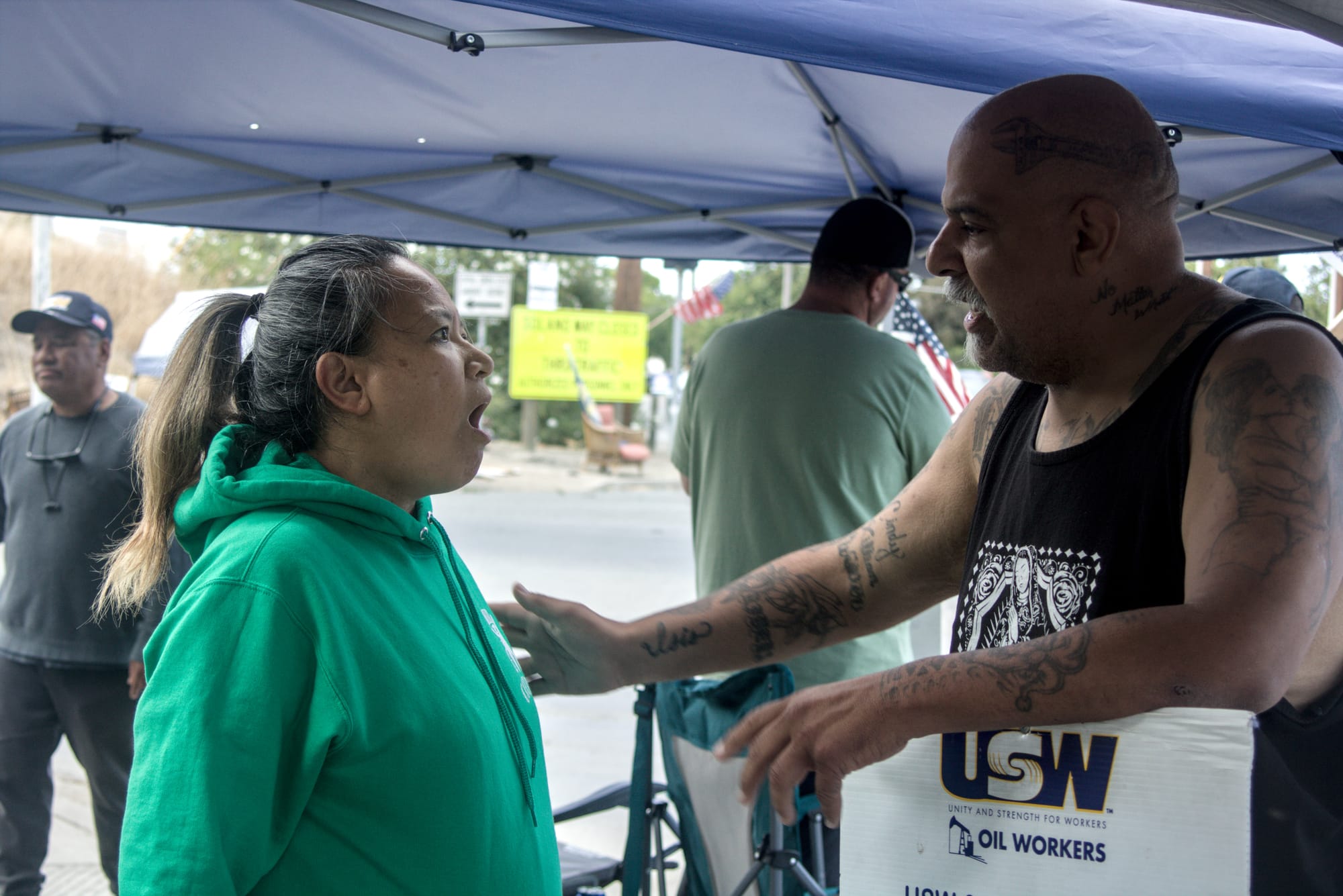
Community members and other workers recognize all the work and sacrifices Rivera has put in to ensure his USW Local 5 comrades win a fair contract.
“Tomas has just been a consistent, constant leader out here,” Barrett tells me. “He's bringing his kids, he's teaching them the value of solidarity, the value of standing up for yourself as a worker. And that's inspiring to see, but I really hope that the community understands the real human cost of what's happening here.”
But despite his charismatic personality, and the admiration of his colleagues, Rivera doesn’t consider himself a leader.
“The whole point of the union and the solidarity is that there's no big me’s or little you’s, right?” he says. “The whole point is really believing that an injury to one is an injury to all.”
You can support USW Local 5 workers on the picket line on Solidarity Mondays at the corner of Arnold Industrial Way and Solano Way in Concord. You can also contribute to their GoFundMe here.
*Correction: previously the article incorrectly identified Marathon's parent company as Nestle, the article has been corrected to reflect the correct parent company, Neste.

We spoke to one of the frontline union workers in the climate change fight.


Union workers face cuts amid eye-watering boss pay and refusal to dip into a $270 million endowment

In a city dripping with cash, San Francisco can’t get its kids to school.


Ten picketers were arrested on July 21st during the strike at C&H Sugar. Their charges can be filed at any time within the next year.
