
Wildland Firefighters Are More Important Than Ever
We spoke to one of the frontline union workers in the climate change fight.
We spoke to one of the frontline union workers in the climate change fight.

TUES, SEPT 22 — Surrender yourself to the transformative sounds of Lulu the African Gray Parrot (and some human counterparts). Remember

Despite public outcry, Oakland City Council decided to approve the new cop contract and reappoint police commission chair.
We spoke to one of the frontline union workers in the climate change fight.

Think past the fire trucks in your local city. These wildland firefighters chase blazes in the US hinterlands. We wanted to know what it is like to do this job, so we spoke with Pedro Zhu an experienced wildland firefighter. Here's what he told us.
Justin Gilmore: We’ve had a hard time finding wildland firefighters to interview. Not because they don’t want to talk — they do — but due to fear of the feds. What made you interested in discussing?
Pedro Zhu: It’s a deadly time to be a wildland firefighter. A fourth firefighter from the Knowles Fire burnover has passed away. Three weeks ago, on our way to Colorado, the initial three fatalities of the burnover passed away in their fire shelter.
JG: Tell us about the wildland firefighting landscape.
PZ: All federal wildland firefighters are assigned to a duty station and to a resource. The most common resources are helitack (specialized firefighters who are transported via helicopter for quick attacks), fire engines, 20-person handcrews, 10-person Wildland Fire Modules (WFMs, aka smaller handcrews specializing in self-sufficiency and natural ignitions on the landscape), smokejumpers, rappelers (helitack crew that rappel down ropes), and dozers (tracked machinery that moves soil and trees with its blades). The most famous are smokejumpers and a specific 20-person handcrew called Interagency Hotshot Crews, or shots for short.
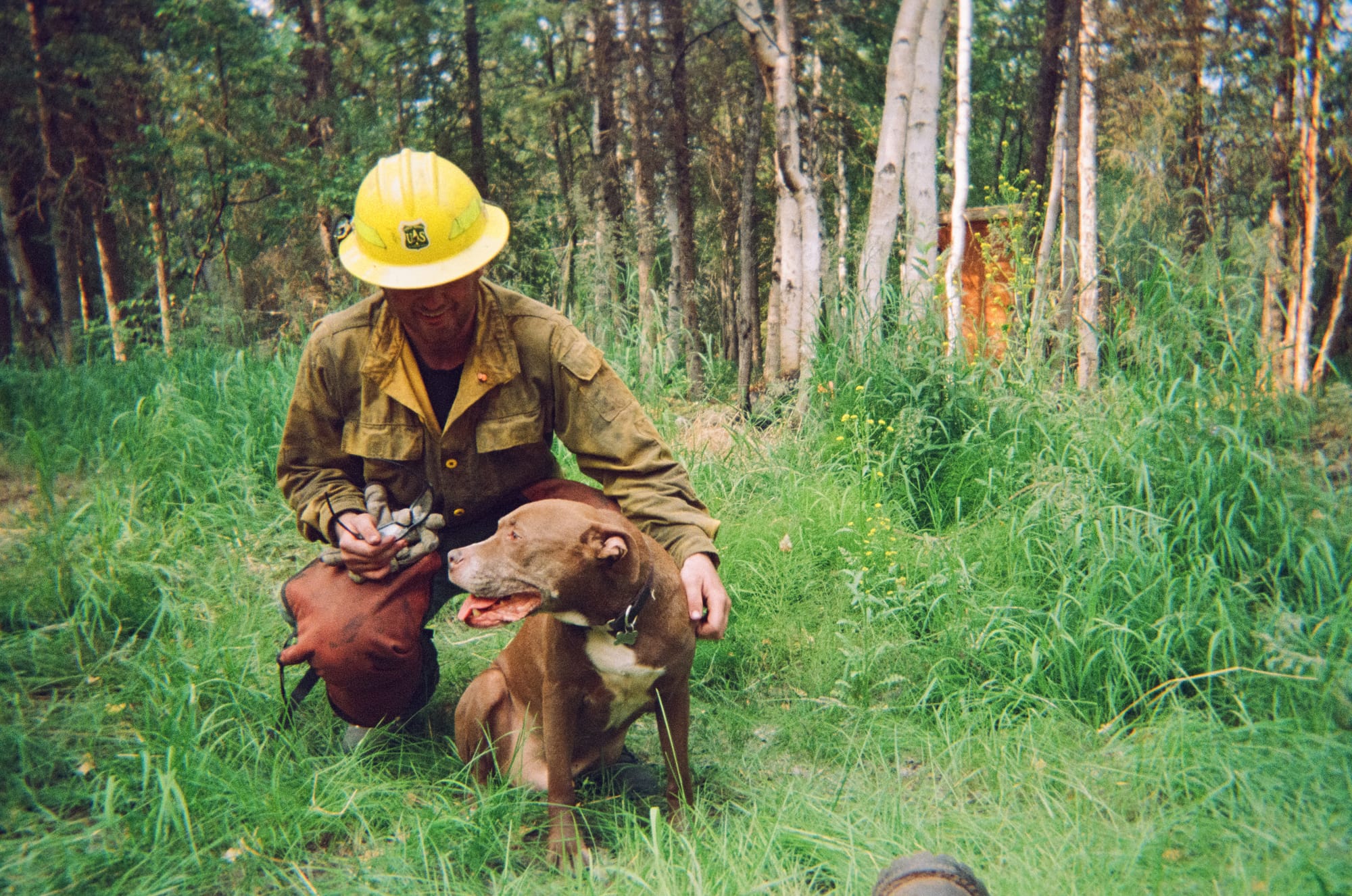
JG: So this sounds a lot different than the urban firefighters that most of us are used to, right?
PZ: Yes. Federal firefighters form a backstop you can count on when municipal and state resources aren't sufficient for complex incidents, or when numerous incidents stretch what is available within a state. Few municipal, county, and state agencies staff significant numbers of professional full-time handcrews. Up until recently, CAL FIRE mostly relied on inmate labor to field handcrews.
In 2024, the Park Fire became the fourth-largest fire in California history. When CAL FIRE couldn’t catch it during initial or extended attack, it became a campaign fire in which the two branches at the head of the fire were fully staffed with Federal hotshots. Near the end of our assignment there, we flew away in our helicopter and it just so happened to pass over the origin of the fire. It was a bewildering sight, from where the fire started to the column of smoke at the head of the fire that was now thirty miles away — in between, miles of charred black.
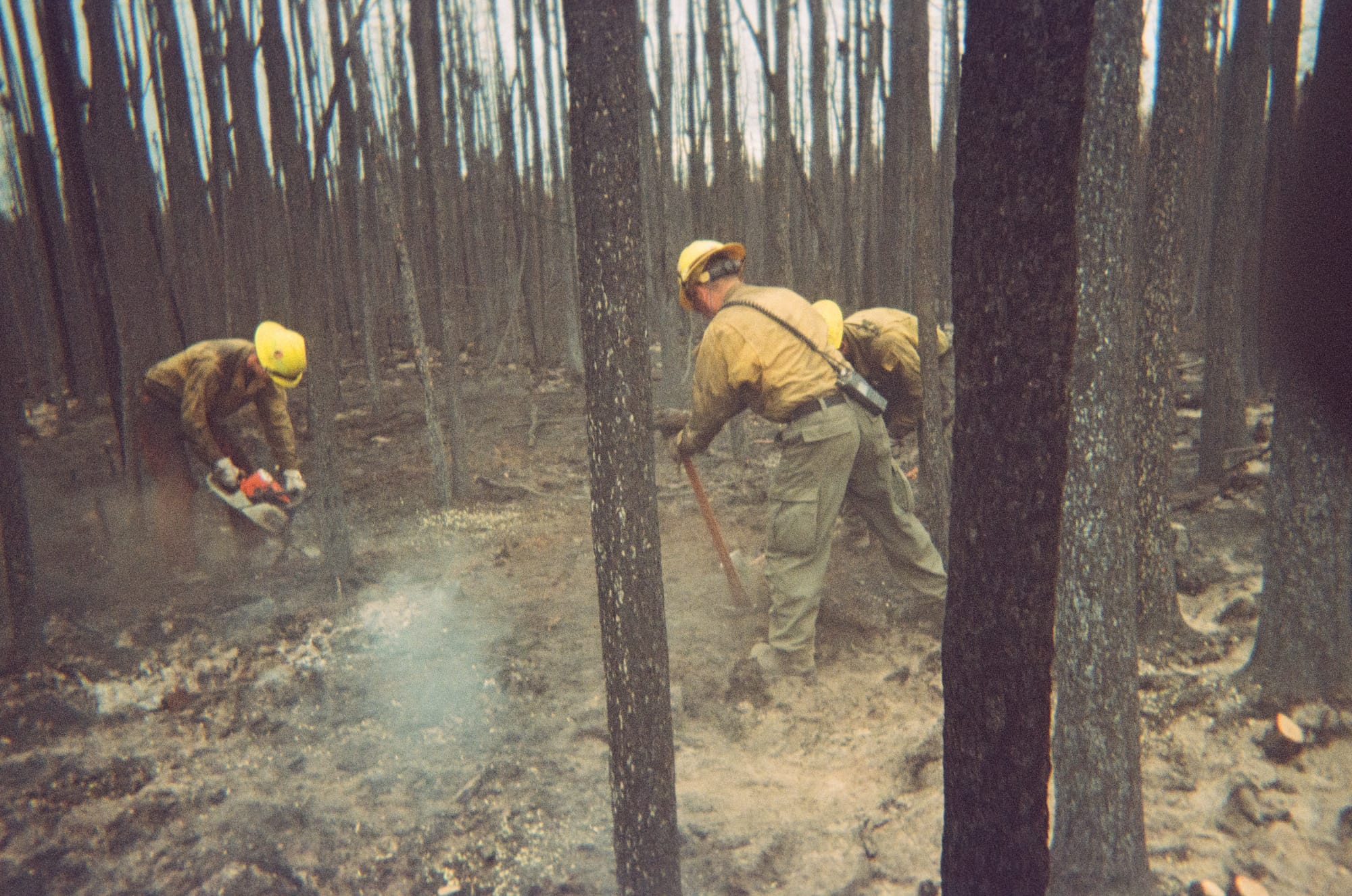
JG: What does it take to become a wildland firefighter?
PZ: The physical training requirements are rough. The average American without training has little chance of passing the arduous pack test, carrying 45 pounds over three miles in under 45 minutes. But that is just the minimum; the hour of paid physical training most crews do every day is probably enough to put the average person out of commission for the rest of the day. Mostly the personal training will be enough to maintain a level of fitness adequate in most situations — but most is not all. Every couple of years there is a gut-check moment, in which unforeseen circumstances, bad luck, and logistics all conspire to put an unreasonable amount of weight on your back that must be carried upslope at 8,000 to 10,000 feet elevation through dense vegetation in the rain.
To go from a good firefighter to an excellent firefighter on a shot crew or to make it through smokejumping selection, more is required. The packout test for some smokejumping bases could be as much as carrying 110 pounds over three miles in 65 minutes. To get ready for something like that, it would not be unusual to do a 10k as part of breakfast and then a hike with a full kit in the afternoon. Don’t forget to hit the weights before bed. This would all have to be done off the clock, each and every day consistently for at least a year.
JG: That sounds tough. So what is a typical day like?
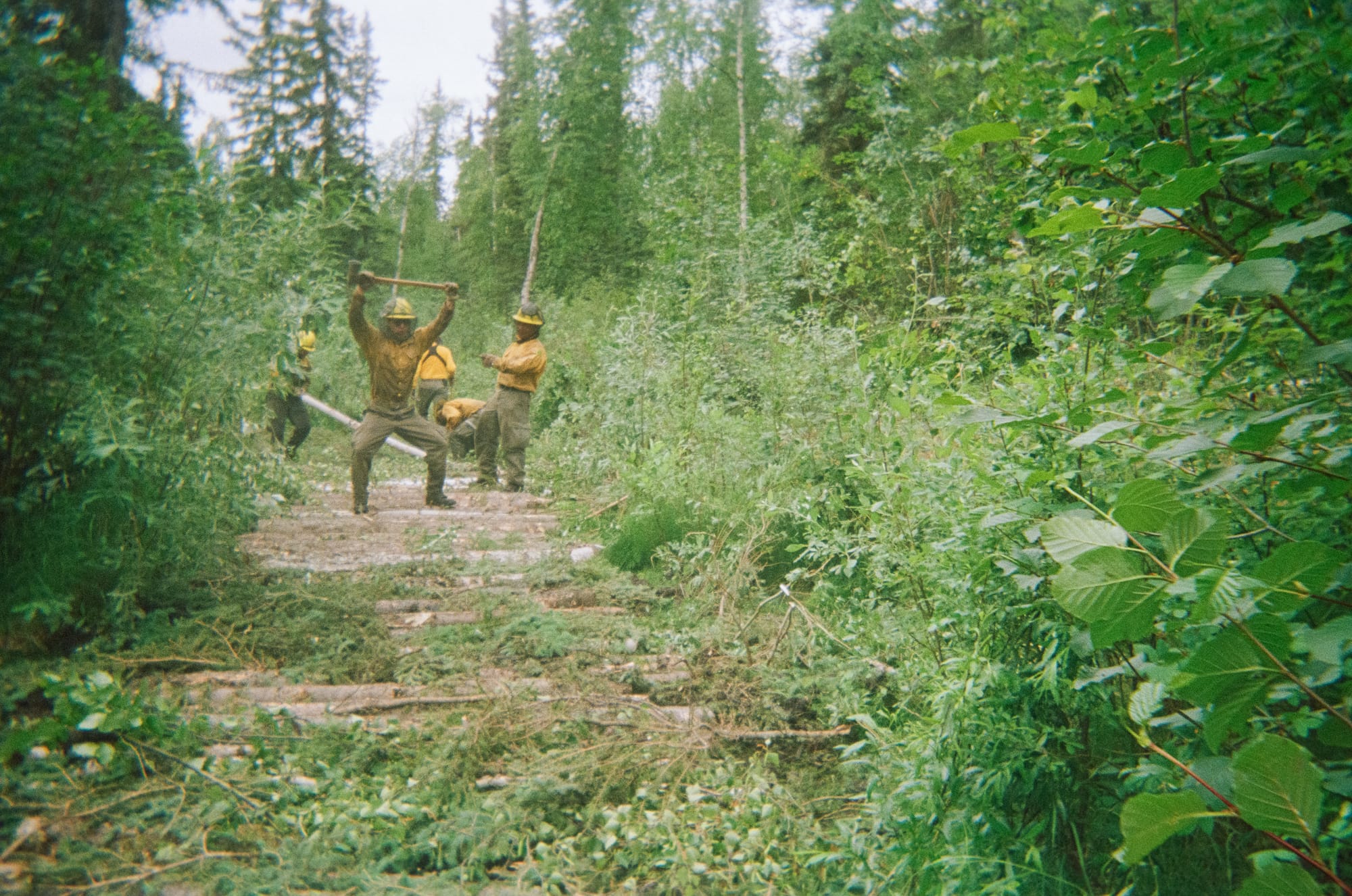
PZ: Typical days are 12 to 16 hours on the side of a steep ridge in 90-plus-degree weather. And it is expected for a firefighter to be swinging their tool or running their saw for the entirety of that time, if that is what is needed. By swinging a tool, I do not mean shoveling some dirt and depositing it some distance away. I very much mean swinging it with some force all the way along the trajectory; this deposits the scraped material away from the fireline so that it does not form a berm of mixed vegetation and soil. This is actually the easy stuff. Some poor firefighter called a swamper forms the second half of a saw team and gets to move everything that is cut with a chainsaw by hand. It is not unusual to burn 6000 calories in a day. Assignments last 14 to 21 days, not including travel. Upon return, we are guaranteed three days of leave. If there are no administrative, logistical or vehicle problems, we are made available nationally again for the next assignment.
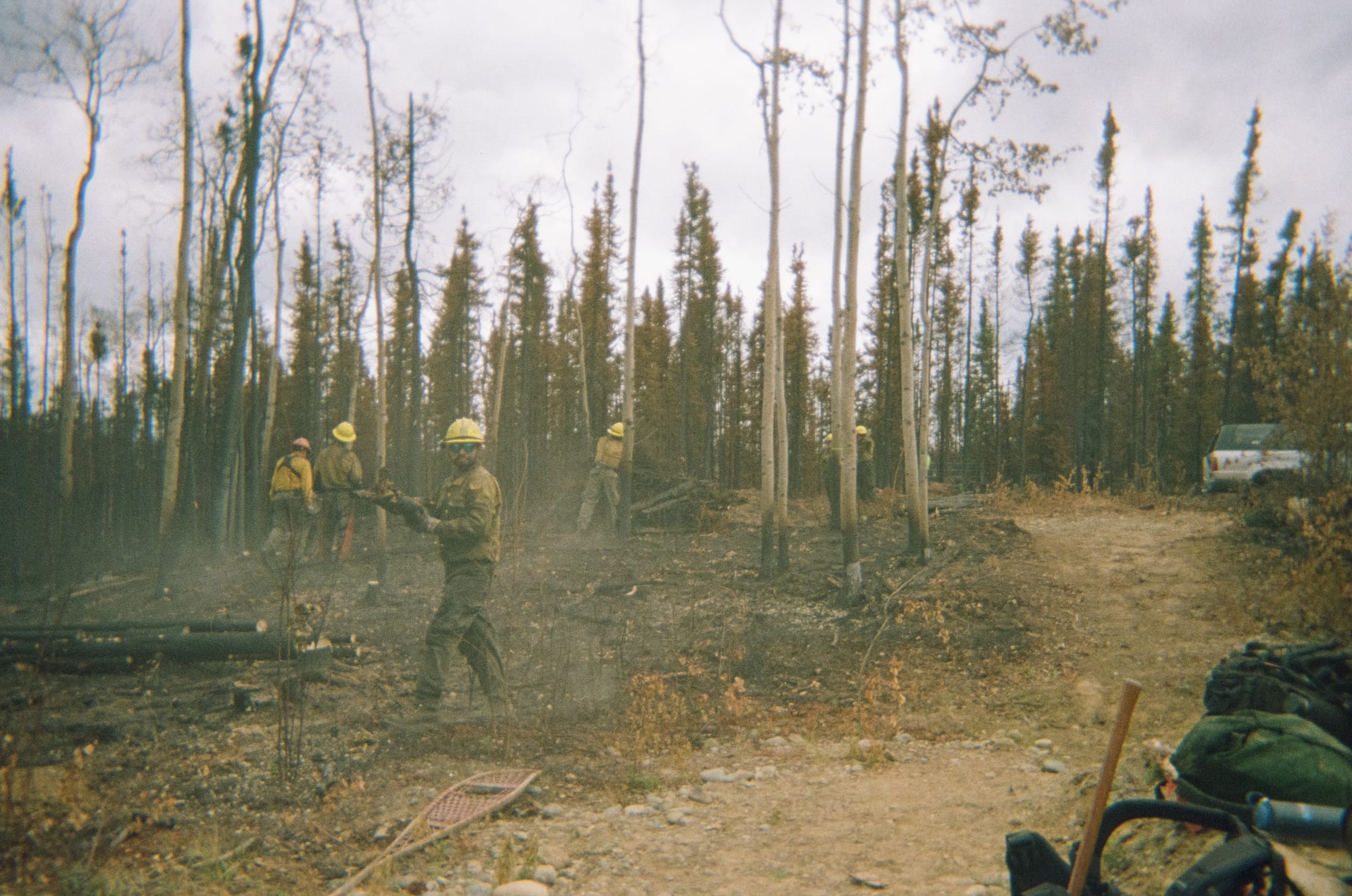
JG: This sounds like a physically hard gig. How dangerous is it?
PZ: The consequences of mistakes on fires can range from humorous, like your buddy mistakenly telling the helicopter three o’clock instead of nine o’clock. And then having to move two thousand pounds of water 200 yards by hand. Or not so humorous, like giving bad directions for a VLAT (very large air tanker) drop, each of those Phos-Chek (chemical retardant that impedes fire) loads cost upwards of someone’s down payment for a house. Or it can be deadly, like an engine driver going too far along the edge to make room for foot traffic — on a road with only 27 inches of extra clearance. That whole engine tumbled down a bank for 1,100 feet. Three died, two survived.
There are a lot of “find out” moments in wildland fire. Some are precipitated by inattentiveness and messing around but sometimes shit just happens. While procedures and checklists are there to mitigate risk, it is never negligible. The average person may have such a find-out moment every few years, probably while driving. And honestly, driving is also the most dangerous thing we do. Statistically, driving and a category called gravity are the top two causes of fatalities and serious injury. Gravity includes falling, tree strikes, punched buckets (emergency release of water bucket from a helicopter), getting knocked off an embankment, falling from a helicopter, etc. Fire comes in as the third leading cause. Doing some rough napkin math, over the course of a 20 or 25 year career one would get a one to two percent chance for just fatalities alone.
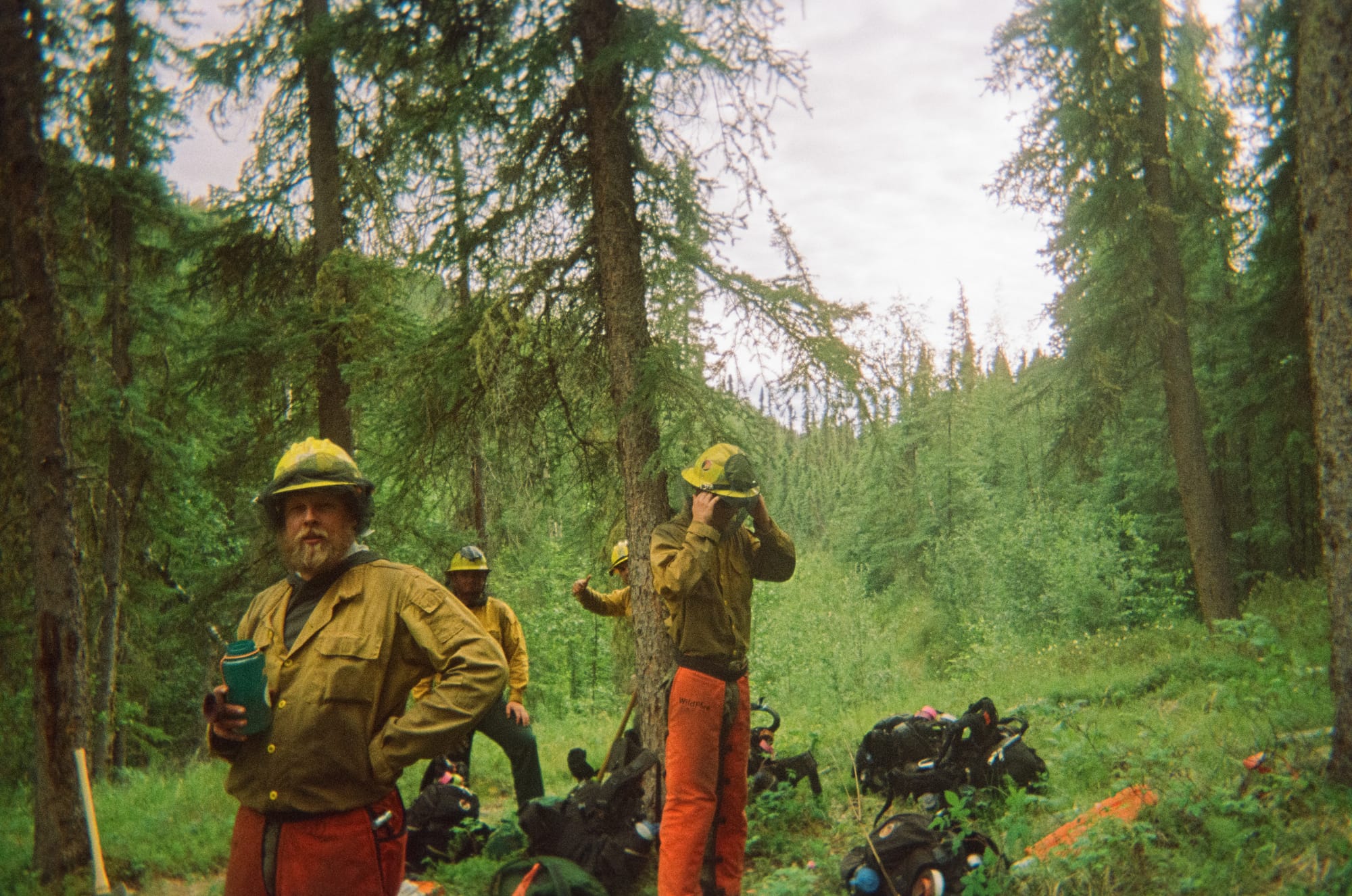
JG: Wow, and so are people really making careers out of this job? Or does the difficulty make it hard to retain workers?
PZ: Staffing is not good. It floats around 50 to 70 percent. The remoteness of most duty stations doesn’t help. A lot of people try it for a year or two, but ultimately decide it is not for them. Of the ones that stay for the full career, it is surprising how many solid wildland firefighters there are. There are all kinds of workers as in any workplace, from the minimalists to the average to the excellent. But it is with consistent regularity that I meet solid old-timers, solid in that they are good firefighters and solid people.
For me, the whole endeavor was made easier by accepting the whole package. I do not wake up and ask myself if I am feeling good about doing this 10k or pack hike before work, I just do it because it’s what it takes to be a good firefighter. There is a scene towards the end of The Departed, when Jack Nicholson’s henchman — surrounded by cops, trapped between barrels and shipping containers in a flaming car — the character casually, with no emotion, takes out a gun and shoots himself. If one makes the bed, one has to lie in it. Past a certain point motivation can only get you so far, acceptance is much simpler. It actually gets easier not harder over the years, the body adapts. Soreness is just background noise. Over time, I realized sensations such as hotness, fatigue, strain and discomfort don’t have a direct relation to my feelings if I don’t let it.
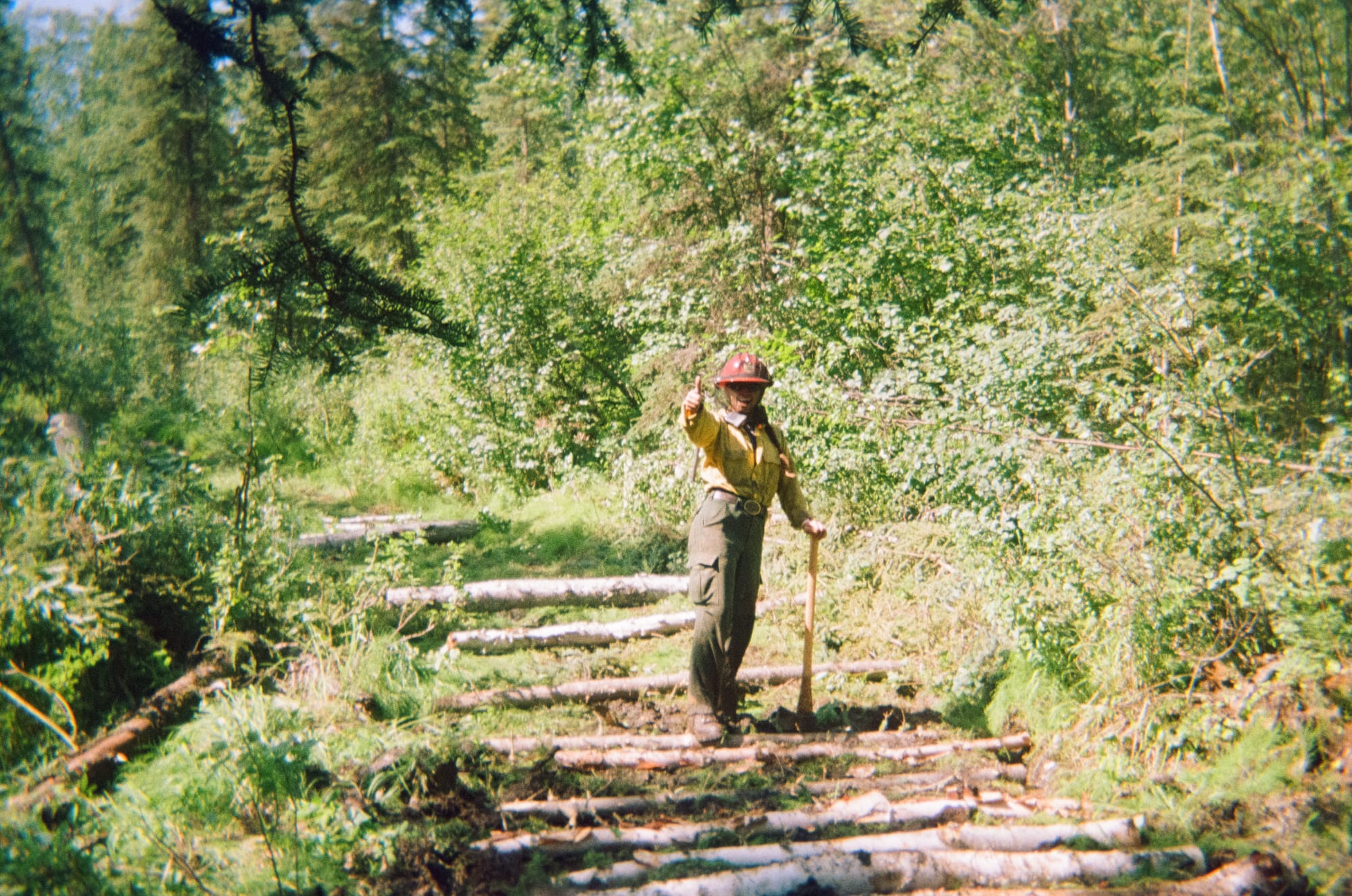
In a way, this profession is from a by-gone era — but in a different sense, it is a kernel of the physical reality of labor that can not be erased by the trappings of modernity and technology. In a time where workers often have to remind themselves to be present and mindful in order to retain some sanity in a face-paced chaotic world, the visceral impact of being on a fire forces the worker to be present and mindful.
JG: Can you say a bit more about this, but from the viewpoint of the worker? Like what are the labor conditions like? And what’s up with the union?
PZ: The labor conditions are good if you exclude physical things that can’t be mitigated, like breathing in smoke, thousand-plus hours of overtime away from home, and taxing the nervous system. The benefits package is better than the private sector. There is a pension on top of a matching 401k. There has been a string of union victories: presumptive coverage for certain kinds of cancer, hazard pay on prescribed burns, three-day paid leave after assignments, incident response premium pay, free therapy sessions, and a significant pay increase. Some of these apply to non-fire employees as well. The union staffs a lot of positions with ex-firefighters and a lot of ex-firefighters run a number of associations and foundations that advocate for us. Most stewards are also firefighters.
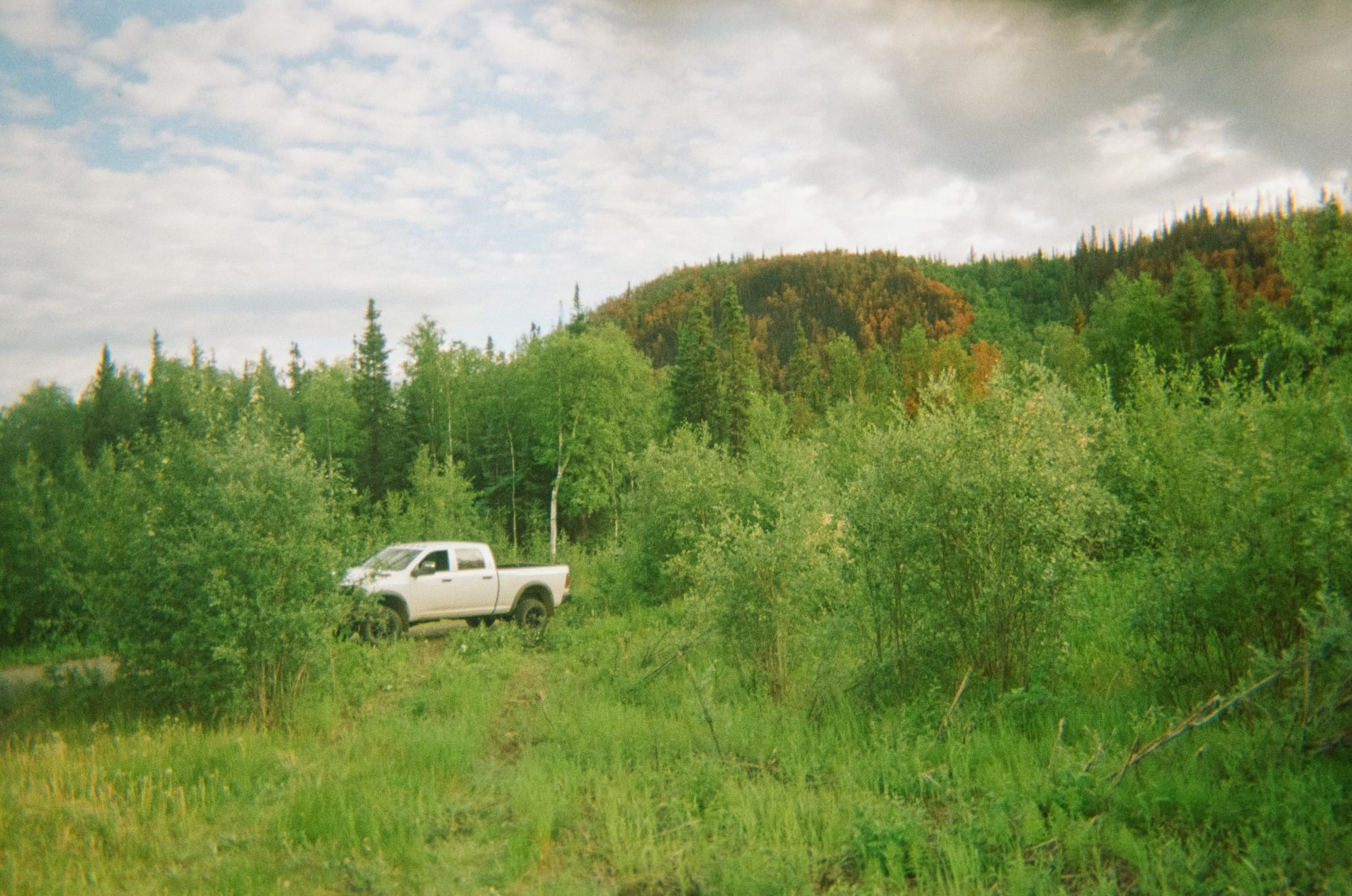
Our union, the National Federation of Employees (NFFE), is unusual. Even as US union membership has trended down, the number of forests being added as locals into NFFE has steadily gone up. Firefighters are getting organized. Over 90 percent of forests are unionized.. I think firefighters are naturally good militants. We handle stress well. We understand leverage. We’re not dissuaded by setbacks. We understand the importance of organization.
In a way, it’s the opposite of the rank-and-file strategy, at least in form. We don’t rely on building relationships because we already have them.
JG: Any last thoughts?
PZ: There is a lot to learn about America by traveling to a place and spending two to three weeks there at a time. It is just enough time to get a feel for a place, getting to see how intact and healthy a community is. I know in the Bay Area, there has been a popular push among certain progressive demographics at “building community.” But what is a community in this day and age? From my travels, the Southern Ute Tribe is by far the location and people that most fit that word. There is a feeling of wholeness there. Half of the Southern Ute Agency is staffed by tribal firefighters from their own community. There is just a vibe about them. There is a quality to the community there that is hard to perceive except in contrast with other, more meager communities. A quality I would describe as fully integrated in all parts of itself.
Note: A pseudonym was used due to concerns over job security. The above interview was edited for clarity.

Union workers face cuts amid eye-watering boss pay and refusal to dip into a $270 million endowment

In a city dripping with cash, San Francisco can’t get its kids to school.


“I'm just a dad that wants to go back to work.”

Ten picketers were arrested on July 21st during the strike at C&H Sugar. Their charges can be filed at any time within the next year.
