
The Show Won’t Go On: SF Orchestra Walks Out Opening Night
Union workers face cuts amid eye-watering boss pay and refusal to dip into a $270 million endowment
Union workers face cuts amid eye-watering boss pay and refusal to dip into a $270 million endowment
In a city dripping with cash, San Francisco can’t get its kids to school.

Union workers face cuts amid eye-watering boss pay and refusal to dip into a $270 million endowment

As night fell over the San Francisco War Memorial, the air was cool and crisp. Blue light illuminated City Hall as a small parade of opera patrons, clad in heels, suits, and shimmery dresses left what was supposed to be the 104th opening night of the San Francisco Opera. The orchestra had announced that it would not perform in the pit, but march on the picket line.
On September 12, the San Francisco Opera orchestra went on strike after negotiations stalled over their contract. The orchestra’s contract expired on July 31, and the musicians, represented by the American Federation of Musicians Local 6, announced that they would not perform without a contract before the fall season.
“The orchestra is going on strike for a livable wage”
Energy was high at the picket line. The orchestra handed flyers to patrons, waved at cars, and rallied pedestrians with chants of “Pay before you play!” Instead of Verdi’s “Simon Boccanegra,” which the orchestra was set to perform that night, “Bring Him Home” from Les Misérables played on a speaker. And yet, the musicians and union couldn’t hide their disappointment.
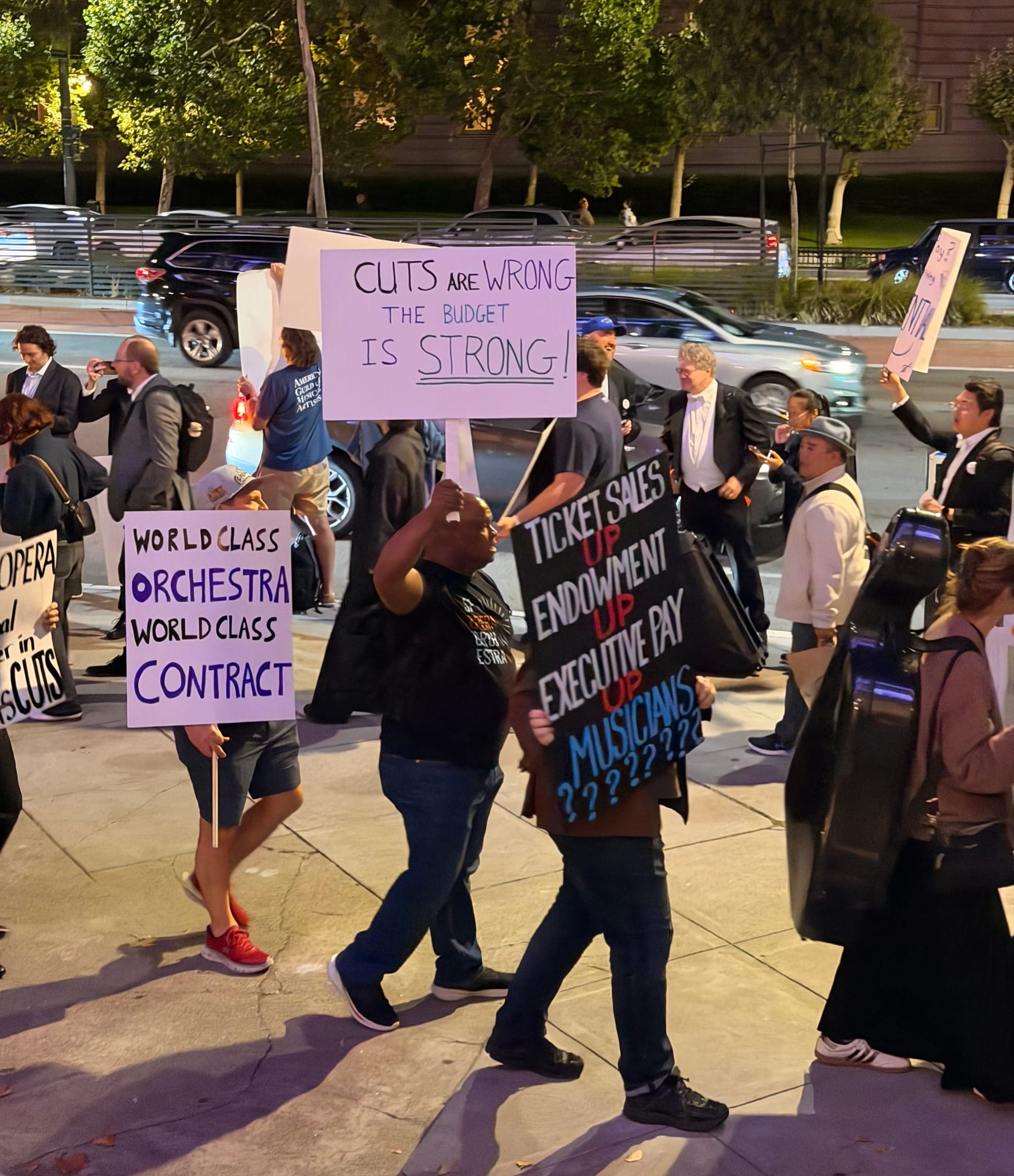
“We came into these negotiations months ago, expecting to build on the modest agreement we reached two years ago,” the musicians wrote in a statement. “Management proposed a 26% pay cut, which would have returned us to 2015 wages. They have since ‘improved’ that offer to a 20% cut, which would put us back at our 2018 pay. We cannot begin a season under proposals like these.”
SF Opera General Director Matthew Shilvock’s salary has only grown. Public tax filings show Shilvock’s salary increased from $424,000 in 2022 to $729,000 in 2025, about a 22% increase.
This is the first time the SF orchestra has gone on strike since 1990. “Since then, negotiations have been difficult, but successful,” said Liza Medina, legal counsel for the SF Opera orchestra. This time, management doubled down, citing rising expenses as the reason for the pay cut.
“The orchestra is going on strike for a livable wage,” said Ruth Lane, a cellist. Lane has played with the orchestra for 35 years and says opera management is asking the orchestra to “take concessions even though the financials are robust.” When asked about management’s response, Lane said she was “heartbroken.”
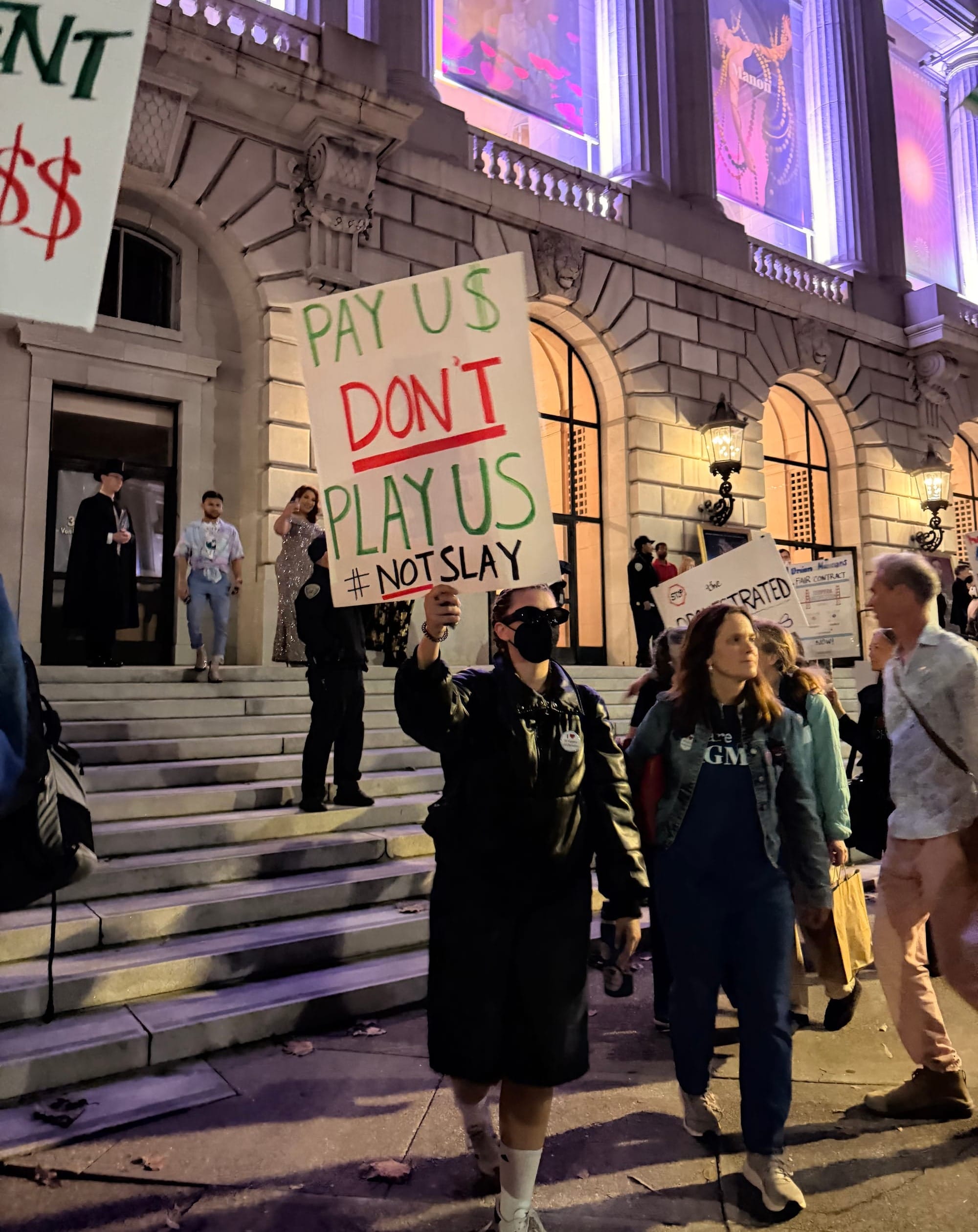
Management claims the cuts are necessary due to the two different economic realities SF Opera faces. On one hand, the company is seeing upward trends in revenue, with subscriptions up 13% and almost $50 million raised in donations. On the other hand, inflation has ballooned operating expenses, forcing SF Opera to draw $30 million from its hefty $300 million endowment. To address the opera’s $15 million yearly deficit, management is proposing a 5-year contract set to reduce “underutilized” performing hours.
From the musicians’ perspective, fewer hours performing and less pay will continue to hurt the opera. “A shrunken orchestra only has diminishing returns”
The allocation of the $300 million endowment remains a sore point for the musicians. While the orchestra took a major cut during COVID — they accepted a 44% decrease to their base minimum salary — the SF Opera General Director Matthew Shilvock’s salary has only grown. Public tax filings show Shilvock’s salary increased from $424,000 in 2022 to $729,000 in 2025, about a 22% increase.
From the musicians’ perspective, fewer hours performing and less pay will continue to hurt the opera.
“A shrunken orchestra only has diminishing returns,” said Gabe Young, associate principal oboist and a chair on the orchestra’s negotiation committee. Young, along with other musicians, has proposed options to address the deficit, including scaled-down concert operas that are more affordable to stage and attend. The decrease in wages could also deter future talent, and the musicians’ statement asserted that “we cannot expect exceptional talent to accept a lower-paying position in one of the world’s most expensive cities.”
“The musicians have made San Francisco their home, they’ve made [the] SF Opera their home,” said Young. “This should be concerning to anyone who appreciates art.”
As of September 15, the orchestra announced that three further performances through September 20 would be canceled due to ongoing negotiations.

In a city dripping with cash, San Francisco can’t get its kids to school.

“I'm just a dad that wants to go back to work.”

Putrid vibes reigned at SF billionaire-funded Hamilton Society debate.


Ten picketers were arrested on July 21st during the strike at C&H Sugar. Their charges can be filed at any time within the next year.

