
Partying with Pitbull Before the AI Bubble Pops
We crashed a conference hosted by AI startup CoreWeave. It was weird.
We crashed a conference hosted by AI startup CoreWeave. It was weird.

What can the Brazilian elections teach us about the Brazilian Left and the world?

We crashed a conference hosted by AI startup CoreWeave. It was weird.

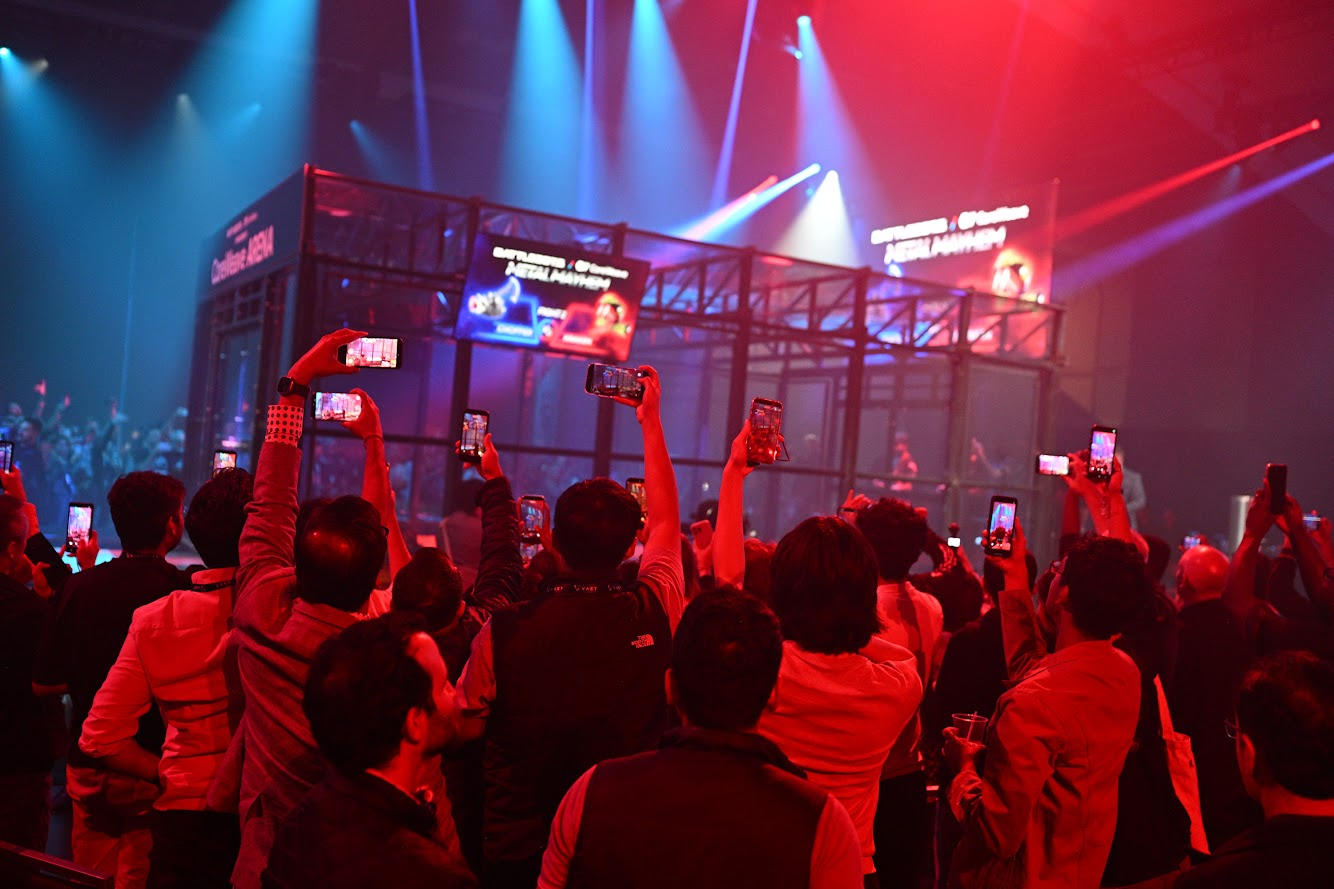
It looked like the tech industry had regained its pre-pandemic swagger, a relentlessly publicized industry image of tech’s wealth being enjoyed by its workers in the form of ostentatious perks. Pitbull, an artist who averaged crowds of 19,000 a show this summer, was playing a private show to well under 1,000. The Moscone Center was decked out in a neon Miami Vice colorway, featuring unlimited Cuban food and an open bar. Delivery robots jetted across the room to deliver precious swag, like Pitbull’s signature bald caps, shades, and mustaches.
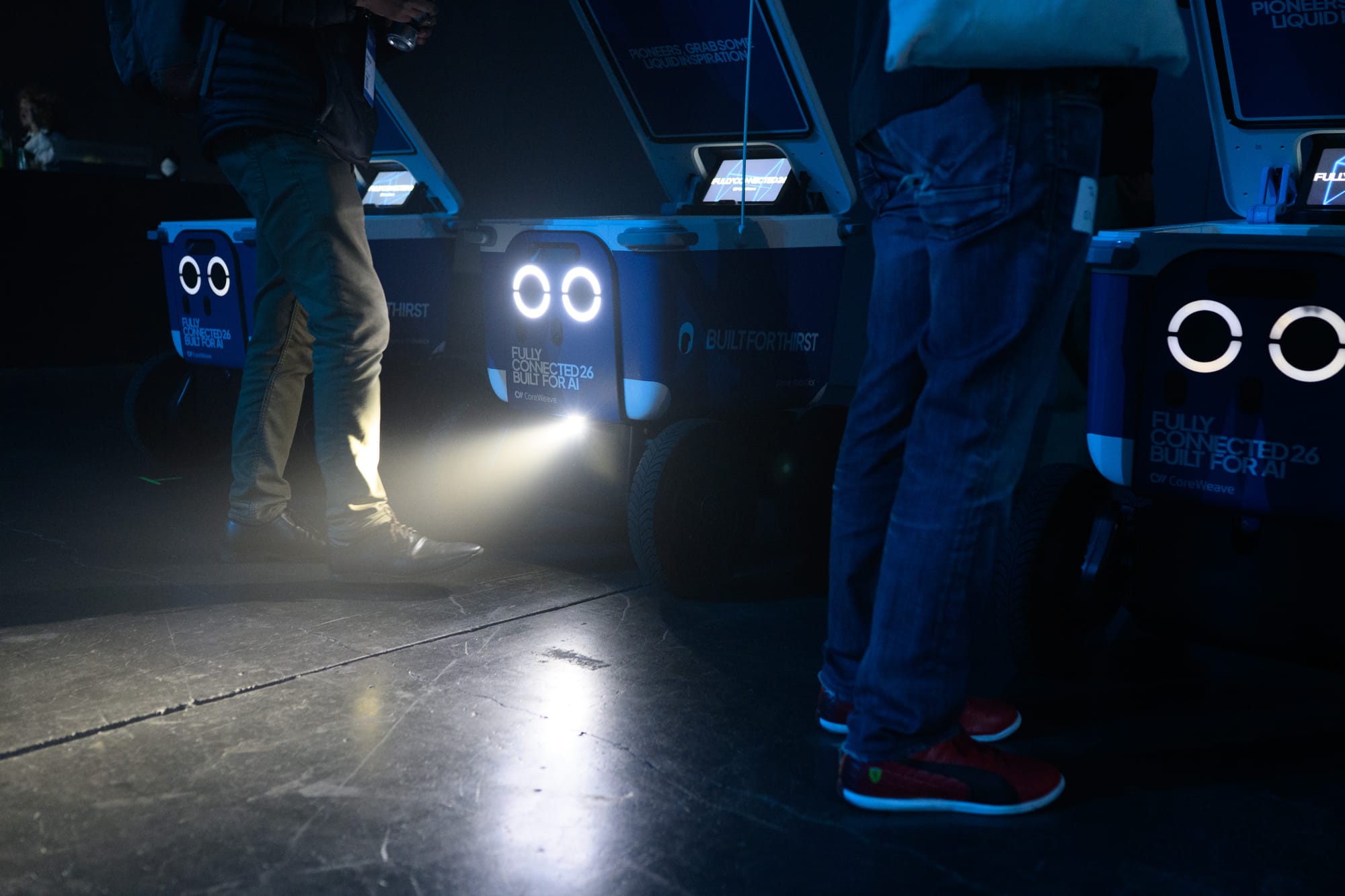
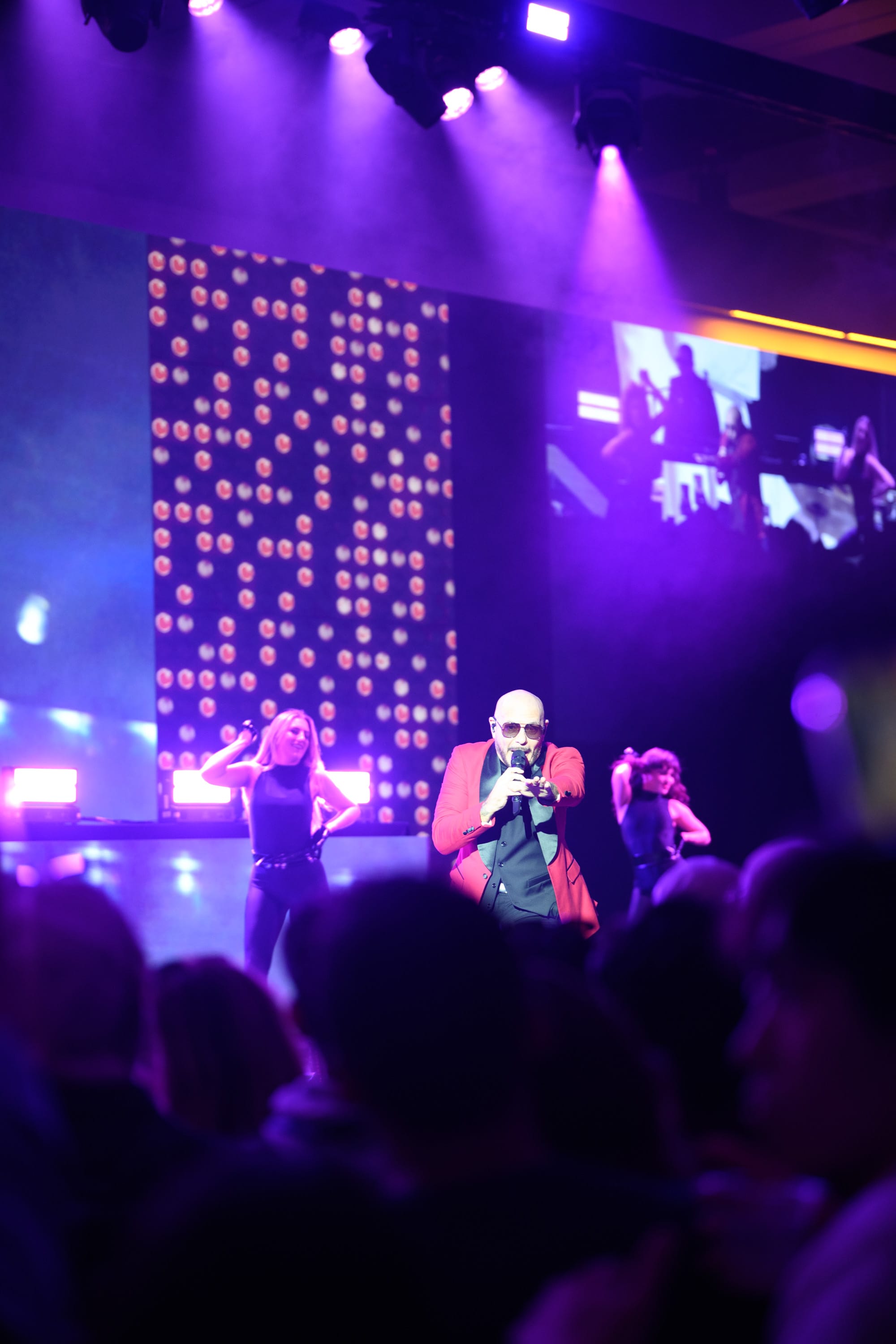

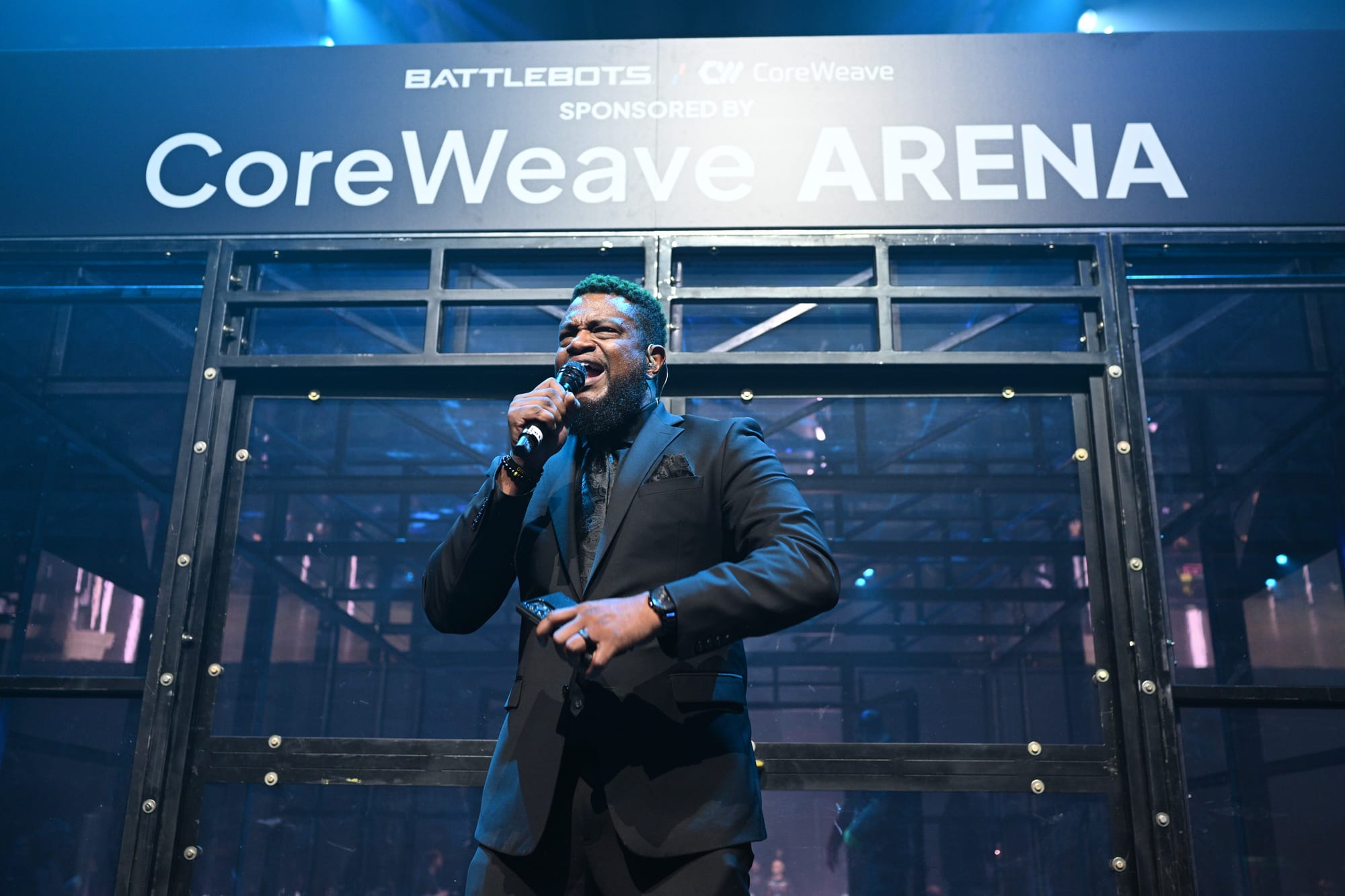
The afterparties featured Pitbull (and Pitbull impersonators), battling robots emceed by a host of the television show BattleBots, and delivery robots. (Matt Takaichi / Bay Area Current)
What brought Pitbull, BattleBots, and delivery robots to the Moscone Center? It should go without saying that it was AI. But the company behind the event — CoreWeave, a key player in the AI data center buildout — is a curious one. Unlike the typical startup founding story, CoreWeave was not built to capitalize on any particular technical innovations. Instead, their main innovation was financial.
CoreWeave wasn’t always meant to be a data center company. Founded in New Jersey in 2017, CoreWeave was originally a crypto mining company called Atlantic Crypto. Three of its four founders were commodities traders — people who make money by betting on the price of oil, natural gas, and other resources. When “crypto winter” hit in 2018, the company pivoted, using their existing hardware to provide cloud computing for 3D modeling and data analytics. In 2022, seeing the developments in LLM technology, they pivoted once more, buying up a giant stock of cutting-edge Nvidia GPUs (graphics processing units, an essential component for AI model training) in a bid to cater to the AI boom.
That last pivot led to their current business model, as a “neocloud”: operating data centers and renting out GPUs on a per-hour basis. Most of their revenue comes from major cloud computing companies looking for extra capacity, particularly Microsoft. So far, it’s received immense enthusiasm from investors. In 2023, Nvidia invested $100 million at a valuation of $2b. Nvidia is also a key hardware supplier, perfectly illustrating the circular financing that characterizes so much of the AI boom. To add to the circularity, CoreWeave has pioneered the practice of using Nvidia GPUs as collateral when raising debt.
That circular financing didn’t appear to faze investors: in 2024, CoreWeave’s valuation rose dramatically to $19b. In 2025, CoreWeave went public in what was the largest AI-specific IPO at the time. In 2026, Nvidia invested again, this time to the tune of $2b. To date, CoreWeave has built 51 active data centers, with more in the pipeline. They are one of the largest holders of GPUs in the cloud computing space.
This is a new breed of tech company: not the story of Silicon Valley myth, of inventors tinkering in their garage or dorm room in the hopes of changing the world. CoreWeave’s story is that of opportunistic Wall Street traders who saw a chance to make money and kept pivoting until they stumbled upon something that worked.
Still, a tech company isn’t seen as successful until it has its own conference. In 2023, the AI company Weights & Biases began hosting an annual conference in San Francisco called Fully Connected, pitched as bringing together “the world’s brightest minds in AI.” CoreWeave acquired the company in 2025, and the 2026 version of Fully Connected, held at the Moscone Center from September 30 to October 2, would be the first under the CoreWeave banner.
This is a new breed of tech company: not the story of Silicon Valley myth, of inventors tinkering in their garage or dorm room in the hopes of changing the world, but of opportunistic Wall Street traders who saw a chance to make money and kept pivoting until they stumbled upon something that worked.
To throw a conference at the Moscone Center is no small feat, something usually associated with annual extravaganzas like the Dreamforce convention hosted by ultra-profitable Salesforce. But CoreWeave is not even close to profitable. Although their annual revenues are considerable — in the first half of 2026, they earned nearly $5 billion — their operating expenses are higher, as they continue to build data centers. Their build-out is debt-financed: with $51 billion in debt and lease obligations, CoreWeave is extraordinarily overleveraged. Given that the company is still not profitable, newer debt is needed to pay off the interest on older debt; as interest rates go up, this can lead to a vicious spiral. In the first half of 2026, interest payments accounted for over $1 billion. Both Ed Zitron’s newsletter and Elizabeth Lopatto of The Verge have described CoreWeave as a financial “time bomb.”
And yet, there CoreWeave was at the Moscone, putting on a spectacle with expensive borrowed money. We wanted to see it for ourselves before the bomb went off.
We wanted to immerse ourselves in the spectacle, but we also wanted to understand the feelings of those inside the bubble. Did the tech workers attending this conference — relentlessly referred to as “pioneers” throughout the conference — see it as a bubble? Were they worried about AI killing humanity, or what AI might do to their own jobs?
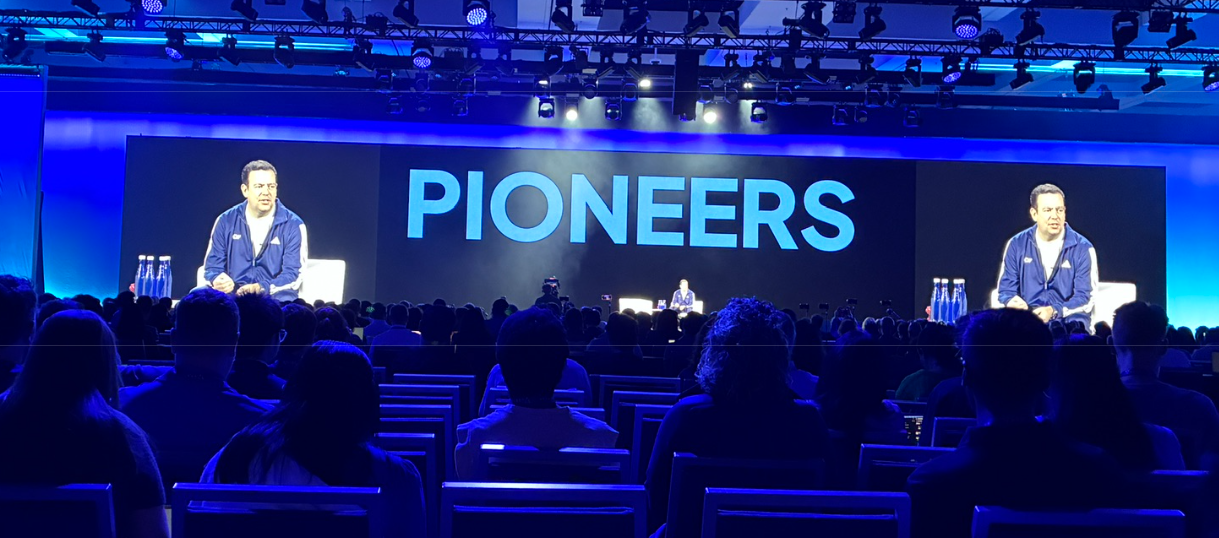
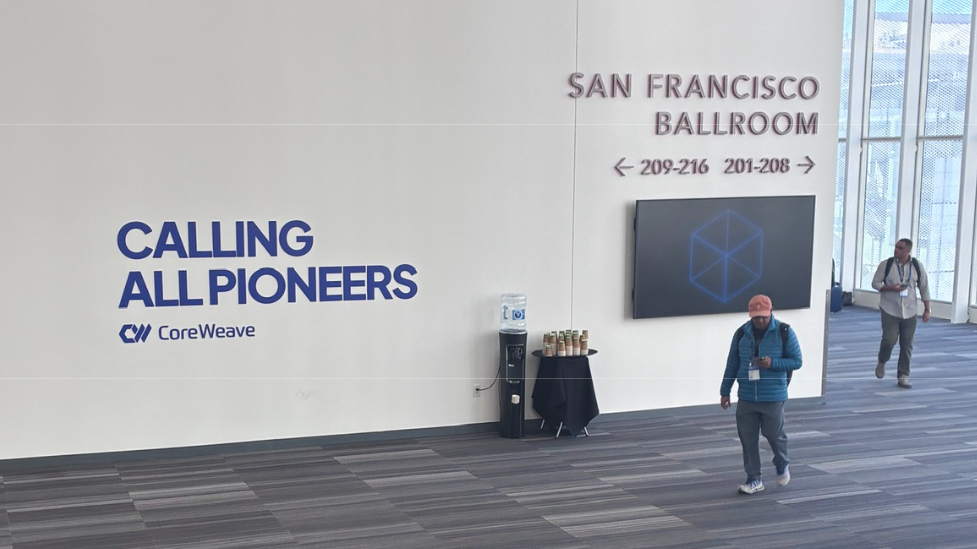
The “pioneers” messaging was repeated throughout the conference. (Wendy Liu / Bay Area Current)
During the day, our conversations with attendees tended to be professional and uncontroversial. Nobody seemed particularly alarmed by the prospect of the bubble bursting, or by the public backlash against AI. We talked to a pair of recruiters who helped AI companies hire, who said their clients were “optimistic” about the space. One financial analyst from New York said CoreWeave was a “buy” on the basis of “strong fundamentals.” A startup founder from Oakland wanted to use AI for wildfire detection, acknowledging that fundraising was a “challenge.” FieldAI demoed a robot that could be deployed for construction work, to take on the “dangerous jobs that the newer generation doesn’t want to do.” We were confused by T-shirts that said “UNION AI,” which turned out to be an AI startup that had nothing to do with labor unions.
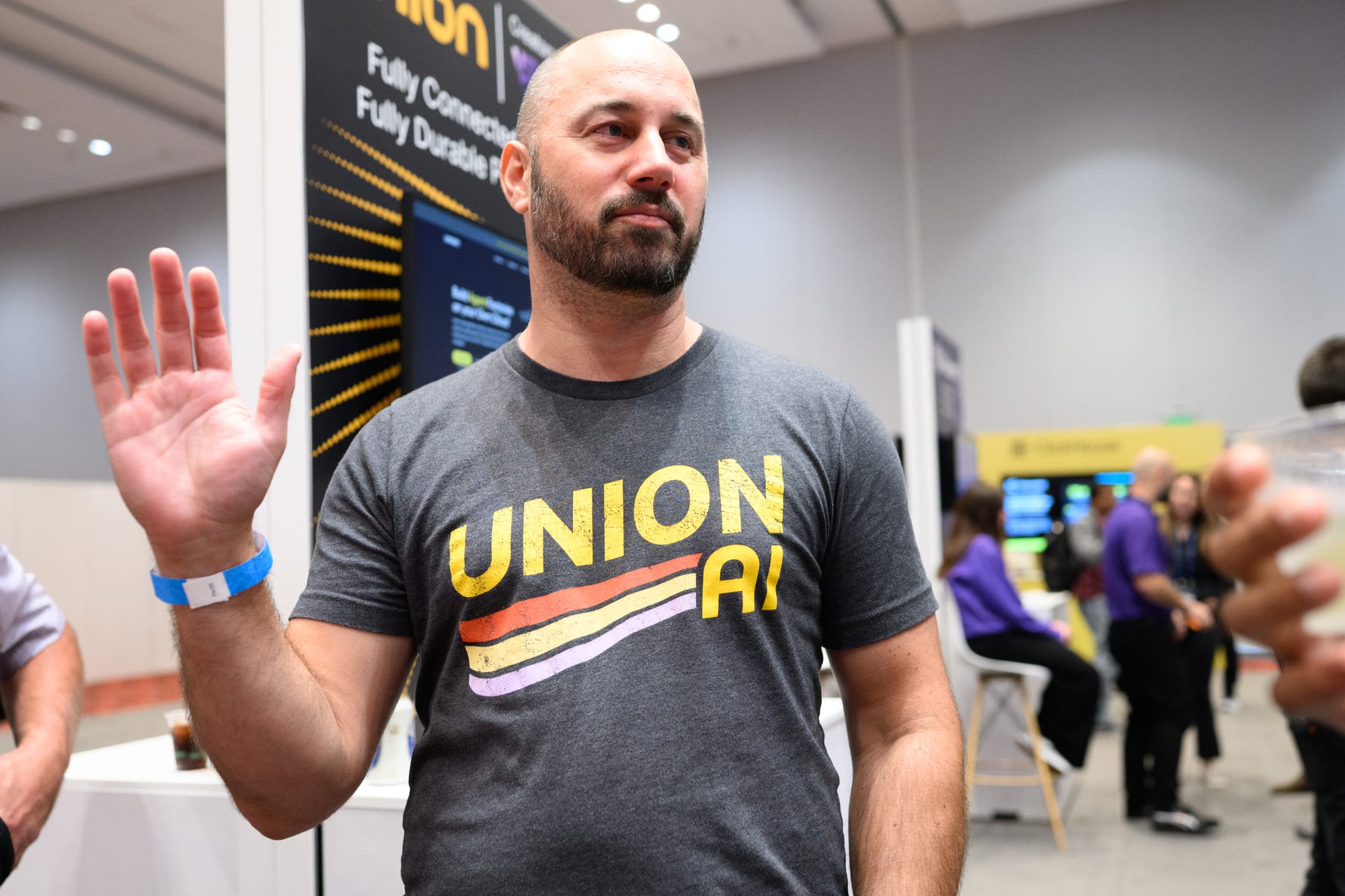
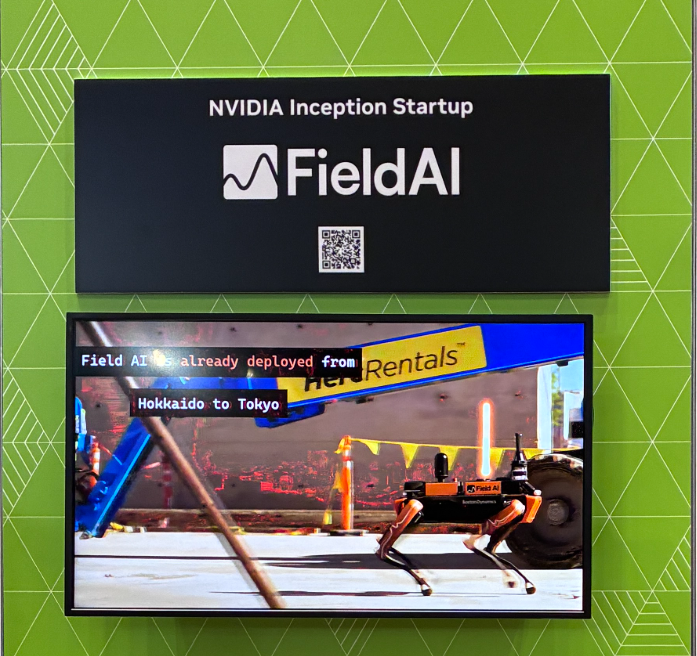
Union.ai raised $38m earlier this year to “power a new era of AI development infrastructure.” FieldAI raised $405 million last year to build “universal robot brains.” (Matt Takaichi and Wendy Liu / Bay Area Current)
It was only at night, with the free alcohol flowing, that the most negative and honest opinions came out. At the Pitbull party, we talked to Gabe Kangas, an unemployed software engineer. He was critical of the speed of the data center rollout, describing CoreWeave’s financial situation as a “tightrope.” “It’s like they’re putting on makeup and saying, don’t think about the real me, check out the circus we’re putting on,” he said. Kangas also expressed concerns over the dangers of software engineers “outsourcing [their] thinking” to AI: “I have to pay an OpenAI subscription and an Anthropic subscription and I have to ask permission to do things going forward that I used to have agency with.”
The contrast between day and night illustrated something obvious: at the end of the day, the circus notwithstanding, this was a tech conference. And tech conferences tend to be boring. Ultimately, they’re an opportunity for businesses to sell their products to other businesses. Pioneers or not, we were primarily here as potential customers for CoreWeave and their partners. CoreWeave itself used this opportunity to announce a new software platform for AI developers called CoreWeave Forge. Many of the daytime sessions had the flatness of a timeshare presentation, delivered in monotone by what felt like AI billboards in personified form. The listed registration fee may have been $899, but many of the attendees we spoke to said they, like us, had gotten in for free.
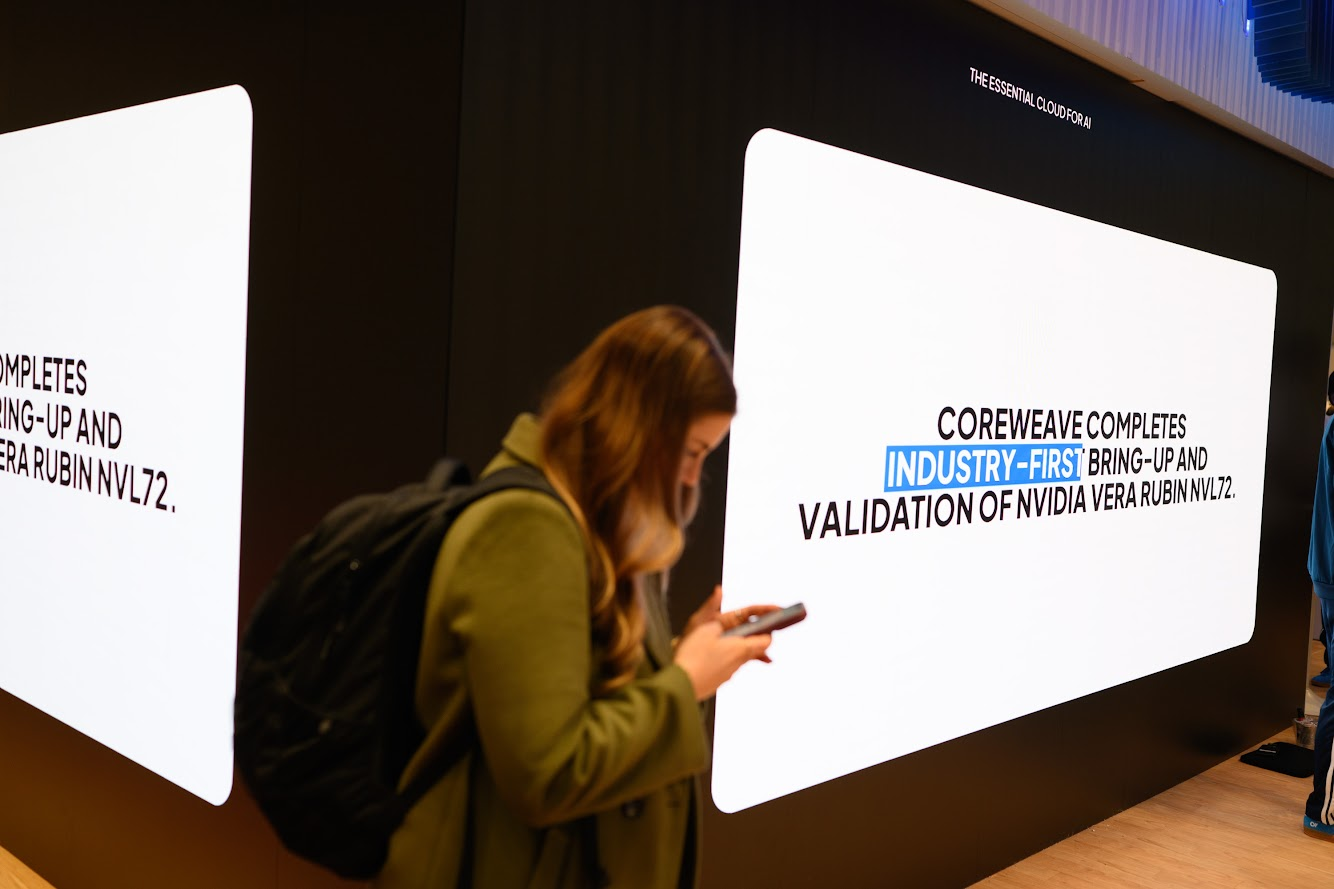
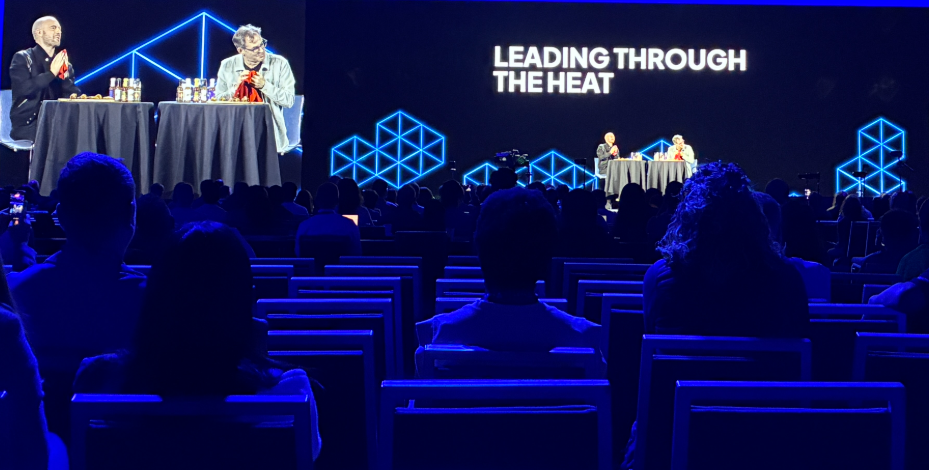
The morning keynotes were clearly meant to be exciting, with loud walk-on music and nightclub-like lighting, but the content was hard to be enthused by: product announcements, bland interviews with industry professionals. There was a celebrity cameo from a Formula One driver whose demeanor suggested that his presence was contractually obliged. Sean Evans, host of Hot Ones, made a valiant effort in his interview with CoreWeave’s CEO, but even at peak spice levels, there wasn’t much said beyond the typical industry buzzwords.
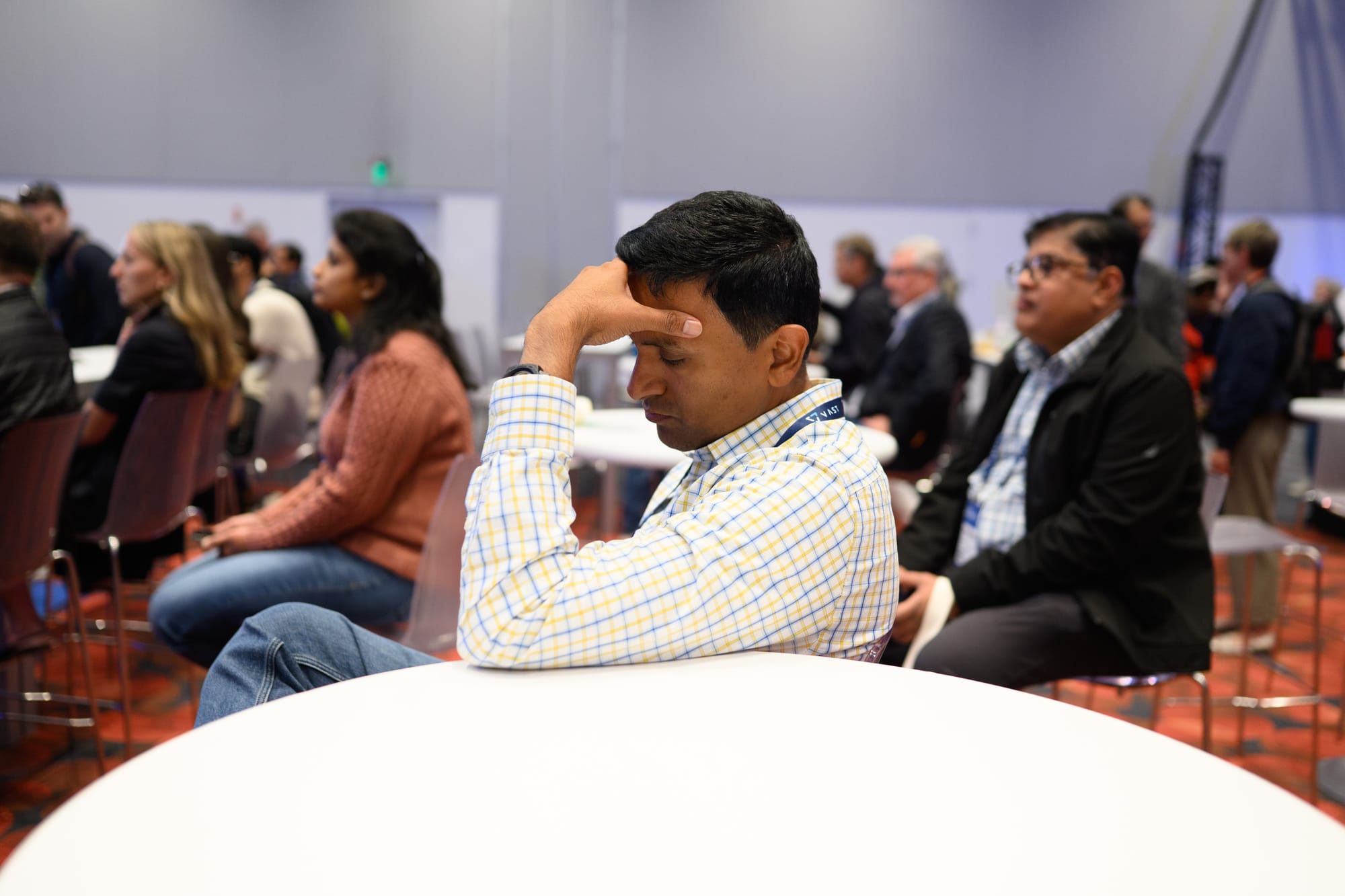
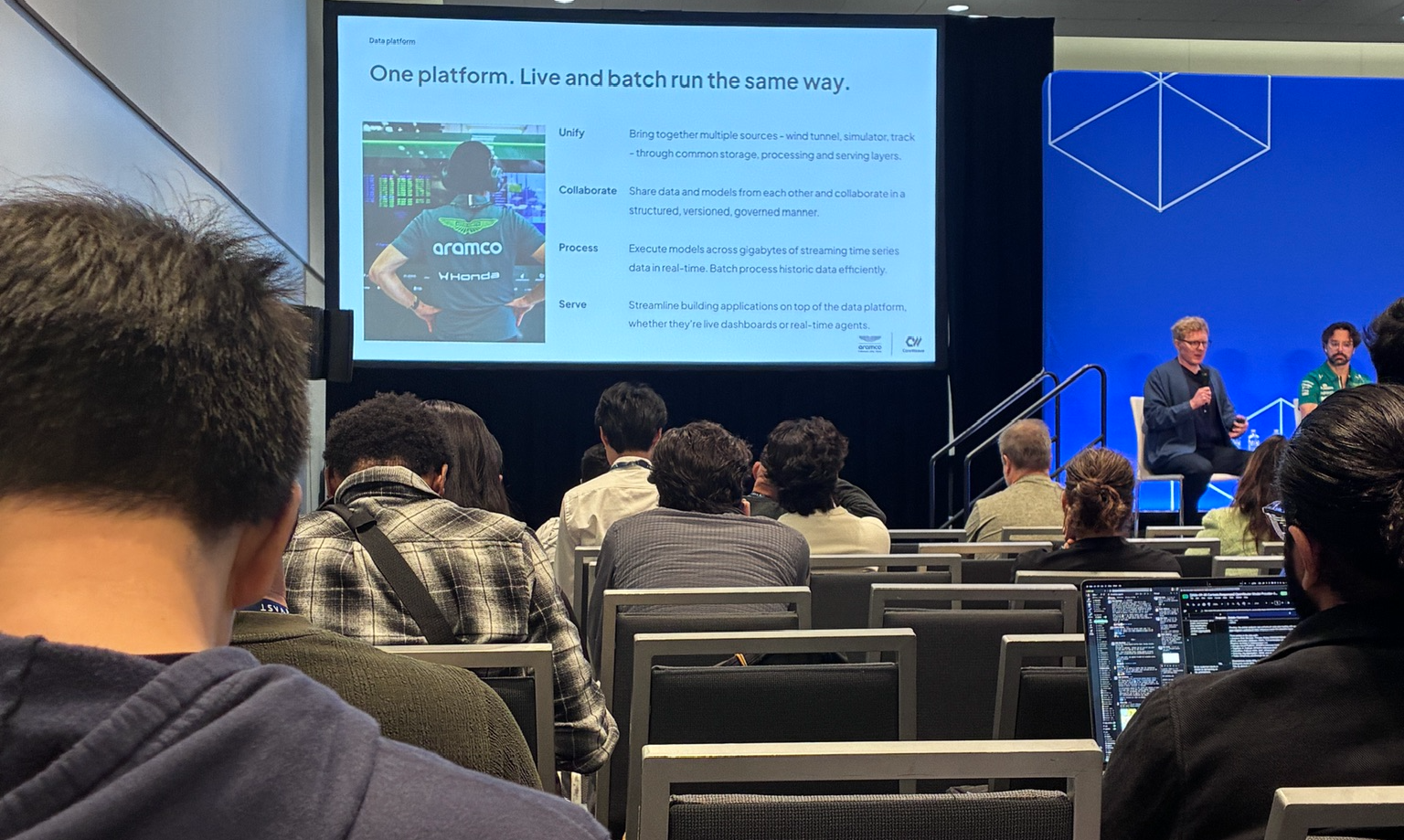
At a time when the media can’t stop talking about fears of AI killing humanity, when even the Pope has issued a call to disarm AI, it felt jarring to attend an AI conference that elided broader social issues. Most sessions were dry, technical talks on the logistics of using particular AI platforms. We experienced an eerie disjuncture between the conference’s businesslike quality, the banality and mundanity of all its technical talks, and the political and social backlash to AI.
The truth is that for many attendees, this was probably just a boring industry conference. One attendee we spoke to was more interested in bar recommendations than discussing AI. Another attendee spent an entire talk searching for housing in Fremont.
We did witness some very human responses to this very inhuman event. (Matt Takaichi and Wendy Liu / Bay Area Current)
Things change rapidly in AI land. In the few weeks since the conference, CoreWeave's financial situation has gone from questionable to alarming.
On October 17, the Financial Times published a major story titled “America’s $10tn AI infrastructure boom is starting to fray.” Key to the story is CoreWeave, with its habit of taking out massive bonds to pay for its data center expansion. Some of those bonds have since entered distressed territory, indicating investor skepticism of CoreWeave’s ability to pay back its debt. On October 19, Elizabeth Lopatto published a follow-up article for The Verge titled “CoreWeave’s debt is becoming the whole AI industry’s problem.” On October 20, CoreWeave’s stock dropped to its lowest level since May 2025. On October 26, Elon Musk predicted a near-extinction-level event for the neocloud sector, which he described as “guppy-level death and consolidation.” On October 28, when Microsoft announced lower capital expenditures than analysts predicted, CoreWeave shares fell some more; after the results of the midterm elections, they fell again.
Of course, their stock price may rise again; analysts are still divided on the company’s future. Still, in the long term, things aren’t looking good for CoreWeave’s balance sheet. Its current financial strategy appears to consist of taking out debt, now at increasingly punitive rates, in order to service its existing debt, which can’t go on forever. Adding to the uncertainty is a distinctly political question, which touches on CoreWeave’s existence: building out AI data centers in the midst of widespread opposition across the political spectrum. CoreWeave in particular is currently facing local resistance to several of its planned data centers, including one in its own backyard of New Jersey.
If a market correction happens with CoreWeave, then what? The AI industry is unusually interdependent, not to mention overinflated, as a result of circular financing schemes as well as investor susceptibility to hype. The fortunes of any one AI company are closely tied to that of the sector as a whole; CoreWeave’s revenue depends on the AI revenue of Microsoft and other hyperscalers, which itself depends on AI expenditures across the economy broadly. A tremble in any part of this house of cards could send the whole thing crashing back down to earth.
The cold truth is that AI hype has led to massively inflated valuations that can’t be sustained once quarterly earnings reports roll in. We’re already seeing tremors across the stack: some companies are cutting back on AI expenditures by capping usage, or switching to cheaper models. The upcoming IPO for Anthropic, originally planned at a $2 trillion valuation, may end up being less valuable due to investor disappointment with slowing growth. After the IPO, they are expected to receive high “junk” ratings from credit rating agencies. And OpenAI, whose own IPO has been delayed until next year, had to reduce its fundraising expectations for its current round, thanks to “tepid” investor response.
A market correction may already be underway, though it’s hard to confidently say much while we’re in the middle of it. We can only hope that the next few months bring a reality check to the AI bubble, which would, among other things, cool the Bay Area’s overheated housing market — something that tenants desperately need. Until then, don’t get distracted by the chicken wings and circuses.


AI data centers have arrived in the Bay — and the fight to block them is just getting started.

Contrary to what Scale's 7-figure ad campaign claims, the company's ethos is anything but “centering humans.”