
French Students Proclaim “the End of the Contemporary Era”
A report from Current’s foreign correspondents in Paris and Marseille.
A report from Current’s foreign correspondents in Paris and Marseille.
Our advice columnist Pretty Good Advice works through a breakup problem.
Tenant fights have become a mainstay in the political landscape.

Who wants a World Cup devoid of feeling? A die-hard soccer fan laments what is sure to be a tournament overflowing with cash, but lacking in life.

The World Cup is coming to the Bay. Shouldn’t we be excited? There's nothing bigger than this tournament. The feelings associated with the World Cup are so deep, that no words nor clear-cut analysis could capture them. That is why fans all over the world — as they do every four years — will sell their belongings, give up their jobs, and forego buying homes to travel to the 2026 World Cup.
Unfortunately, FIFA is making this summer’s World Cup the most expensive to attend in history. While reflecting on the prices, Arsenal fan Zohran Mamdani summed all our thoughts up, “I don’t think a stable future for soccer can be built upon the denial of working-class fans being able to watch the game themselves.” In less than two months, he’ll be proven right. The fans that make this tournament special will be nowhere to be found. The result will be a competition that has all the pieces of a big event, but not the soul.
What’s happening?
The World Cup has never been cheap. If you compare it to other sporting events in the U.S. though, it’s affordable. You won’t have to burn your car down and use the insurance payments to fund your trip. Unless of course, you’re Argentinian.
This time around, FIFA has given up on affordability. The 2026 World Cup is set to take place across three huge countries: the U.S., Canada, and Mexico. Traveling across this region is unavoidably expensive. Imagine U.S. companies extorting you on all fronts, whether it’s airlines, transportation, or hospitality. This World Cup is not going to mirror the last one in Qatar, where you could take a 40-minute train from every single stadium to one another. The issue is that the U.S. — which is the centerpiece host in 2026 — has a business culture that treats fleecing fans and talent like a human right. That’s before we even get to the tickets.
If you wanted a ticket for the World Cup final in 2022, the cheapest one would’ve been $200. In 2026, the cheapest ticket for the final is $4,185.
If you want to understand the price-gouging in this World Cup, look at the ticket prices. Let’s try the biggest game of them all: the World Cup final. If you wanted a ticket for the final in 2022, the cheapest one would’ve been $200. In 2026, the cheapest ticket for the final is $4,185. Reread those last two sentences. World Cup final tickets four years ago were less than 5 percent the price they are for 2026. FIFA justifies this increase by pointing to U.S. ticket prices, saying, "The pricing model adopted (for this World Cup) generally reflects the existing and developing market practice in our co-hosts for major entertainment and sporting events.”
FIFA’s Purpose
So, given most will be unable to afford this World Cup, why does the U.S. get to host? To answer this question, you need to understand FIFA’s role: to make as much money for its national football associations (FA’s) as possible. Every year, FIFA sends vast sums of money to FA's all around the world. Associations from Brazil to Kenya rely on this money to sustain themselves. Technically, all this funding is meant to go towards soccer’s development in these countries: building soccer fields, youth development facilities, and so on. Yet a Transparency International study on FIFA in 2015 revealed that 80% of FA’s have no public records of how they spend their money. FIFA claims they’ve reformed since then, but a 2024 study by FairSquare shows that FIFA still refuses to mandate the disclosure of these public records. All that money earmarked for building new soccer fields is left in the hands of unaccountable executives.
Pressure from commercial partners also takes a toll. Since their 2015 corruption scandal, FIFA has been doing anything to bring sponsors back onboard. Especially given these sponsors’ immense contributions to FIFA’s revenues: over 60% of FIFA’s budget. Among FIFA’s current American sponsors are Visa, American Airlines, and Airbnb. These companies all benefit from a cash-rich World Cup. For Visa, higher ticket prices mean higher transaction fees. It also means people taking out enormous lines of credit to pursue a trip they can’t afford (which leads to more fees). For American Airlines, a ridiculously large World Cup means more people booking flights at higher prices. For Airbnb, skyrocketing rental prices mean higher service fees for the company. In Airbnb’s case, they’ve even allowed hosts to cancel bookings when hosts realized they could upcharge for the World Cup.
American companies also benefit from the U.S.’s business-catered approach to, well, everything. Whereas other countries —- like Mexico —- have consumer protections to defend their fans from egregious price-gouging, the U.S. has investment firms spending millions of dollars to buy up tickets and resell them at a profit. To get a better sense of how American host cities are approaching this World Cup, listen to their event organizers. For instance, listen to interviews with Bay Area Host Committee CEO Zaileen Janmohamed, and you will hear endless monologues about churning out revenues for local businesses. You will hear about ‘brand activations’ and their efforts to build relationships between executives and sponsors. The key word you will never hear —- not even once —- is ‘affordability’.
In total, the 2026 World Cup is estimated to rake in over $11 billion of revenues into FIFA: making it the most profitable sporting event in world history. In comparison, the 2022 World Cup brought in $7.5 billion. For FIFA’s stakeholders, those numbers are what matter most. Not the health of the game, nor the affordability of the event, but the cash being brought in. It hurts because there’s a distinct magic at the heart of this competition. FIFA’s decisions may now destroy that magic.
In 2022, during Argentina’s knockout clash versus Australia. Thirteen minutes into this close game, the two sides were scoreless. As the tension built, Argentine fans across the stadium began to rise, singing as loud as they could while whipping their shirts into the air. Translated to English, they sang, “I can't explain it to you, because you won't understand. The finals we lost, how many years I cried for them.”
Why does the World Cup matter?
The World Cup has something special to it. The emotions it invokes are ridiculous. You’ll find people who are level-headed in their day-to-day lives. Put them in front of a television screen while a group stage game unfolds; the clown will come out.
It’s this same irrationality that has made this tournament a central part of my life. Every four years, my dad and I make the World Cup the center of our universe. Take the 2018 World Cup. Those games took place in the middle of the California night. I remember the first early-morning matchup: France versus Australia. My dad and I had both agreed we would set our alarms to catch the game at 3:00 a.m.. Fast forward to 2:45 a.m., I’d awoken to a pitch-black room, with only the TV’s light to illuminate my surroundings. I rubbed my eyes for a few minutes, thinking to myself, “Does Dada really care about this as much as I do?” Minutes later, there he was, strolling into the room casually as if it was afternoon, with a cup of tea in his hand. We were the only two in our family awake. Somehow, neither of us were the slightest bit tired.
This story is just one in a bigger tradition. My father himself has stories ranging back to the 80s. In one, he arrived at a U.S. military base in Afghanistan in the middle of the night. His first instinct upon arrival? Look for a television. Afghanistan was an active warzone, but the World Cup was happening. In the dead of the Afghan night, my dad was desperately trying to catch the second half of a group stage game. He ended up succeeding as well, finding a group of soldiers watching the game in the dim-lit night (he himself was not a soldier). For a moment, military duties were cast aside for shared passion. Stories like this illustrate the need that both soccer fans and non-soccer fans have to not miss a single second of what will unfold.
So what brings such a fantastical aura to World Cup games? It’s the feeling that every single second is packed with meaning. You could feel this during the final in 2022, when France equalized with only minutes to go in extra time. The camera panned to Argentinian winger Ángel Di María. Tears streamed down his face as he clutched a bib in distress. By the end of the game, a penalty shootout decided the winner. When Argentine defender Gonzalo Montiel scored the winning penalty at the end of the shootout, he lost his composure. Montiel took off his shirt, buried his head into it, and sobbed uncontrollably as he walked away from the penalty area. Even viewers that didn’t understand a lick about soccer discerned one thing: this game meant the world to everyone involved.
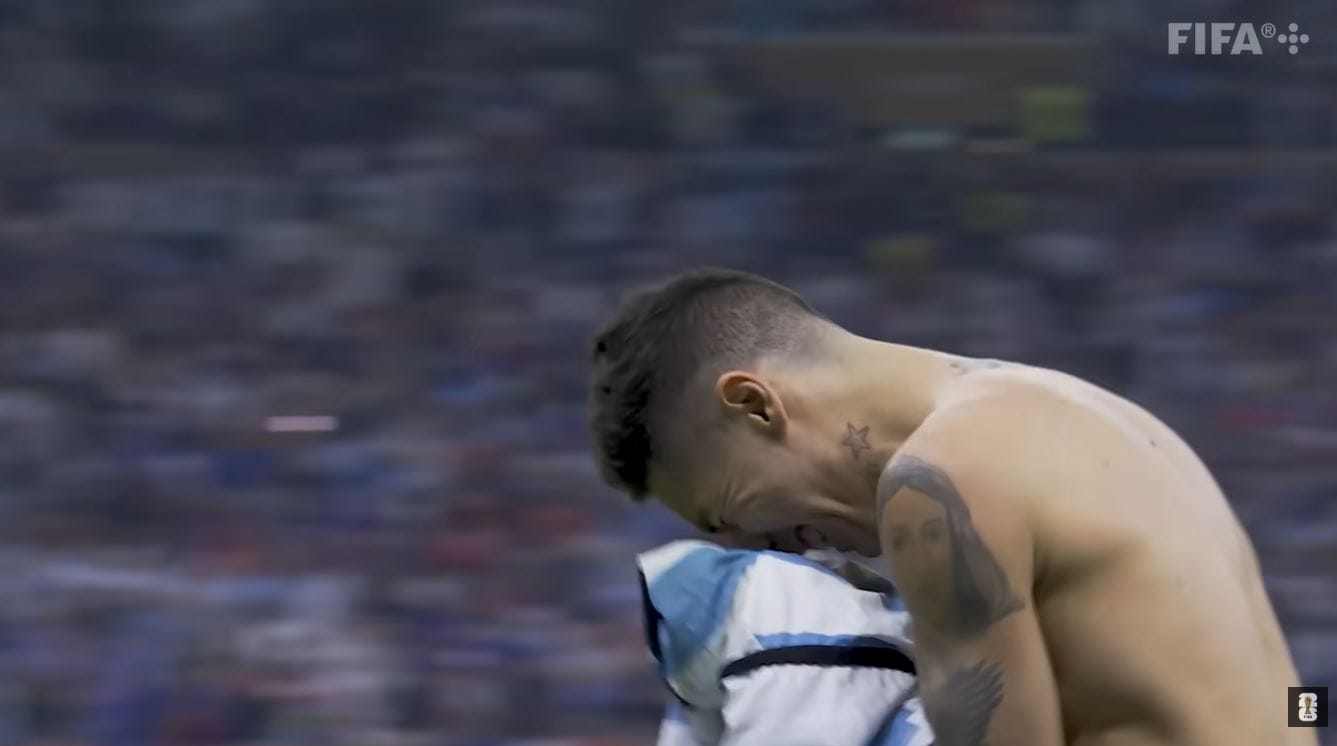
FIFA seems to have forgotten this: what makes the World Cup special is not the big names, nor the level of play (you can see higher quality games on a regular basis in Europe). What separates the World Cup is the feeling that something deeper than sport is at stake. The shock and awe you hear from the crowd reflects that feeling.
Take Iran versus Portugal in 2018. I can still hear the surge of noise from the Iranian crowd, when during the final minutes, Mehdi Taremi nearly sent Iran to the second round (and Portugal home) for the first time in their history. The desperate energy from the Iranian fans made its way straight into my living room, where my father, uncle, and I were glued to the television. I remember my uncle — the most stoic man in our family — squealing in agony as the ball barely missed the open goal. All three of us sat there with our mouths agape, not believing what just happened in front of us. Two minutes later, we stared in stony silence as Iranian players and fans let out the most awful tears of heartbreak at full-time. The hysterics felt less like sporting defeat and more like a national tragedy.
Portugal was THIS close to getting knocked out of the FIFA World Cup. 😳 pic.twitter.com/y8KxYTvoiG
— FOX Soccer (@FOXSoccer) June 25, 2018
The ordinary moments are also special. In 2022, Argentina’s knockout clash versus Australia produced one of those moments. Thirteen minutes into this close game, the two sides were scoreless. As the tension built, Argentine fans across the stadium began to rise, singing as loud as they could while whipping their shirts into the air. Translated to English, they sang, “I can't explain it to you, because you won't understand. The finals we lost, how many years I cried for them.” While the Argentinian players passed back and forth, it became difficult not to let your eyes wander to the crowd. The noise from the fans was awe-inspiring, but it also indicated something deeper: ‘lose, and we will not forgive you.’ The Argentinians had gone 36 years without winning a World Cup. Another four years would not fly.
In 2026, these moments will be far and few between. Singing Argentinians will be replaced by corporate lawyers. The fans that want to jump, shout, and support their countries will be outnumbered by suburban families, who would rather sit down and relax. The stadiums will lack the long-form poetry of Argentinian fans that turned a sterile Qatari stadium into a carnival; or the visceral roars of Iranian fans that made a first round game feel like a life-or-death affair. It is those moments that give the feeling that the World Cup is literally the greatest drama on Earth. With the prices on show for 2026, we will get a crowd that cannot live up to that feeling. The World Cup without working-class fans is a husk of its true self.
Beyond the Stadium
One possible upside is that the World Cup isn’t restricted to the stadiums. If you walked around the streets of Moscow the day before the opening game of the 2018 World Cup, you would’ve run into various crowds of Peruvians, Iranians, Argentinians, Senegalese, Colombians, Egyptians, Costa Ricans, and Mexicans, all singing in their mother tongues. You did not need to enter a stadium to experience any of that.
This element makes the World Cup a festival which is global to the nth degree. Only during the World Cup can you see excited Senegalese supporters singing the One Piece theme song with Japanese fans, in the middle of a Russian city known as the “Gateway to Siberia.” This is also why it’s so exciting to imagine what festivities might descend on the U.S. this summer. Imagine the narrow streets of downtown San Francisco as spirited Algerians bring new life to rickety Muni buses. Or imagine an Irish pub in Boston, as a curious regular asks a Scottish man in a kilt to repeat himself for the fifth time.
I felt a small version of this atmosphere in Germany last year, when the European Championship took place. Fans all over the continent had come to Germany to follow their team. I specifically remember one group of endearing young English fans. They were construction workers from Newcastle who had saved up for a short trip to Dusseldorf for the tournament. I could barely understand their Northern accents at first. Each of them tried to translate what the other was saying — me standing there gobsmacked.
Despite my initial struggles, I grew fond of these boys over the few days I spent with them. They were very different kinds of people than I’d gotten used to in residential San Francisco. They were more genuine, more rowdy, and (honestly speaking) more funny. They said what was on their mind without the usual protective filters that Bay Area residents put between their thoughts and their words. They had followed the English team all across the continent over the years. Throughout my time in Germany, fans like them were the beating heart of the tournament: singing, drinking, and making the cobblestone streets of Dusseldorf and Cologne feel alive. Eventually, I asked one of them whether they planned on traveling to the U.S. in 2026 to follow their team. He casually answered, “Nah, mate. Too expensive”.
What We Will Get Next Year
Last year, I turned to my friends to game plan this World Cup. We all beamed with excitement. We were ready for the celebration around this World Cup to take over Bay Area streets. Now, less than two months away, all that excitement has gone. Price-gouging as far as the eye can see has killed off any hope for a festival atmosphere. This is set to be a World Cup devoid of feeling. A tournament overflowing with cash, but lacking in life. World Cup host cities are now preparing for the lackluster influx of visitors by gearing their tournament festivities for locals rather than traveling fans; but what’s the point of a World Cup if the world isn’t actually there?
This is set to be a World Cup devoid of feeling. A tournament overflowing with cash, but lacking in life.
Some may say this is the cost of doing business. There’s no shortage of American sports fans rushing to defend FIFA’s decisions as simple supply-and-demand. What these people don’t understand is the difference between forms of entertainment and cultural goods. I enjoy using Netflix, but Netflix is not a part of me. The World Cup is different. It’s woven into the social fabric of working-class communities around the world. Look at Paraguay: when they qualified for the 2026 World Cup, a national holiday was declared the next day. Tens of thousands of Paraguayans poured out onto the streets. Fireworks exploded above the crowd while they bounced together to the beat of one chant, “Albirroja! (Red-and-white!)” The World Cup breathes life into families and neighborhoods in every country you could name. To put it in the same box as streaming subscriptions and theme parks is to misunderstand the competition entirely.
That is why, despite everything, millions of fans will do everything in their power to reach this tournament. We may well see thousands of bouncing Argentinians in Arrowhead Stadium next year — at the cost of their own financial wellbeing. Or, while strolling through Golden Gate Park, I may come across a sea of Moroccans adorned in red and green. After all, Qatar had all of that and more, right? But attendance is not a binary, it’s a spectrum. Some will make it. Many will be unable to overcome the hurdles FIFA is asking them to jump.
Regardless of whether fans can make it, what happens on the field will still matter. Whether those in the crowd know it or not, the players will be carrying the weight of their nations on their backs. We will see the raw emotions that come out when people fight for something bigger than themselves. Even FIFA’s hubris cannot take that away.
There will be incredible moments, but they will be isolated. Instead, the emptiness at the heart of the authorities governing this tournament will be front and center. This World Cup will undoubtedly generate billions of dollars in revenue. FIFA and its sponsors will pat themselves on the back and say, “job well done.” Yet they won’t understand for the life of them why this all means so much. Tune in this summer and you’ll see an infuriating juxtaposition: a game filled with passion, intensity, beauty, versus an executive class devoid of all those things. Look back at your own passions and you may see the same picture.

When management neglected their building, elderly, majority-Chinese tenants in Downtown Oakland got organized and fought back.

Despite public outcry, Oakland City Council decided to approve the new cop contract and reappoint police commission chair.


In a city dripping with cash, San Francisco can’t get its kids to school.

