


San Francisco Landlords Keep Targeting Elders for Eviction. The Fight Back Is Intergenerational
And the tenants are winning.

When Jackie Barshak, 75, received an eviction notice at her 10th Avenue apartment in the Inner Sunset, she felt shocked and betrayed. “I know what my obligations are as a tenant,” she said. “I felt that I had stayed within the respectful confines of those rules.” Barshak wasn’t having it. After organizing with the local tenants union, Tenant and Neighborhood Councils (TANC), and other local tenant formations her eviction was defeated in April. Her fight is an example of what is happening across the city of San Francisco.
In August 2021, after Barshak’s building was sold to the current landlords, Alda Chan and Trung Luu, Barshak was diagnosed with Stage IV lung cancer. Barshak let Chan and Luu know about her diagnosis that December. But Chan and Luu initiated eviction proceedings against Barshak in early 2026 anyway. Her fight was not only about her home, but her life as well–the five-year survival rate for her condition is between three and 12 percent.
Stories like this one are painfully commonplace in San Francisco, where the cost of rent is extraordinary and gentrification continuously displaces long-term residents. As the San Francisco Controller’s Office reports, enthusiastically, “Housing remains a bright spot. The city’s apartment asking rents [...] continue to be among the fastest-growing in the country.” According to the report, the median asking rent increased by $300 over the course of 2025.
In a disturbing trend, landlords are targeting elders for removal, due to the fact that they can charge new tenants higher rates. Rent control means that Barshak, for instance, pays $1,700 a month, versus her neighbors who pay $4,200. In another case, where three elderly tenants fought off an eviction in Noe Valley, tenants believe the landlord wanted to return the units to market rate. According to Brian Harrington, one of those elderly tenants, “[The landlord] just wants to make triple the amount of money. It's just that simple.”
This explains why many members of the San Francisco tenants movement are elderly, and why the tenants’ movement is remarkably intergenerational. At any given meeting of TANC, you can find 20-year-old transplants organizing alongside San Francisco tenants in their 60s, 70s, and 80s, who have lived in the city for decades.
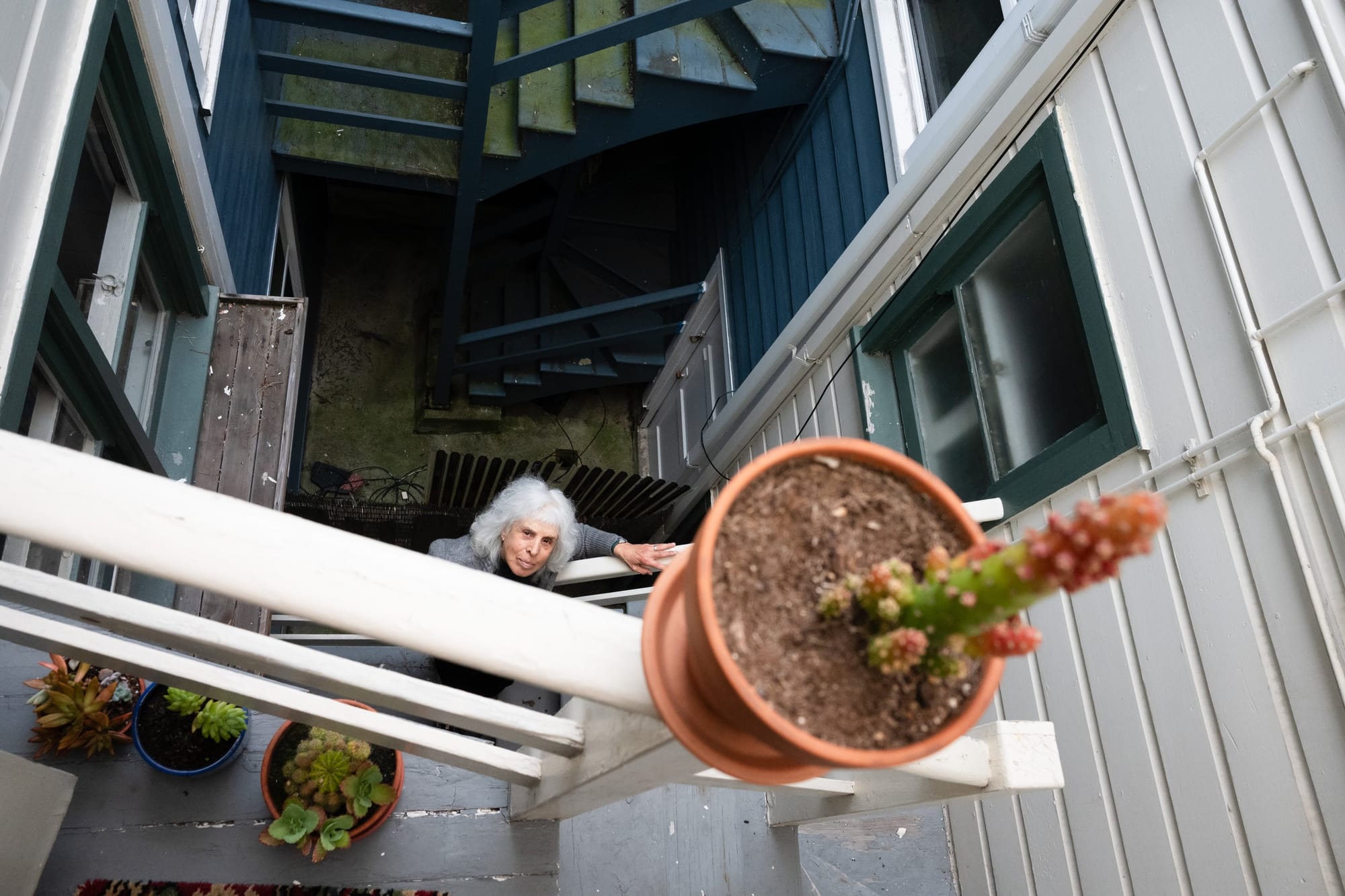
I first met Barshak at one of SF TANC's general meetings. Barshak is a petite, elder woman with white, pearlescent hair, who moved to San Francisco from New York in 1980. Upon arrival, she immersed herself in a vibrant scene of artists, anarchists, and activists. Barshak is a sharp thinker and communicator, even as she faces the difficult circumstances of her cancer treatment and eviction case.
“I benefited from a pre-Reagan economy, in that I was able to have a part-time job, do my activism, ride my bike around the city, and not have to pay huge rents,” Barshak says. But things changed rapidly. “In the mid-to-late 80s, beginning with Reaganism, people could no longer do their art and activism on their salaries. They didn’t have the income required to continue living in San Francisco.”
Barshak was a member of ACT UP (AIDS Coalition To Unleash Power), an organization that fought the AIDs crisis through direct action and other tactics. “I was friends with many men who were dying of AIDs, so that they were often too sick to do the activism themselves. At the height of the crisis, before the FDA was willing to do the research to release the drugs that are now saving people's lives, we had to ‘act up’ and protest,” she said. “We shut down the Golden Gate Bridge. This was coast to coast, to get the government to pay attention to the numbers of people that were dying in the 1980s.”
Barshak wasn’t just involved in ACT UP. She was also an early member of a group of tenants rights’ activists that met at Old St. Mary’s church. This group would eventually become the Housing Rights Committee of San Francisco (HRC).
Nearly 50 years later, Barshak grasped quickly that TANC, Housing Rights Committee (HRC), and West Side Tenants Association (WSTA) could help her fight her eviction. And it’s not just Barshak; the tenants movement has begun to reengage many elderly leftists. Previously, TANC supported Deni Leonard, a Vietnam war resister and an Indigenous rights activist, when it came time to fight off his own eviction case.
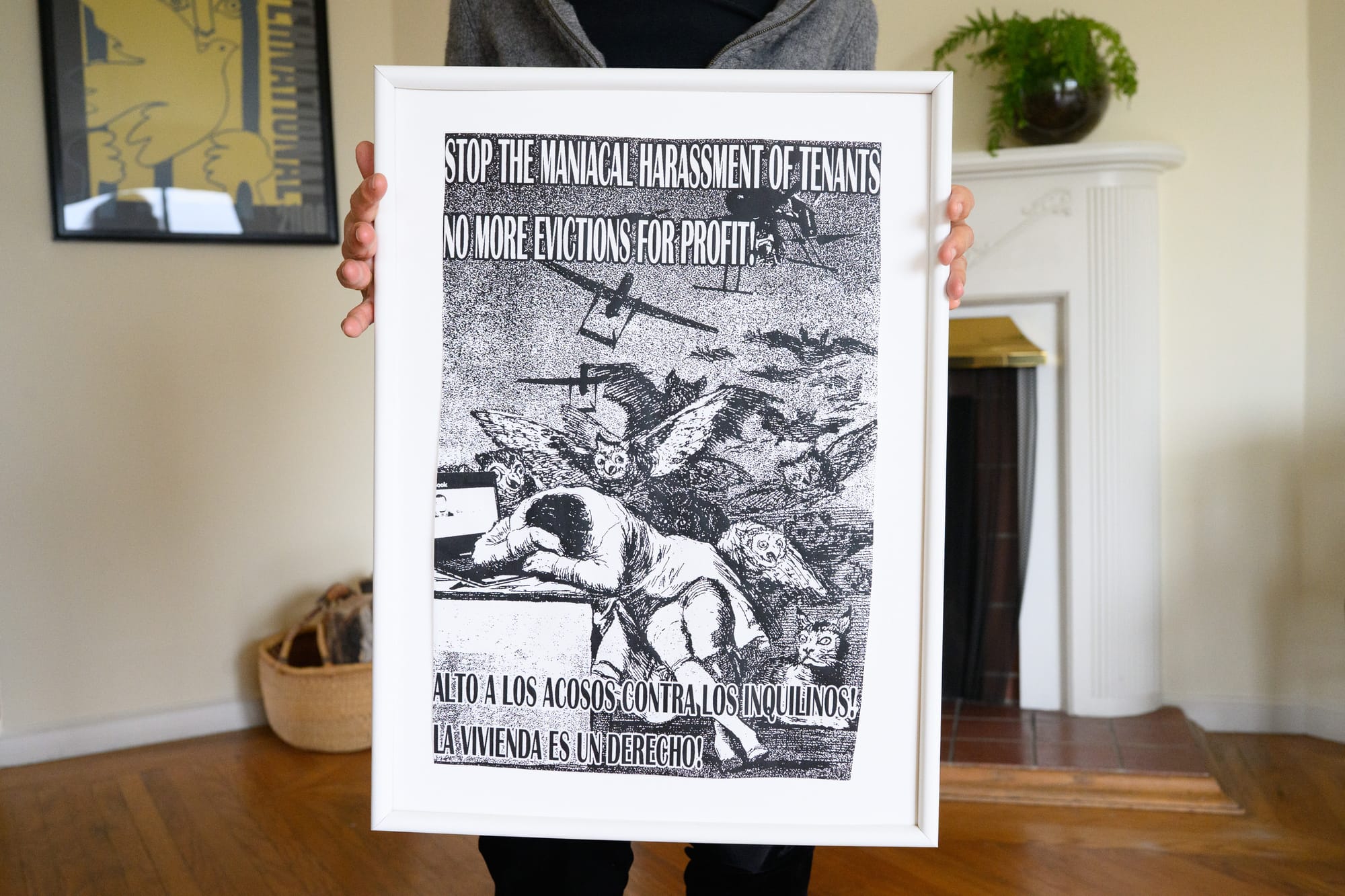
Leonard described the similarities between his experiences from the anti-war movement of the 60s and those in TANC: “I kept thinking, while listening to people’s different problems —this is how everything was during Vietnam. Nobody would do anything because it was too big, the government's going to come after us. And then we kept on doing it and kept on doing it. That’s what I got from my old experiences. We have to keep doing it over and over and over and make sure that, even when we are being attacked, look out and find resources that we can utilize.”
Steve Leeds, 73, is one of the cofounders of WSTA. I first met Leeds at a film screening of The Fall of the I-Hotel put on by the Democratic Socialists of America — San Francisco Tenant Organizing Working Group. The film depicts the historical resistance of Filipino tenants and volunteers to urban renewal in what was then San Francisco’s Manilatown. As it turns out, Leeds was there during the events of the film, in 1977, when the I-Hotel’s tenants were brutally evicted. He remembers consoling an elderly tenant in his room as police prepared to knock down the door.
Now Leeds is fighting for himself and his neighbors. Leeds has resisted three separate threats of eviction from his West Side home in San Francisco. In my time with TANC, Leeds has become a close friend and comrade, who has taught me a lot about the ins and outs of tenant organizing. As Leeds says, “Organizing is about building community and relationships, especially because even a short-term project or campaign usually lasts a number of months.”
Tenant organizing involves the careful work of building unity. As Leeds says, “When [my neighbors and I] all got notices that our landlord wanted to evict us in 2018, I knew that I could not do this alone. I also realized that we had a very specific goal: to fight off an eviction. So I asked everybody: ‘what do you want to do?’ They all said that they wanted to stay in their homes.”
What is truly important is that as many people as possible get to live and die with dignity.
The intergenerational nature of the tenants movement, while remarkable in some ways, is just one part of an overall need for cooperation, what Leeds calls “a united front of tenants.” “It comes back to the issue of solidarity. Social justice movements can't just be about one age group, or one ethnic group. But we have to have a mass movement.”
Solidarity, in turn, stems from everyone’s need for housing. In a recent call with Leonard, he described the necessity of tenant organizing. “Tenant organizing determines how one’s life–especially for the younger ones–are going to come together to make themselves successful. Housing is necessary to give people strength, so they can attend to their personal education and their employment.”
Tenant organizing is a matter of life and death. Meeting people through the movement clarifies what is really important, as compared with my own everyday issues — much less the profound nihilism of SF’s tech elite. What is truly important is that as many people as possible get to live and die with dignity. This was evident with Jackie Barshak’s case, as she viewed her fight for housing as existential amid navigating her cancer diagnosis.

“In November of 2021, I was diagnosed with Stage IV lung cancer. It was of course traumatic, but it was also a relief to know that the symptoms I was having could now be explained. The following year, I had a brain MRI that was part of the protocol. Although I don’t have cancer in my brain, it was discovered that I had a brain tumor,” Barshak says. “Emotionally, it’s been very impactful. I’m uncertain about the future, and what my future is, and what the best health consequences would be for me.”
For TANC and the SF tenants movement, organizers both young and old, we were not going to let Jackie be evicted without a fight. We did not, and we are going to keep organizing.
You can donate here to help Jackie Barshak with her legal fees.
Read next

Where Are All the Yellow School Buses in San Francisco?
In a city dripping with cash, San Francisco can’t get its kids to school.

Cleaning Up Poop: The Human Labor Behind Waymo
Human feces isn’t even the nastiest thing they’ve found in the backseat.

Cops Arrested C&H Strikers and Picketers. The Courts Go For Repression Again.
Ten picketers were arrested on July 21st during the strike at C&H Sugar. Their charges can be filed at any time within the next year.


Breaking News: Seniors in Affordable Housing Say No to Retaliation from Management, Hit the Picket Line and Win
The majority Chinese-speaking tenants at a downtown Oakland building organized to fix hot water, broken doors, and lack of security. Management’s response: shut down their community room.