
This Nonprofit Promised Housing but Left Tenants Homeless Instead
Tenants fight back and plan for the worst: “We’re trying to see where to go for the holidays.”
Tenants fight back and plan for the worst: “We’re trying to see where to go for the holidays.”
When management neglected their building, elderly, majority-Chinese tenants in Downtown Oakland got organized and fought back.
Whatever is on Spotify is not all that there is.


If you've been monitoring the music streaming space in the past year you've probably noticed a few growing trends. Artists and consumers are growing tired of the streaming business model. Prices are going up for consumers, while artists see less and less of the revenue generated by the companies. In turn, people are rediscovering analog music forms or early digital devices, like CD players and iPods. New streaming models such as Nina Protocol — a UK-based streaming service that doubles as a platform for artists to sell their work — have sprouted up in the cracks between the larger streaming tech companies.
I became aware of this growing trend last year when San Francisco-based indie rock band Deerhoof pulled their music from Spotify after Spotify CEO Daniel Ek's finance firm invested in European AI weapons company Helsing. Subsequently, many in my circle, including myself, dumped Spotify.
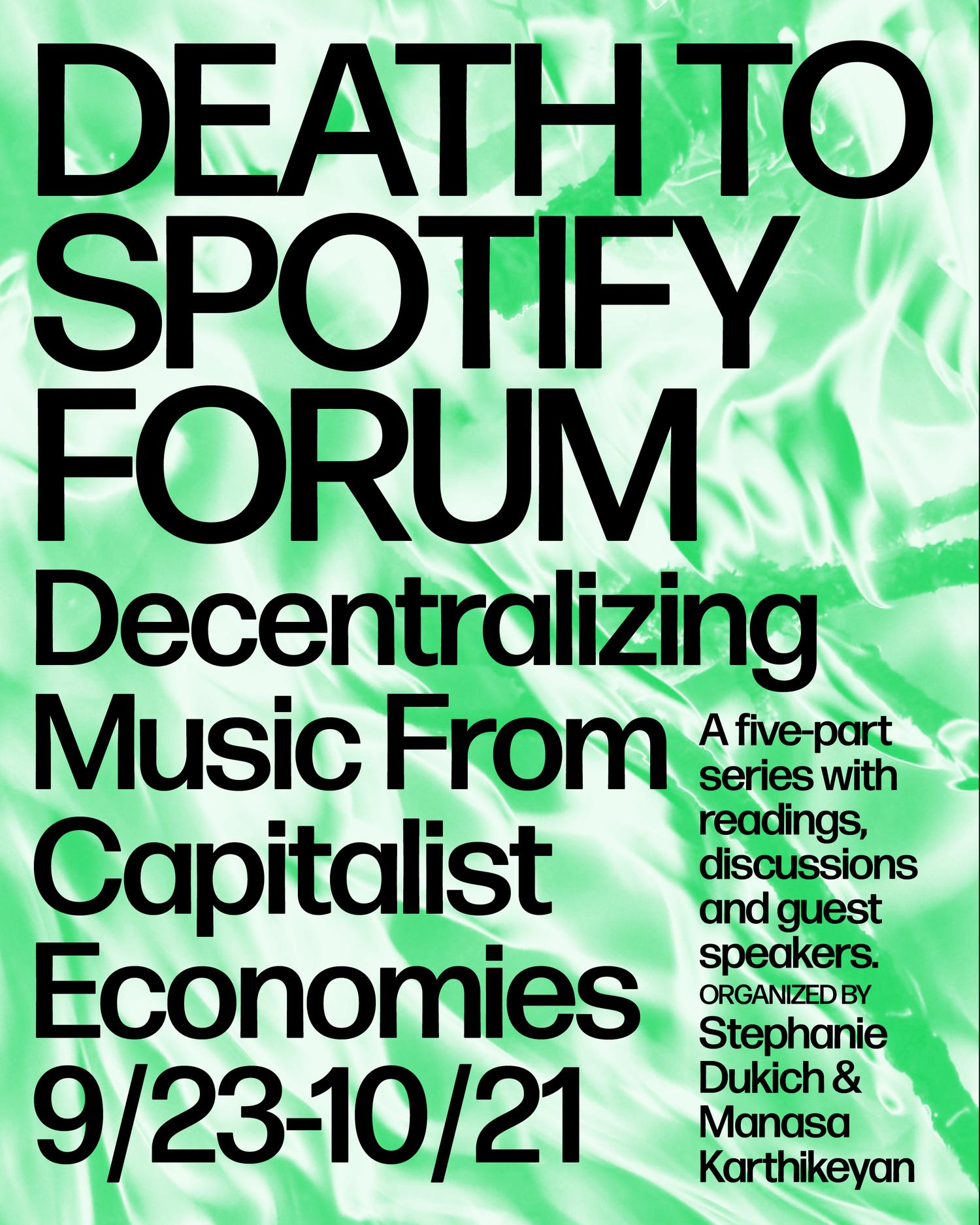
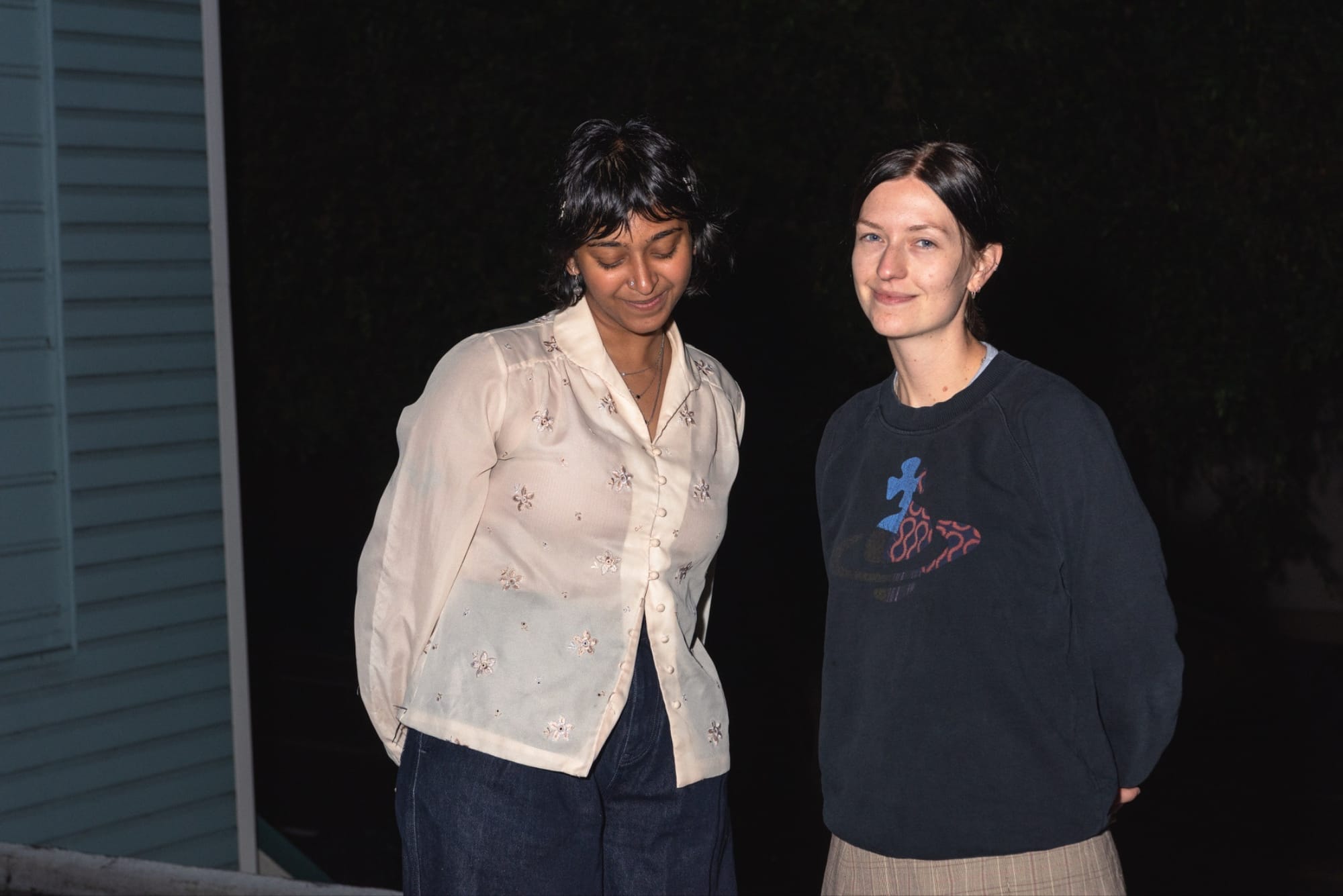
In October of 2025, I was invited to speak about radio at the “Death To Spotify” forum at Bathers Library in Oakland hosted by Stephanie Dukich and Manasa Karthikeyan. Dukich, a resident DJ at local online radio station Hyde FM, and Karthikeyan, an avid music collector, started the forum in part as a response to the Liz Pelly book, Mood Machine:The Rise of Spotify and the Costs of the Perfect Playlist.
I recently caught up with them both at Dukich's Mission district apartment to see what has changed both in their personal lives and in the music zeitgeist since the forum ended.
GABRIEL LOPEZ: How did the forum germinate? Can you walk me through how you both came to host Death To Spotify?
MANASA KARTHIKEYAN: Steph had friends in Brooklyn who hosted these parties where people could come in and physically move their files off of Spotify, either burn CDs or like file share. And that's what the whole thing started out as. But then as we were planning it we realized that we could talk about a lot of different things surrounding music in the same place.
STEPHANIE DUKICH: We wanted to learn how to get off Spotify and archive sound. 'Cause I also think the problem is that we realize that everything that's on Spotify is not something that we own or have tangible access to that isn't through the internet. We wanted to talk to other people about how to take back music and decentralize music from these platforms.
LOPEZ: So, six months out of Death To Spotify, what's the vibe? Do people come up to you and say I dumped Spotify?
KARTHIKEYAN: My friends kind of do. I don't think anyone knows who we are, who hasn't met us already, but I've had multiple friends be like, I've stopped using Spotify.
DUKICH: I feel like I've unfortunately had the complete opposite experience where the people who have been using Spotify doubled down and refuse to change services because what we did made them really angry.
LOPEZ: What? I didn't expect there would be pushback.
KARTHIKEYAN: One of the biggest counterpoints that people kept bringing up to me was kind of like, well the technology itself is not a bad thing. We were never saying that streaming as a concept is a bad thing. That's probably a net good for people having access to music, but the ways that the services themselves have taken over music discovery and even giving artists any say in how their music is listened to, I feel like is a completely separate thing from just the idea of streaming.
LOPEZ: In the time since you have left Spotify, what has changed in your relationship to music?
DUKICH: What I have noticed since is I'm listening to music in very different ways since leaving Spotify. I think mostly if I am streaming, I do use Apple Music, but I find myself streaming much less.
In my music tab on my phone that used to just be Spotify, I now have Apple Music, SoundCloud, Bandcamp, and Discogs. I use all of these services in tandem with each other now and for different things.
Whatever is on Spotify is not all that there is, and I can be listening to and finding things that aren't concentrated on this one platform.
KARTHIKEYAN: I've been diversifying the way I listen to music. I've been really dedicated to buying CDs. I find myself being like, oh, do I actually think about the thing I'm listening to more?
DUKICH: That's another thing. I genuinely am buying music more, which feels good too!
KARTHIKEYAN: I'm definitely spending more money on music now. I have not regretted a purchase yet.
LOPEZ: What have you learned from designing the forum? As you have explored de-Spotifying, what has come up for you?
KARTHIKEYAN: I keep thinking about something that a speaker early on said where a friend of theirs was kind of really upset about the forum and the idea of asking people to quit Spotify. They were like “listening to music after the end of a long day is one of my small pleasures in life and this makes it so much easier for me to access it.” I think it's one of those things that if you are someone who cares about music very deeply and cares about the way you engage with it, then it feels like a natural next step to be like, well, what are better ways to engage with it?
DUKICH: I also don't think I can fault artists for having their music on Spotify. I think the onus is on the consumer. We as a society have to find better ways to engage with sound, but I don't think the artist who's gonna be making no money anyway can be faulted for getting some revenue from streams. I think we just have to reimagine the whole thing altogether.
LOPEZ: Any closing thoughts?
KARTHIKEYAN: There is such a big ecosystem for music in the Bay Area, I mean there probably is an ecosystem for music everywhere, but I think everything being local made it apparent people can plug in right in their communities.
DUKICH: Definitely. Streaming is here, streaming is staying. Whether that's good or bad. I think what's important is you just have to challenge it and not feed into it. And there will be alternatives. We have to have alternatives.
Since the Death To Spotify forum I too have reflected on my own relationship to music and its commodification. I have ping-ponged from one streaming platform to the next hoping I can do less damage (or at least get artists paid a little better), but ultimately found that the best cure to this malady is also the oldest. I go to a show, buy some merch, and show some love when I can. It is a simple formula to an ever expanding problem but it works.


Is it hype or is it Kool-Aid? “Ghost in the Machine” succeeds where “The AI Doc” fails.


