
Bay Area Workers Fight Bosses For First Union Contracts
Hundreds of workers have unionized—but will they be able to secure wins for the long-term?
Hundreds of workers have unionized—but will they be able to secure wins for the long-term?
The company’s Integrated Behavioral Health Services workers hold one-day strike against AI.

Wallace Shawn’s ironic polemic against class society takes audiences on a psychic and physical journey after dark.
On the second day of historic strike, SF teachers say they’re determined to win on wages, healthcare and special ed funding.

Spirits were high Tuesday morning, as around 100 educators, students, and community supporters gathered to support the picket line at Mission High School on the second day of the United Educators of San Francisco’s (UESF) first strike in almost 50 years.
On Monday, the union secured the district's sanctuary status in negotiations, protecting students from possible ICE abductions. But workers are determined to get more. Educators, students, and supporters marched to a drum line, over a steady stream of honks from passersby. Chants of “Say it loud, say it clear, immigrants are welcome here!” rang out across 18th street.
Apart from this key win, which included expanding the Stay Over Program, which offers emergency shelter to SFUSD families, no further movement towards a tentative contract had been announced. Outstanding issues included healthcare coverage, special education funding, and wage increases that match SF’s wild cost of living.
Cindy Castillo, who is a parent and a ninth grade ethnic studies and tenth grade honors history teacher at Mission High, said a livable wage is central to her ability to serve her students. She also emphasized the need for full days for paraeducators and security staff for a potential agreement.
Castillo spoke to the insidious, yet popular misconceptions of teacher’s unions as “greedy” and only out for money, a line which has been pushed by rich individuals like Garry Tan. “I feel like a lot of people don't understand what happens in the classroom day to day, and what educators do outside of the school,” Castillo said.
As a high school teacher, Castillo says she sees the cumulative results of unmet needs throughout her students’ elementary and middle school experiences. “By the time they get to us in high school, students are left with a lot of gaps. We are desperately trying to fill those in. But you can't do that with any AI,” she said.
In January, the district approved a contract with Open AI to deploy ChatGPT EDU weeks before approval was requested from the school board, prompting union pushback. As of now, formal implementation has been scrapped. But AI regulation remains an issue in union negotiations.
Students also joined the picket line to show solidarity with their educators. Bairo, an 11th grader at Mission High, spoke to the direct connection between his long-term success and the success of his educators amidst the district’s inaction on key issues such as specialized support staff. “It’s pulling a thread on my future, especially when my IEP [a legal document that outlines services for special education students] is not reached fully,” he said. “It is going to affect me in the long run. Being here standing with my teacher is going to have a bigger effect than just sitting at home.”
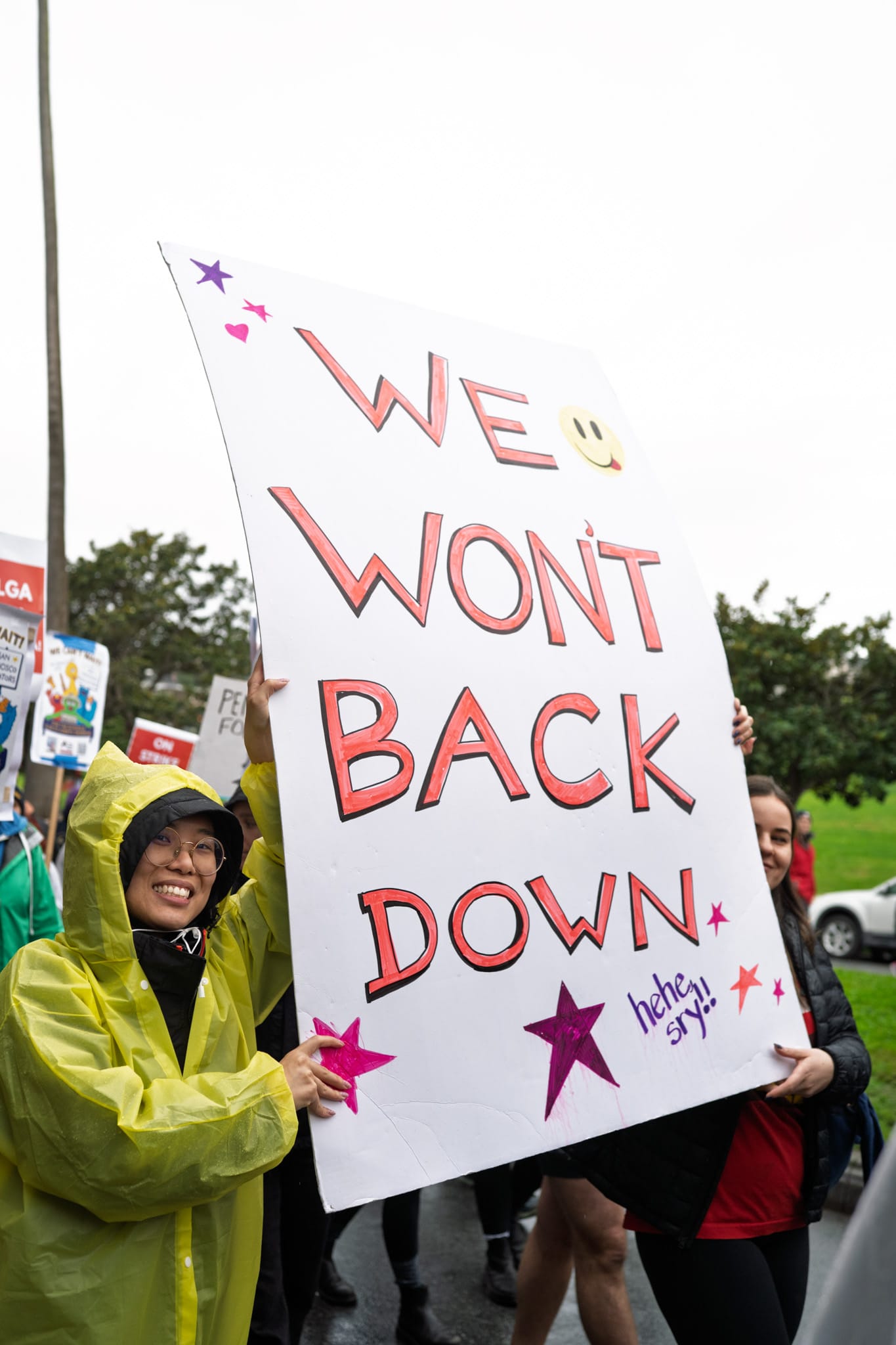
At noon, thousands of educators and community supporters from across the city gathered at Dolores Park for a rally. Despite signs of rain, the crowd was large, and ready to call out the district and the city’s backwards priorities.
“It always looks like we have money for the military, always money for the cops, always money for the prisons, but whenever it comes to talking about teachers and our students and families, it always seems like we're trying to squeeze water out of a rock."
Aaron Neimark, a transitional kindergarten teacher at Dianne Feinstein Elementary School, who has been in SFUSD since 2001, sees overall stability, particularly adequate healthcare, as a key issue that will keep educators at their sites.
While Neimark’s child, who attends Feinstein, receives healthcare from his wife’s plan, it’s difficult for teachers who are single parents. “It's costing tens of thousands of dollars just to keep their own child on their healthcare,” Neimark said.
Neimark also emphasized that many media outlets and politicians have taken the district’s statements on the impossibility of UESF’s demands at face value,“[The district says] they're only offering a little bit less than we're asking for [in terms of raises], but they're also asking us to give up [caps on] class size, give up sabbaticals that keep people in the work, things like that are the givebacks,” Neimark told Current. “It looks like they're giving a lot and we're saying: no, no, no.”
Michael Ungar, a social studies teacher at Lowell High School, also said the public narrative on the state of bargaining is skewed. “Sure, we might get something of an increase, for instance, a 2% increase, but taking on 20% more work,” Ungar said. For the workers we spoke to, these numbers do not add up.
Matthew Lambert, a sixth grade social studies and English language arts teacher at James Denman Middle School, said the district’s disregard for educators' conditions is linked to the political system that has made the abandonment of public education seem inevitable.
“It always looks like we have money for the military, always money for the cops, always money for the prisons, but whenever it comes to talking about teachers and our students and families, it always seems like we're trying to squeeze water out of a rock,” Lambert said.
While the path to a fair contract may be uncertain, San Francisco teachers seem clear-eyed and determined to remain on the line for what Ungar sees as a potential “long haul” fight, after a year of the district stalling on bread-and-butter issues.
Castillo, as with other workers Current spoke with, were resolute. “We're doing this for our students and we will not stop until all the demands are met.”

Hundreds of workers have unionized—but will they be able to secure wins for the long-term?

The company’s Integrated Behavioral Health Services workers hold one-day strike against AI.

Today marks *twenty four* calendar days since seven Highwire workers have been laid off by the company in a move workers deem to be anti-union retaliation. However, the workers are far from dissuaded, and the fight is far from over.

Dublin Teachers Association secures class size caps, raises, and health care in tentative agreement.