
Malcolm X Academy Educators on Strike: "We're Not Closing These Schools"
Amid the SF educators' strike, Current visits Malcolm X Academy, which the district keeps slating for closure.
Amid the SF educators' strike, Current visits Malcolm X Academy, which the district keeps slating for closure.
Amid the SF educators' strike, Current visits Malcolm X Academy, which the district keeps slating for closure.

The United Educators of San Francisco (UESF) strike has entered its fourth day. But for Malcolm X Academy (MXA), a TK-5 public elementary school located in the Bayview-Hunters Point neighborhood of San Francisco, the battles with the San Francisco Unified School District have been ongoing for years, if not decades.
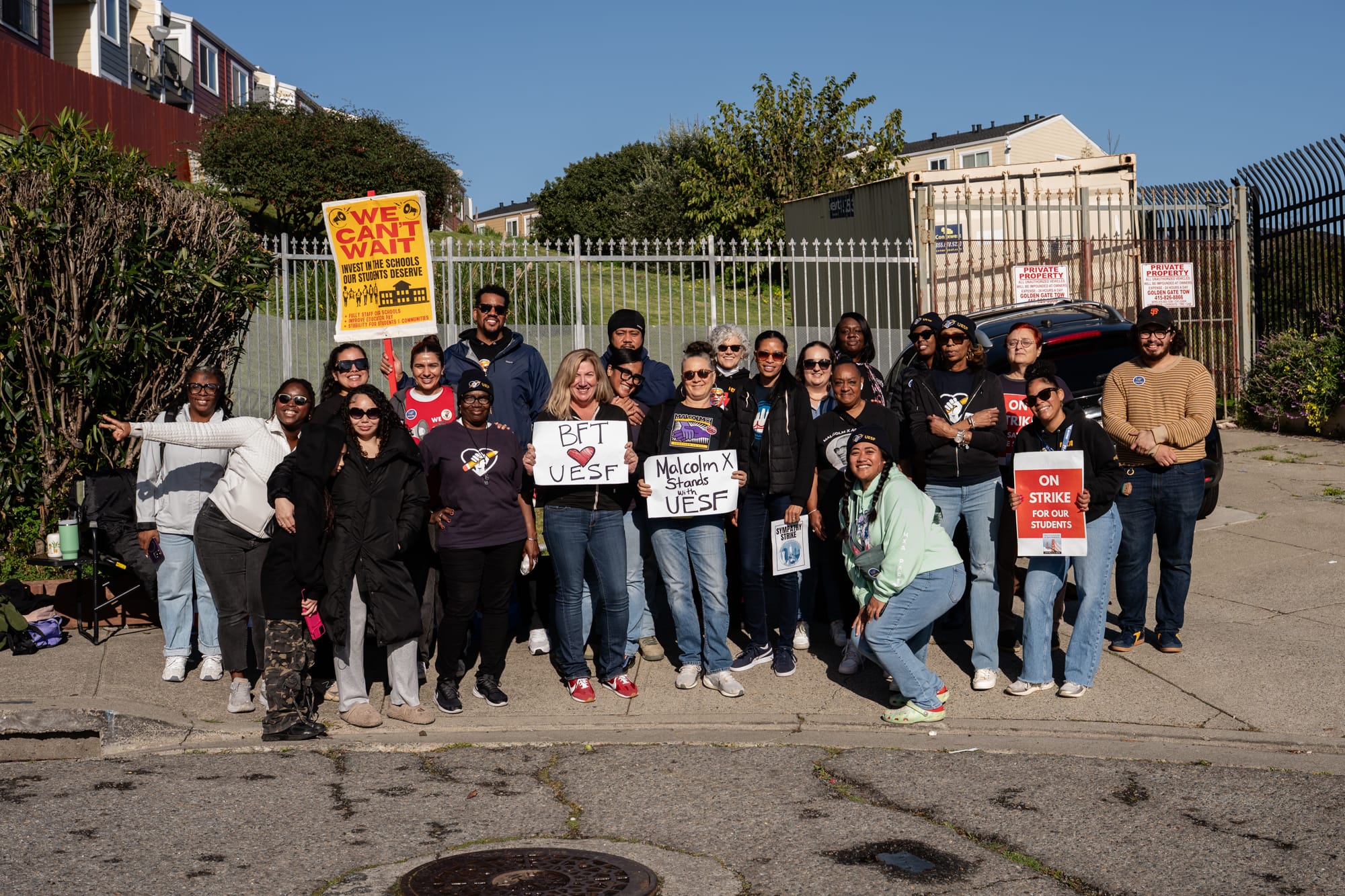
Bay Area Current went out to Malcolm X Academy’s picket line this morning to profile this predominately Black, brown, and working-class school.
In October 2024, Malcolm X Academy was one of 13 schools slated for either closure or merger by then-Superintendent Matt Wayne in the face of a mounting budget crisis. “They [SFUSD] decided that year was going to be a lot of layoffs as well as school closures,” recalled Lisa Richardson, a paraeducator and family liaison at MXA. “So our union, UESF, went back to the table and said, no, we cannot do this. We're not closing these schools.” SFUSD ultimately decided not to close any of the schools; instead, Superintendent Wayne resigned on October 18, 2024, a day after visiting Malcolm X Academy to hear family grievances related to the potential merger with neighboring Dr. George Washington Carver Academic Elementary School.
“The community said, you know what? We’re tired,” said Richardson. “And really and truly our students and families and just the whole community have been in support of Malcolm X.”
The Board of Education appointed Dr. Maria Su, then Executive Director of the San Francisco Department of Children, Youth and Their Families, as superintendent on October 22. She had previously never worked as an educator or in education, as UESF has long pointed out.
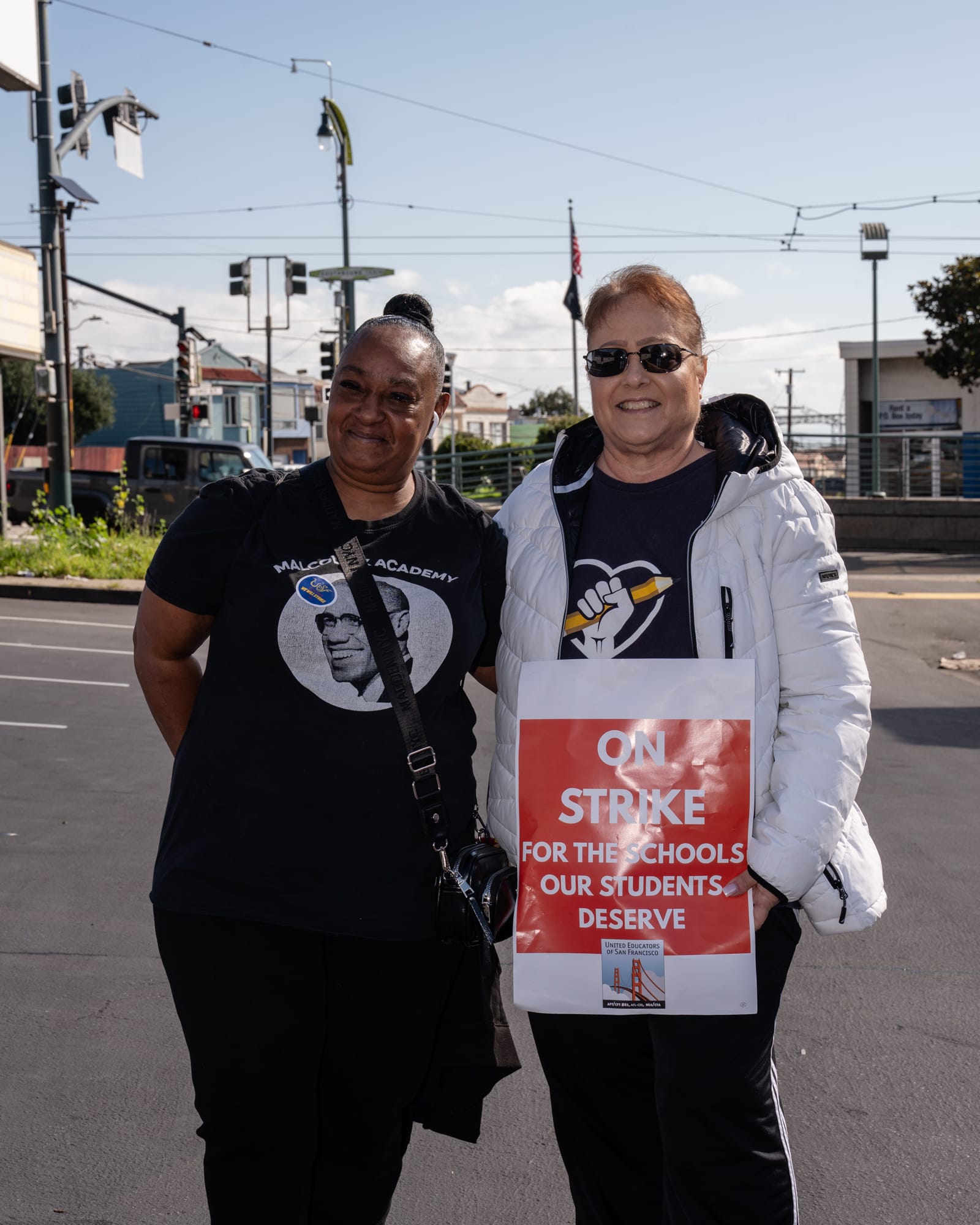
“They tried to close us back in the nineties too,” said Gina Bissell, a veteran educator who has been at MXA since 1987. “When we fought and the parents came, the community came and we won each time.” Though Malcolm X Academy has not had to close, it still faces the impacts of SFUSD’s budget cuts. “They cut two teachers last year. So now I'm doing first grade, half a day teaching first grade ELA [English Language Arts], and then the other half of the day I’m doing my reading intervention,” added Bissell.
The district has long cited Malcolm X’s low enrollment — it currently enrolls approximately 100 students — as a justification for closures. However, the Malcolm X Academy community tells a different story.
“They always look at us as a number,” said Kerri Seow, the MXA Principal who joined the picket line on a sympathy strike. “Our numbers have been dropping, and that's because a lot of kids are bused out of the area.”
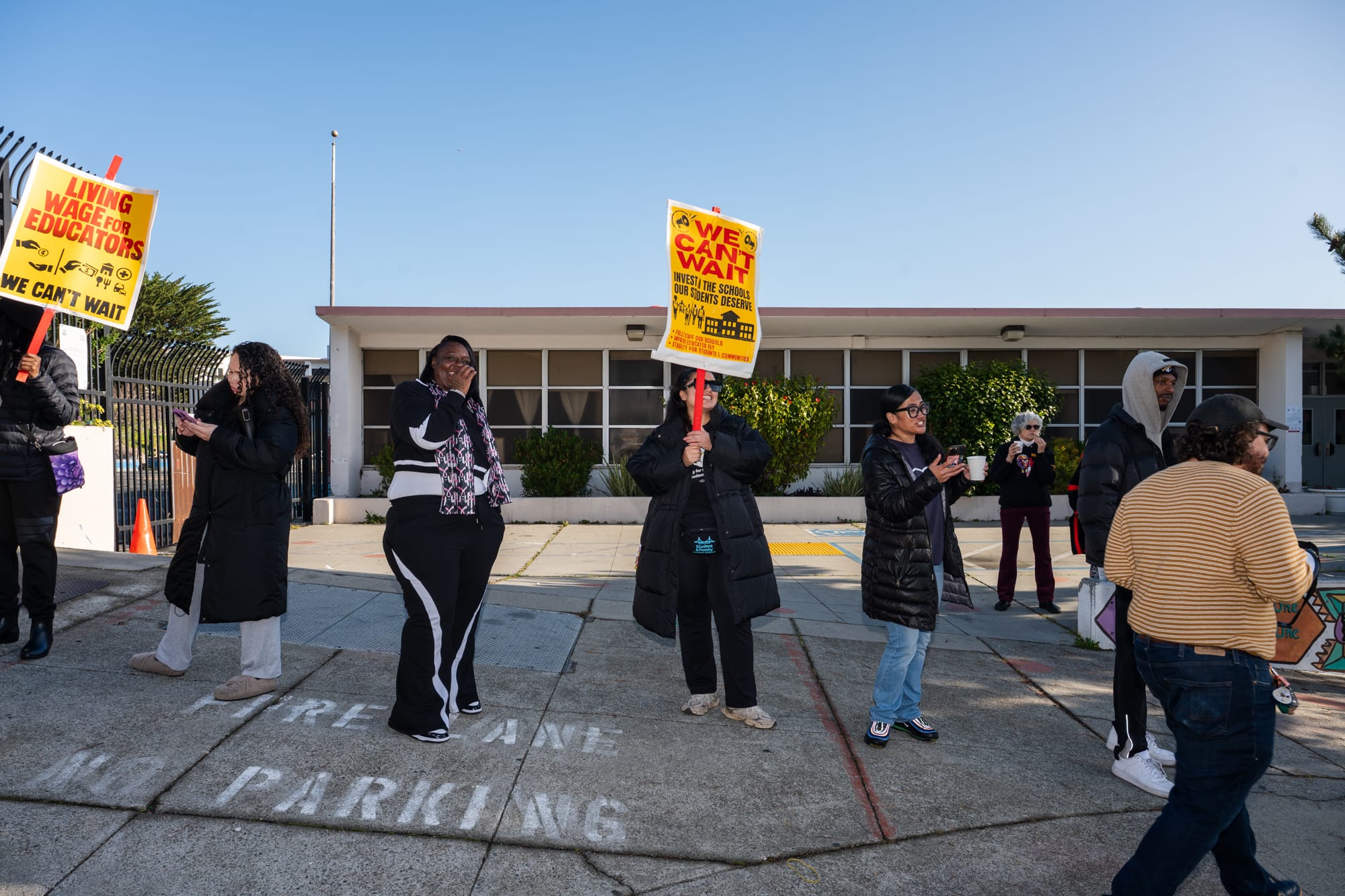
That some SFUSD schools are struggling with enrollment while others, like West Portal Elementary, face long waitlists is a product of San Francisco Unified's complicated, and often maligned, lottery system. As in many if not all US cities, segregated housing yielded segregated and disproportionately resourced schools, and since the 1970s the San Francisco school district has made numerous attempts to desegregate. Though the district experienced significant rates of desegregation in the 1980s, due to a 1999 court ruling that eliminated race or ethnicity as a factor in school assignments, schools are now more segregated than they were 30 years ago. These desegregation efforts also led to white flight from the district’s public schools. Today San Francisco County has the highest rate of K-12 private school attendance in California, with some 30% of students, including Mayor Daniel Lurie’s children, attending private schools — more than triple the state average.
Though difficult to navigate for all families, the current lottery system’s emphasis on choice is especially daunting for working-class families. According to the district’s own analysis of the lottery’s impact on desegregation, “because the choice process requires time to ‘shop’ for schools by attending open houses during work hours, knowledge of the application system and paperwork, and transportation access to make crosstown schools viable options, it has turned out that more affluent families are much more likely to participate in the choice process.”
Malcolm X Academy sits at this tenuous intersection between neighborhood school and desegregation attempts. But it’s impossible to understand the logic behind the district undercutting its predominately Black and working-class schools in the name of equity.
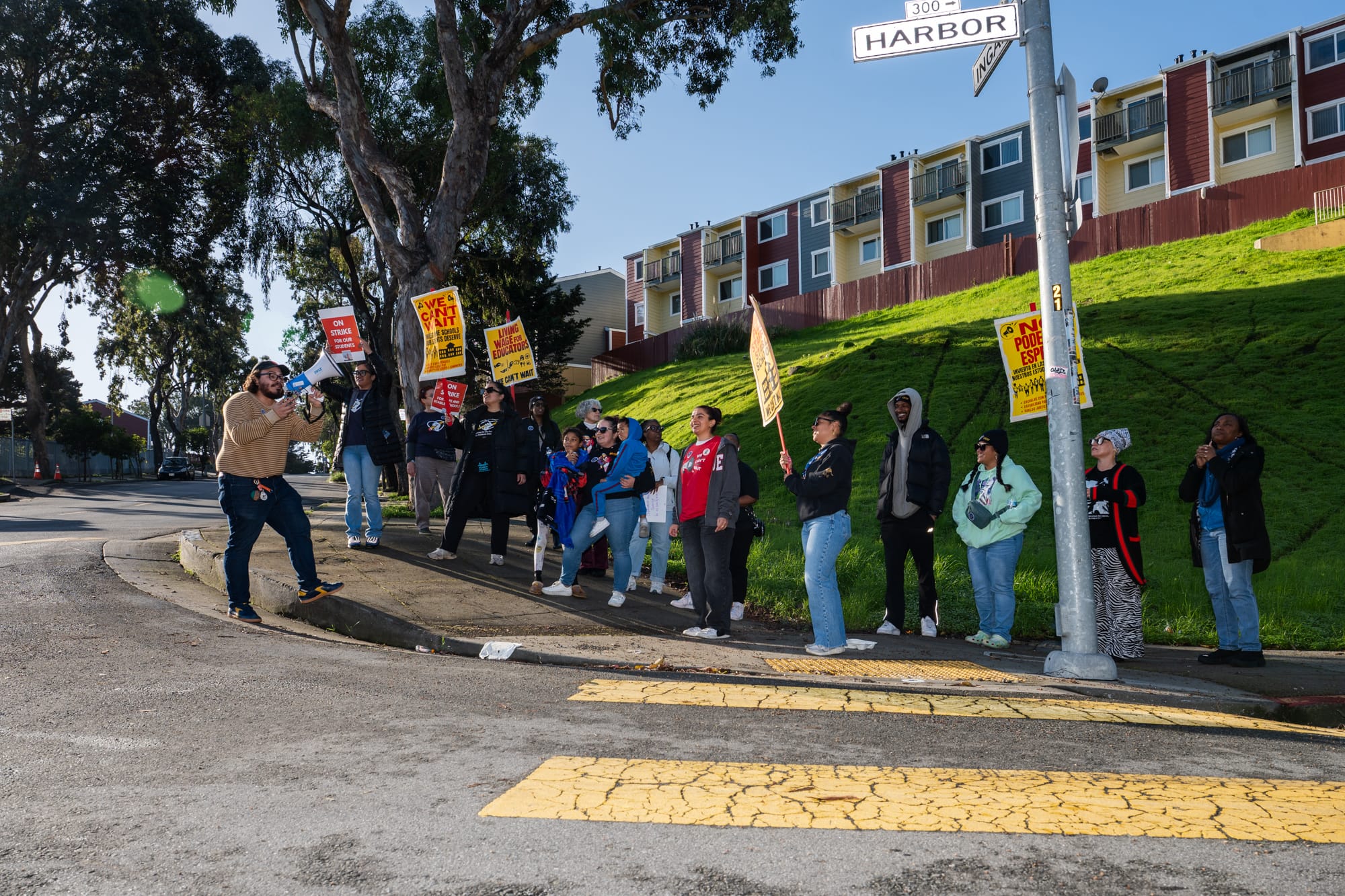
The district’s policies have also created a negative feedback loop for Malcolm X Academy. “The way that our community works is a lot of our parents will enroll kids in kinder[garten] more in the summer, not by the district’s deadline,” said Principal Seow. “So this is the first year we actually had kids who were on the waitlist to get into our kinder class, and we couldn’t accept them because we were at capacity. They made us make a K-1 combo. It’s almost like you’re kind of being set up to close.”Bayview-Hunters Point is also a new frontier of gentrification in a city that has seen its Black population dwindle from 11 percent in 1990, just shy of the national average, to 6 percent in 2024. “I’ve seen [the numbers] go down and I’ve seen ‘em go right back up,” said Aleshea Moore, a security aid and member of UESF who has worked for the district for 16 years with a son enrolled at the school. “But it’s not going down because we are a bad school. It’s not going down because we’re in a bad neighborhood. It’s going down because our families cannot afford to live here. We got people that come here with four or five kids. So when one family leaves, they're taking four or five kids because they can't afford to live in San Francisco.”
Many also questioned the district’s plan to open a new school in Mission Bay while closing those in more economically disadvantaged areas. “Our school needs repairs, but they got a brand new school they just built in Mission Bay,” said Richardson. “Our students haven’t been invited to go there.”
Though the district has treated Malcolm X Academy’s small size as a justification for closure, for families and educators, it means they are able to offer a school environment that can cater to the specific needs of its students. Almost everyone Current spoke to mentioned that the school provides students with necessities like food, toothbrushes and hair products.
Valerie Bell, a parent with a daughter enrolled at Malcolm X, emphasized the importance of having not just a neighborhood school, but one deeply invested in the community and the needs of her child. “I have a special needs kid and she attends the school…the people that work here, they're a little bit more hands-on than a lot of other schools. They show more that they care. It's more like a family than a school.”
SFUSD has long been characterized by disparities in special education, and community members highlighted the role of paraeducators at the school. On the picket line, Noor Sidhu, a school psychologist and member of the UESF bargaining committee, said she had to remind the district that this wasn’t a teachers’ strike, but an educators’ strike.
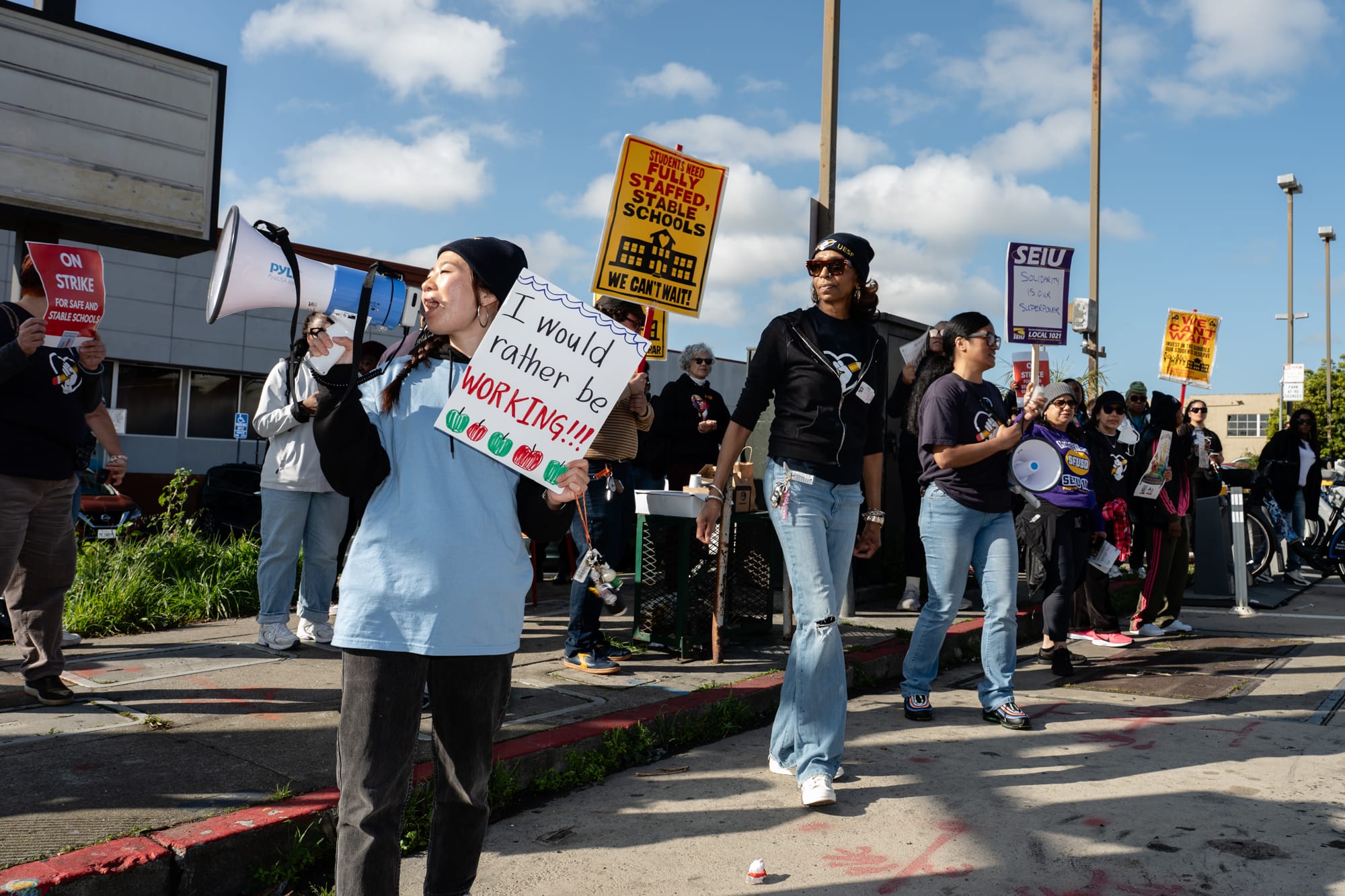
Following the picket, Malcolm X educators met with workers from other area elementary schools — Bret Harte, Dr. George Washington Carver, and Dr. Charles R. Drew College Preparatory Academy.
Educators from all of the schools hoped the strike could also highlight the particular concerns of Bayview-Hunters Point. “I think it’s really raising important issues about how this is affecting us, not just now during the strike with things like higher wages and healthcare, but also school closures and hard-to-staff areas,” said Grace Hirai, a second grade teacher at Bret Harte Elementary.
It is likely that closure could be revisited. “We got to stay open another year,” says Richardson, “2027 it’ll come back on the table.”
Asked why Malcolm X Academy continually faces closures, paraeducator Kenneth Rolle says: “I don’t think they see the value in our students, just plain and simple. As a community, as just as a school.” But he also reminds us that dedicated educators and communities show up for their students. “I just don’t think they see the value in small schools like ours. A school like ours should be the model, we’re able to tend to smaller classes, tend to kids with higher needs.”

On the second day of historic strike, SF teachers say they’re determined to win on wages, healthcare and special ed funding.

The strike follows almost a full year of negotiations and a last-ditch prevention effort by the city’s mayor, Daniel Lurie. We hear from teachers, students, and supporters from across the city.

San Francisco special education teachers tell us why they’re striking.


