
'The Fever' at Clio's Review: Owning The Libs?
Wallace Shawn’s ironic polemic against class society takes audiences on a psychic and physical journey after dark.
Wallace Shawn’s ironic polemic against class society takes audiences on a psychic and physical journey after dark.

Clio’s Books’ production of The Fever starts with the end of one working day, and the beginning of another. It was our first time at Clio’s, and as we wandered around, getting our bearings and debating whether or not to use the bathroom before showtime, we watched the bustling, familiar activity of quitting time in the service industry: floor mopping, bar wiping, politely encouraging the customers to leave. We were enamored by how the novelty of a play in a bar/bookstore imbued certain mundane qualities of the space with new intrigue. Despite a note on the back of the program asking customers to stay off their phones, we caught one of our fellow patrons snapping a landscape photo of the empty bar, with the bartender just out of frame.
The Fever, written by screen-star-turned-playwright Wallace Shawn (of The Princess Bride fame), is the inner monologue of an unnamed bourgeois narrator who becomes manically confounded by his culpability in a global class hierarchy. Our copy of the play, written in 1991, opens up with a note to stage it in homes or apartments and by an actor of any age and gender. Director John Wilkins' production weaves all throughout Clio’s Books in Oakland, CA at 11pm. While Clio’s feels a bit like the wealthy bohemian layabout’s manor this play was originally intended to be presented in, it doesn’t quite have that feeling of vulnerability: that this is someone in our social circles’ home, that they are confessing the thoughts that have started to plague — and radicalize them. The staging was less intimate and more va-va-voom, with intricate props used throughout the show. Shawn’s script and Benoît Monin’s one-man performance both take off when they’re up on their feet, snaking into backroom after backroom as the narrator descends deeper into his guilt. Moving around Clio’s made it easy to follow the winding train-of-thought narrative, and Monin’s recitation (a colossal task for any actor) benefits tremendously from the extra space to move. Sliding behind the bar or pacing around the hall, Monin builds up — with subtlety — a unique, clown-like persona.
As the ethical contradictions of capitalism crowd in on his character, stripping his life of its not-so-simple pleasures, Monin cranks the dial on his physicality, miming, puppeting, and gesturing bombastically into the play's climax.
In the later half of the show, Monin expertly guides a dummy meant to represent “the poor” during a monologue about incremental change. He describes the need for change to come slowly and for the poor to be given more, over time, slowly revealing the absurdity of the claims the narrator makes and the brutality of liberal ideology. During this section of the performance, Monin has opened the back doors of Clio’s that open up to Perkins street. It was an exciting gesture, the play naked to the possibilities that could unfurl with the action facing the park at Lake Merritt. The gaping doors brought in a chilling breeze and the sound of music from cars cruising down Grand Ave. The audience stiffened. Was it the fear of anything — or anyone — entering the theater and ruining their evening of entertainment, or was it just the chill of the night?
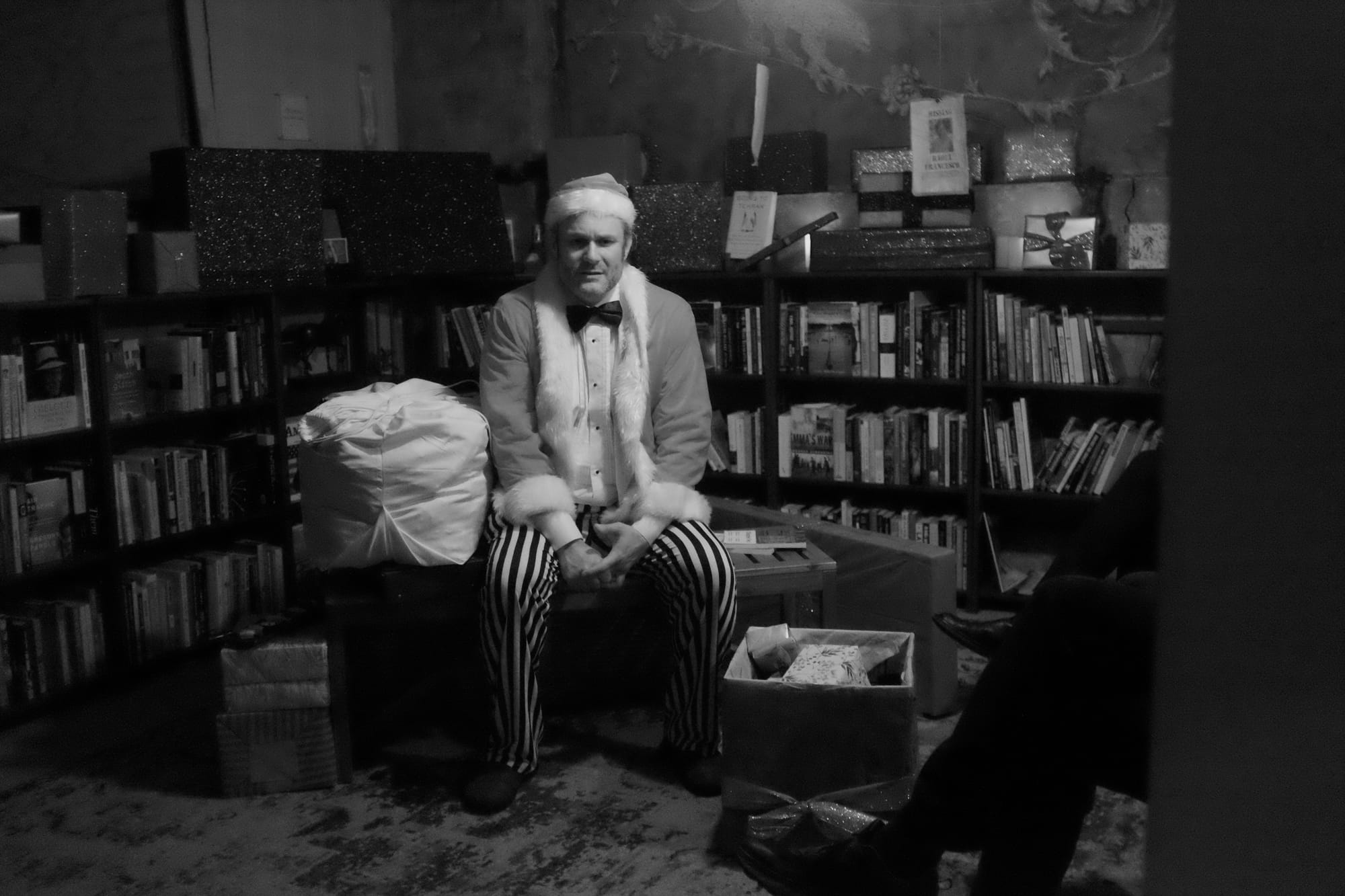
John Wilkins' production of The Fever deserves praise for choosing to stage what is essentially an ironic polemic against class society before the fitting backdrop of a workplace. There are, however, some missed opportunities. By obscuring the work of the stagehands, who seem to have applied the set dressings to the rest of Clio’s while the audience is safely tucked away in the corner during the first scene, this production hides with one hand what it reveals with the other: labor. This is a shame, because their clever theatrical conventions otherwise highlight the continuity between service work and theatrical work. Monin frequently acknowledges the audience throughout the play, but in an ancillary affect that is never direct, gesturing mid-sentence for them to follow him from one room to another, or using them as a prop when the story he tells involves another person. In this way, his version of the show's narrator occasionally comes off like a waiter, a choice that ingeniously troubles his formal evening wear, which could be read as both the trappings of a gentleman of leisure or the uniform of a butler. The audience, too, behaved very much like diners at an upscale restaurant, offering stiff and slightly awkward “thank you’s” every time Monin handed them a plastic ice cream cone or a glass of red soda.
And we couldn’t help but wonder, besides the comrades from our “Staging the Revolution" reading group, who was at this performance tonight? Had they also first heard of this Wallace Shawn play in January because he was performing it at a NYC DSA fundraiser for their Tax the Rich campaign? Were we among the typical theater-going audience the play's text feels directed at, and was the show making them question their complicity in our current political moment?
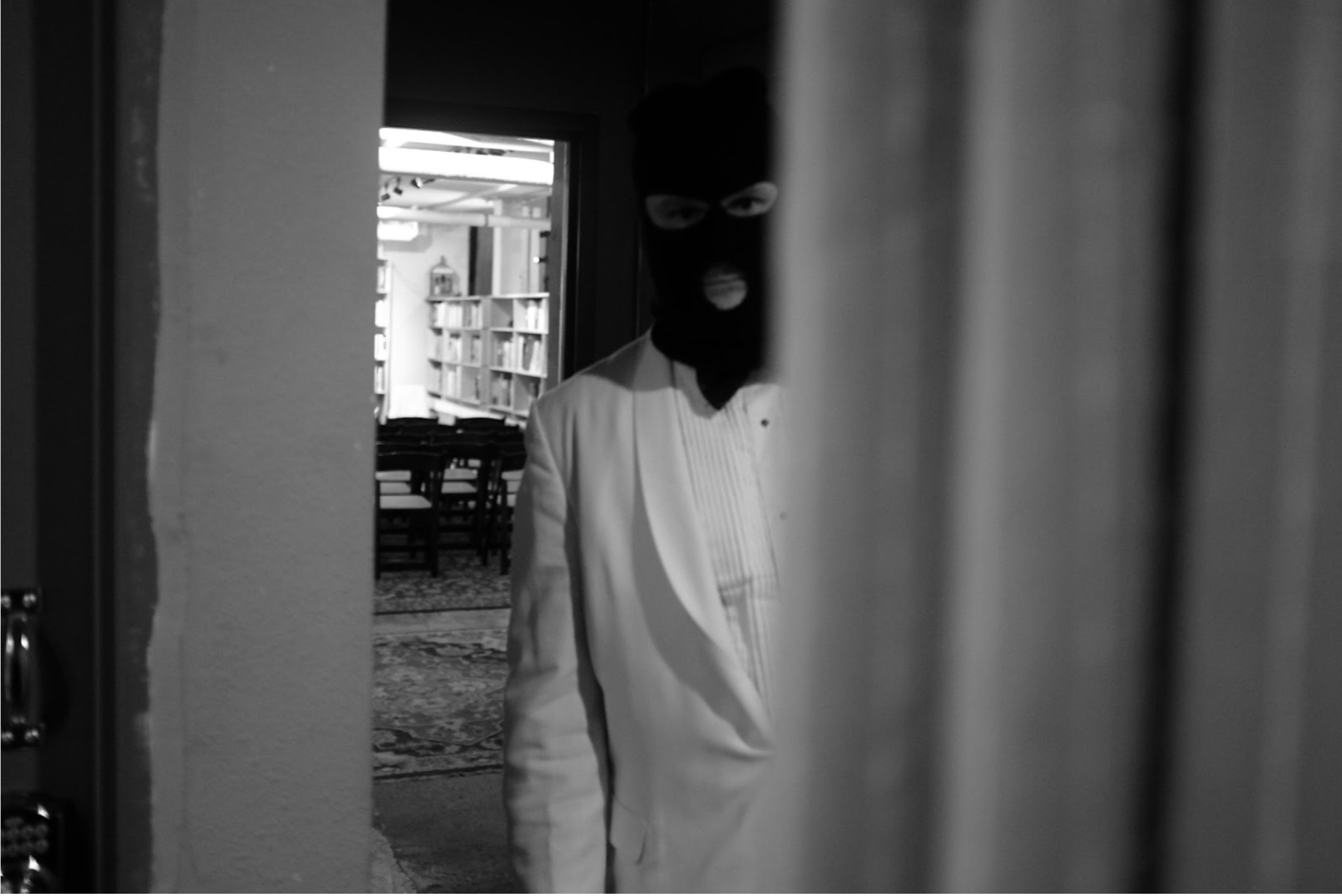
As we were ushered back into the room where we started and entered the final 10 minutes of the show, a group of three attendees (not so quietly) attempted to walk up the stairs and leave the performance early. While Monin reckoned with his participation in classed society with quiet and grounded thoughts on how to be, or not to be a class traitor, we could hear the exiting attendees in the distance whisper “I can’t open the door, I think the door is locked.” The group was dressed in their theater-finest, with hats, jewelry, even a gown (if we remember correctly), and it brought a bit of relief to know that despite a room half filled with leftists, the play was making at least a few people in the audience uncomfortable (even if just with the late hour), and it brought a bit of joy to know they were stuck in the space to face the discomfort at least until the end of the show. A recurring theme of The Fever is the immiseration of work – the script confronts the audience constantly with the absurdity of its uneven distribution and the cruelty of the fact that some people sit back while others toil. While Wilkins' directorial choices certainly draw some fascinating parallels with the play’s main themes, it pulls punches, at times a little tepid in comparison to Shawn’s white hot, confrontational prose. As the play came to a close at nearly half-past one in the morning, we couldn’t help but think that the juiciest opportunity to drive home the point of the play was left on the vine: they should have made us clean up the bookstore before we left.


A monthly questionnaire that tries to get to the bottom of things.


We spoke to rally attendees about taking time off, burnout, and what inspired them to come out in the first place.

