

Fighting Anti-Immigrant Violence, Past and Present
The history of resistance to Japanese American internment echoes through the fight against ICE today, with key differences but revealing similarities about our political reality.

During President Trump’s inauguration speech in January 2025, he vowed to invoke the Alien Enemies Act for the first time since World War Two to achieve his goal of mass deportation of immigrants. The last time this act was authorized, over 100,000 Japanese immigrants, the majority of them American citizens, were sent to concentration camps.
Meri Lane, a descendant of Japanese American internees and an activist with a strong Unitarian Universalist faith, sees a parallel between what her family went through and how the current wave of ICE raids and deportations is affecting immigrants. Both are examples of the “government being responsive to fear and racism in the community,” she said. The main difference now, of course, is that US warmaking no longer appears at the scale and magnitude of the prior World War, leaving less opportunity for justification. Despite this, there is certainly overlap between the way the 1940s-era Hearst-owned media helped engender the so-called “Yellow Peril” in its reporting and the way modern media constantly sensationalizes claims of a “border crisis” or “invasion” by migrants.
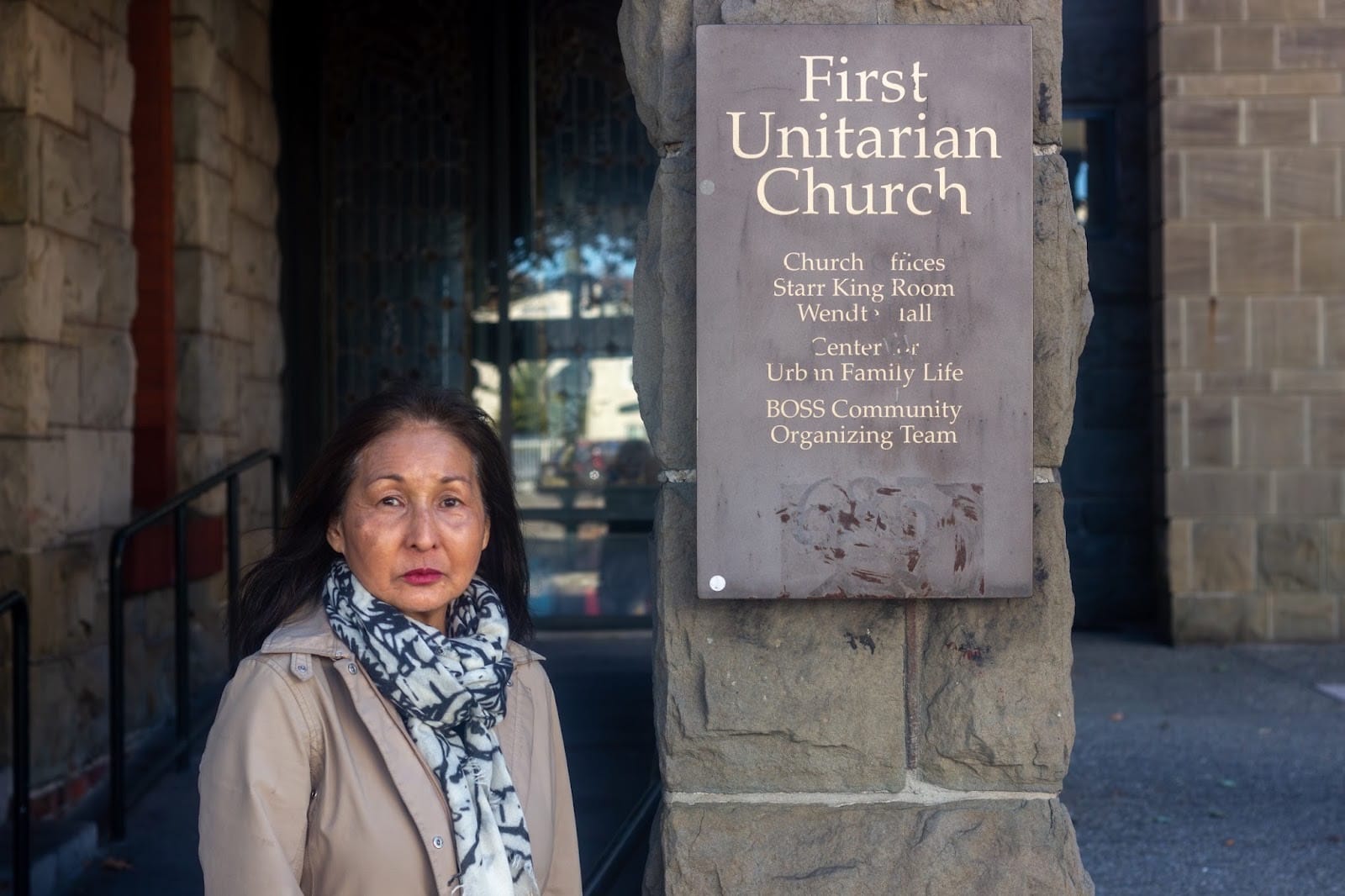
This rhetoric makes it easier for Trump and his sycophants to justify the invocation of the Alien Enemies Act. Today’s mainstream rhetoric can often frame immigration issues as a kind of “existential tribalism,” according to Lane, who added, “As long as we [live under] capitalism where people build careers off of fear and racism, the fight will never end.”
Similar Problem, New Conditions
Maria Moreno, who serves as the senior campaign coordinator on workers' rights for Jobs with Justice San Francisco, spoke about a similar continuous cycle when it comes to fighting for immigrants who are targeted by the Trump regime. Since shifting her work to help laborers that may be in the crosshairs, Moreno acknowledged that the campaign has “no end” and that workplaces are “a line of defense” against an unchecked paramilitary.
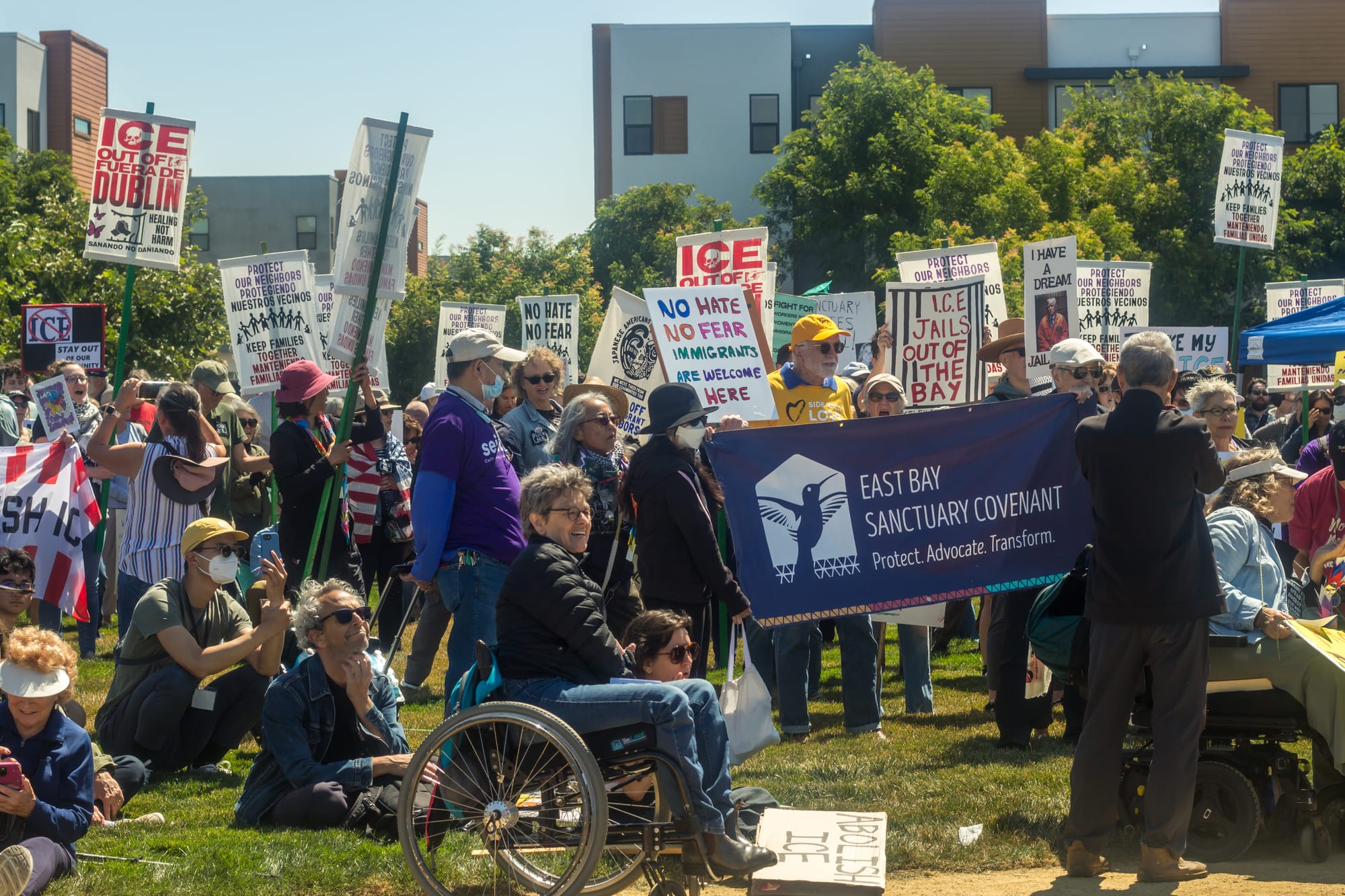
But she’s not doing it alone. Nueva Sol, an organization dedicated to helping day laborers in San Francisco, has also pivoted their focus. In the wake of the raids in Los Angeles, they joined the Adopt-A-Corner program, an initiative wherein volunteers can register to join day laborers as a line of defense against ICE. According to Guillermina Castellanos, the co-director of Nueva Sol, they have spent the last 25 years building the kind of “political power, social power, and economic power” necessary to get a program like Adopt-A-Corner off the ground. There are plenty of volunteers joining the fray, even implementing a “padrinos y padrinas” system where “godfathers and godmothers” escort children to school, as well as help undocumented migrants learn English and integrate into their communities.
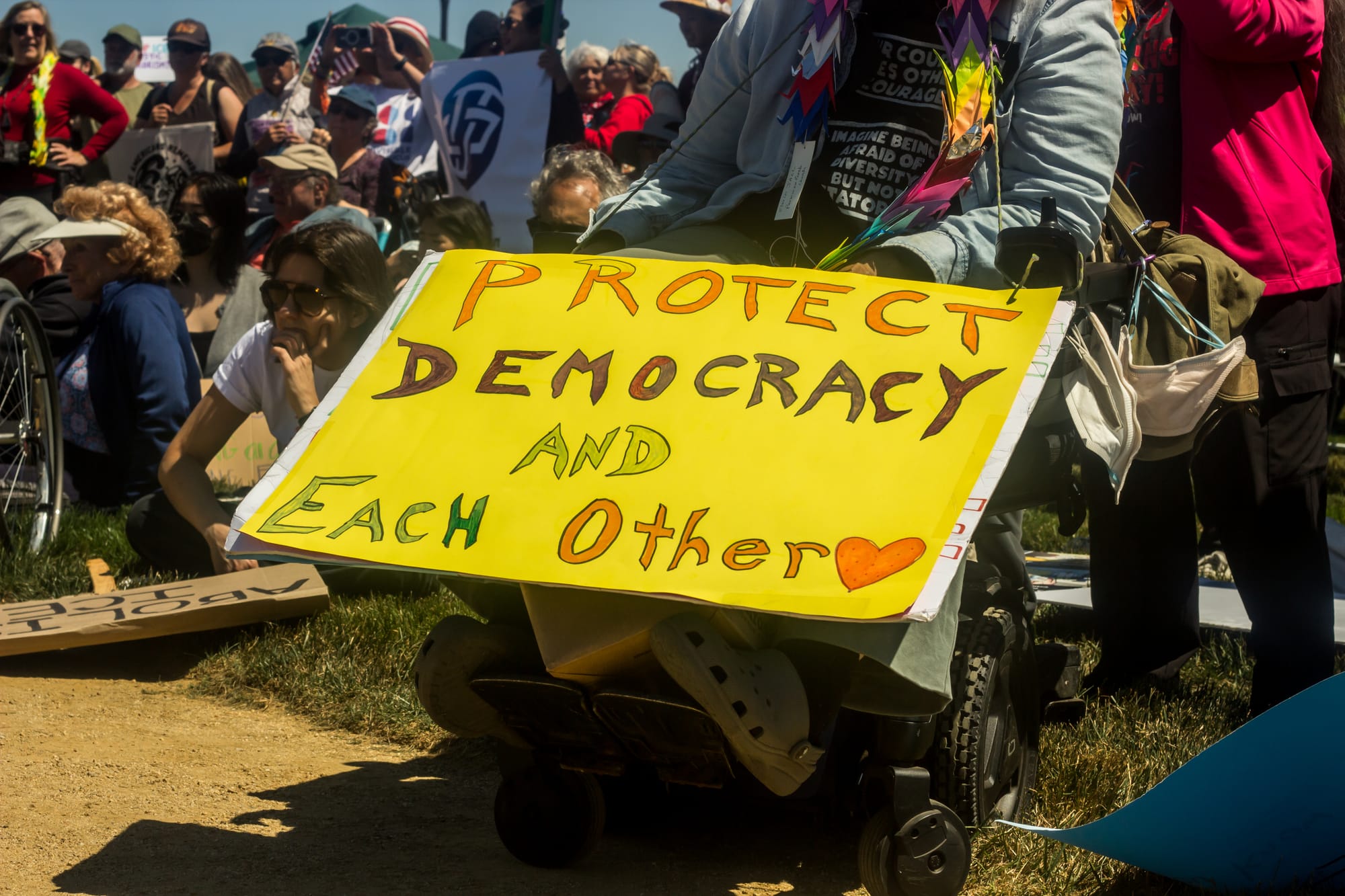
A teacher from the Oakland Unified School District, who spoke to the Bay Area Current anonymously for fear of losing their job or being targeted, has been part of these efforts. They are a member of Bay Resistance, helping accompany immigrants to and from court hearings in San Francisco, where undocumented folks risk arrest and deportation. As for Oakland educators more broadly, their “union is focused on being ready for when ICE starts assaulting our schools. There is a lot of apprehension among teachers and staff, but our district is tough. We're used to protecting our kids from all kinds of threats. We aren't backing down when the time comes.”
This isn’t the only union involvement in the protection of undocumented workers; Jobs with Justice San Francisco and Nueva Sol are drafting a letter to the federal government denouncing ICE raids with support from the National Union of Healthcare Workers, SEIU Local 87, which represents janitors, and LIUNA Local 261, which represents construction workers and other general laborers.
We Are All Quakers Now
The work being done by these organizations mirrors the work that was done during World War II to protect Japanese Americans and their families. Meri remembers that her father was spared internment because the American Friends Service Committee set up an Underground Railroad of sorts. He sold some of his possessions in order to get to Salt Lake City and stay in a Quaker family’s basement. He eventually earned enough money working as an orderly to get to Philadelphia, the home of the Quakers and AFSC.
“They lived out their faith by helping him get his MD at Temple University,” Meri said. “This is what people of faith do, and this is what calls me to pay it forward.”
After her mother died in November 2024, she left a gift to the Quakers to show gratitude for their work in the face of such horrific oppression. “That is how I want to show up, just as people showed up for my family.”

Read next

“We Are Out Here Fighting For What We Need”
San Francisco special education teachers tell us why they’re striking.


Meet SF's Billionaire Simps
We wanted to hear directly from the elite-lovers at their “March for Billionaires” in San Francisco — here’s what they said.

SF Public School Educators Are Striking for the First Time in 47 Years — And That's a Good Thing.
The strike isn't just about saving public education. It's part of the fight against billionaire domination.

Pro-Palestine Stanford Students Await Trial Verdict
“They are so brave. They are representing the future and are giving us hope.”
